Career Guidance for New Grads Unlock Your Potential


After graduation, finding the right career path can feel overwhelming. With many options and uncertainties, it’s easy to get lost. But, with the right job search tips and mindset, new grads can find their way into the workforce.
To unlock your potential, knowing your strengths and interests is key. By focusing on these, you can find exciting opportunities that match your skills and passions. Remember, starting your career is a journey. It’s okay to take your time and explore different paths.
Key Takeaways
- Understand your strengths and interests to identify suitable career paths.
- Develop a strategic job search plan to increase your chances of success.
- Network with professionals in your desired field to gain insights and advice.
- Stay positive and resilient in the face of challenges and rejections.
- Continuously learn and upskill to stay competitive in the job market.
Understanding the Job Market Landscape
The job market is always changing. It’s important to stay up to date to find the right job. Knowing the current trends helps me understand the employment landscape better.
Current Trends in Employment
The job market is influenced by technology, changing workforce, and what employers want. Remote work is a big trend, with many companies allowing flexible work. A survey found that “63% of companies have remote work options” (source: Buffer, 2022).
There’s also a growing need for skills in new technologies like AI and cybersecurity. As jobs change, having the right skills is crucial for my career.
Key Industries Hiring Fresh Graduates
Many industries are looking for fresh graduates. They offer great opportunities for those starting their careers. Some key sectors include:
- Technology and IT
- Healthcare and Biotechnology
- Finance and Banking
- Sustainable Energy and Environment
These industries not only hire but also offer chances to grow and advance in my career.
Job Growth Projections for Graduates
Knowing about job growth helps me choose my career path. The Bureau of Labor Statistics says,
“Employment of software developers is projected to grow 21% from 2021 to 2031”
(BLS, 2022). This shows a big need for tech-savvy graduates.
By keeping up with these trends and projections, I can find the best entry-level jobs. I can also explore careers that match my skills and interests.
Crafting an Effective Resume
To boost my chances of getting an interview, I need a strong resume. It should highlight my strengths and achievements.
Essential Components of My Resume
A good resume has several key parts.
- A clear and concise summary or objective statement
- Relevant work experience, including internships and part-time jobs
- Education background, including degrees and institutions
- Skills relevant to the job I’m applying for
- Any relevant projects or achievements

Common Mistakes to Avoid
When making my resume, I should avoid common errors:
- Typos and grammatical errors
- Inconsistent formatting
- Including irrelevant information
- Failing to tailor my resume to the job
Staying away from these mistakes can really help me make a good impression.
Tailoring My Resume for Each Job
To stand out, I should customize my resume for each job. This means:
- Using keywords from the job description
- Highlighting relevant experience and skills
- Adjusting my summary or objective to match the job
| Job Application | Resume Customization Tips |
|---|---|
| Software Engineer | Highlight programming languages, relevant projects |
| Marketing Specialist | Emphasize marketing campaigns, social media experience |
| Data Analyst | Focus on data analysis tools, statistical knowledge |
By customizing my resume for each job, I can greatly improve my job search.
The Importance of Networking
In today’s job market, networking is key for recent graduates to reach their goals. I learned that a strong professional network opens doors to advice, jobs, and guidance.

Building Professional Relationships
Starting with professional relationships is vital. It means making real connections with people in your field. To do this, be yourself, add value, and stay in touch.
| Strategy | Description | Benefits |
|---|---|---|
| Be Genuine | Show sincere interest in others’ work and experiences. | Builds trust and credibility. |
| Provide Value | Share relevant information, resources, or assistance. | Establishes you as a valuable connection. |
| Consistent Communication | Regularly update your network about your progress and achievements. | Keeps you top of mind for opportunities. |
Utilizing LinkedIn for Connections
LinkedIn is a great tool for professional networking. Make sure your profile is up-to-date, engage with content, and connect with industry professionals.
- Optimize your LinkedIn profile with a professional photo, clear headline, and detailed work experience.
- Engage with posts, articles, and comments to demonstrate your expertise and interests.
- Personalize connection requests to show you’ve taken the time to review the other person’s profile.
Attending Networking Events
Going to networking events is another good way to grow your network. These events let you meet people, learn about trends, and show off your skills.
To get the most from these events, prepare a short pitch, bring business cards, and follow up with new contacts.
Enhancing My Interview Skills
Improving my interview skills is crucial for finding a job that fits my abilities and interests. To do well, I must be well-prepared, confident, and know what the job needs.
Preparing for Common Interview Questions
Anticipating and practicing answers to common interview questions is key. Questions about my background, strengths, weaknesses, and career goals are common. By preparing, I can show my qualifications and interest in the role.

Some typical questions are “Why do you want to work here?” and “What are your long-term goals?” Practicing these helps me speak clearly and make a good impression.
Techniques to Showcase My Strengths
It’s important to highlight my strengths during an interview. The STAR method is helpful: Situation, Task, Action, Result. It lets me share specific examples of my achievements and how they can help the company.
For example, if asked about overcoming a challenge, I can explain the situation, the task, my actions, and the outcome. This shows my strengths and how I apply them in real situations.
Following Up After an Interview
Following up after an interview is often missed. Sending a thank-you note or email within 24 hours shows I value the interviewer’s time and still want the job.
A good follow-up message can make a strong impression and keep me in the interviewer’s mind. It’s a chance to remind them why I’m a good fit and how excited I am to join the team.
Leveraging Internships for Experience
Internships can greatly improve a fresh graduate’s career chances. They offer valuable experience and a competitive edge in the job market.
Internships are a great first step for new graduates. They provide real-world experience and insight into industry practices. To get the most out of internships, it’s key to find the right ones, make the most of the experience, and turn them into job offers.

Finding Relevant Internship Opportunities
To find internships that fit my career goals, I can use several resources:
- University career services and job boards
- Online job portals and internship databases
- Company websites and social media platforms
- Professional networks and industry events
By checking these sources, I can find internships that match my skills and interests.
Making the Most of My Internship
To get the most from an internship, I should:
- Set clear goals and expectations with my supervisor
- Take initiative and volunteer for various tasks and projects
- Network with colleagues and industry professionals
- Seek feedback and learn from the experience
Being proactive helps me gain skills, build my network, and improve my resume.
Converting Internships into Job Offers
To turn an internship into a full-time job, I should:
- Demonstrate my skills and work ethic during the internship
- Build strong relationships with my colleagues and supervisors
- Express my interest in a full-time role to my employer
- Stay positive and professional throughout the internship
By following these tips, I can increase my chances of getting a job offer and starting a successful career.
Acquiring Additional Skills
The job market keeps changing, and I must keep up by learning new skills. In today’s world, professional development after college is key for moving up in your career.
Identifying In-Demand Skills in My Field
To stay ahead, I need to find out what skills are wanted in my field. I do this by looking at industry trends, job ads, and talking to professionals. Knowing what skills are needed helps me focus on learning them.
- Researching industry reports and job descriptions
- Networking with professionals to understand their experiences
- Utilizing online resources to stay updated on the latest trends
Online Courses and Certifications
Online courses and certifications are great for learning new skills. Sites like Coursera, Udemy, and LinkedIn Learning have many courses for different careers. These not only improve my skills but also show my dedication to employers.

Volunteering as a Skill-Building Opportunity
Volunteering is also a great way to build skills and help others. By taking on volunteer roles that match my career goals, I can get real-world experience. I can work on skills like leadership, communication, and problem-solving.
For example, volunteering for a project management role can improve my organizational skills. Helping out with a marketing campaign can teach me about market analysis.
Researching Potential Employers
Researching potential employers is more than just a first step. It’s a strategic move that can greatly impact my job search. As I explore the entry-level job market, understanding potential employers is key to standing out.
When researching, there are several important areas to focus on. First, I need to check if the company culture matches my values and expectations.
Investigating Company Culture
Company culture is crucial, affecting everything from employee happiness to productivity. To understand a company’s culture, I can:
- Look at the company’s website and social media to see their mission and values.
- Read reviews on platforms like Glassdoor to learn about the work environment.
- Talk to current or former employees for real insights into the culture.
As Richard Branson said, “Train your people well enough so they can leave, treat them well enough so they don’t want to.” This shows how important a good culture is for keeping talent.
Understanding Job Roles and Responsibilities
It’s also important to understand the job roles and responsibilities. This means:
- Reading the job description carefully to know the main tasks and needed skills.
- Learning about the department and team I’d be working with to get a feel for the dynamics.
- Talking to the hiring manager or current employees for more details about the role.

Evaluating Company Stability and Growth
Checking the company’s stability and growth potential is also crucial. This can be done by:
- Looking at financial reports and news to see the company’s financial health.
- Studying industry trends to understand the company’s position and growth potential.
- Examining the company’s history and milestones to judge its stability and longevity.
By deeply researching potential employers, I can make better choices about my job applications. This increases my chances of finding a good match in the competitive entry-level job market.
Utilizing Career Services on Campus
Using the career services on campus has changed my job search for the better. As a new graduate, the job market can seem overwhelming. But, my university’s career services have given me the tools and advice I need to succeed.
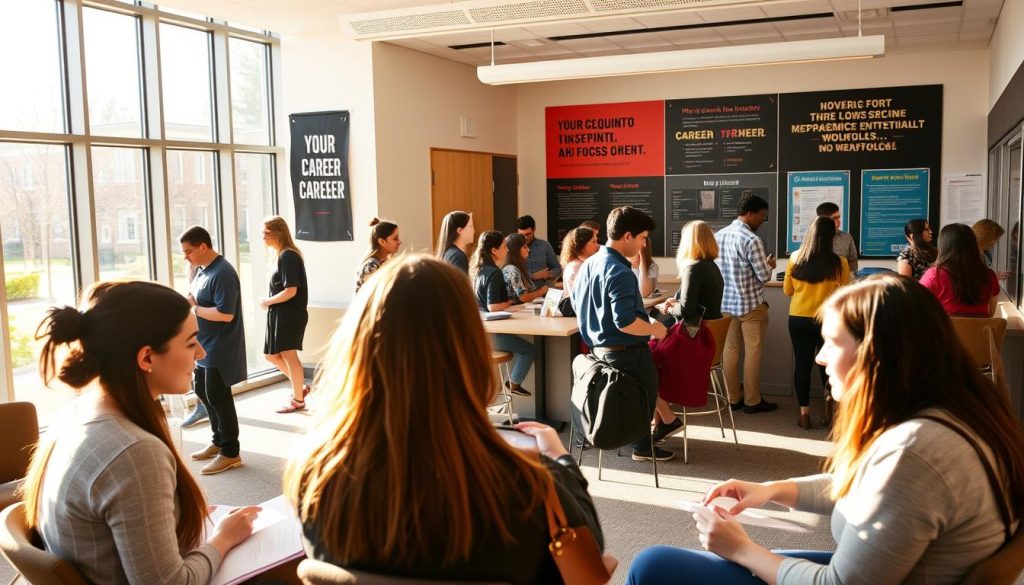
Resources Available at My School
My school has many resources for career development. There’s career counseling for personalized advice and job search assistance to find jobs that fit my skills and interests.
Workshops and Resume Review Services
The career services department hosts workshops on topics like resume building and interview prep. These workshops have been key in improving my job search skills. Also, the resume review service gives me expert feedback to make my resume stand out.
Career Fairs and Job Placement Assistance
One of the best things about my university’s career services is the career fairs. They let me meet employers directly. It’s a great chance to learn about companies and roles. Plus, the job placement assistance program has helped me find jobs I wouldn’t have found otherwise.
By using these resources, I’ve improved my career chances a lot. I suggest that other new graduates check out the career services at their schools. It can really help them stand out in the job market.
Embracing a Growth Mindset
Having a growth mindset has changed how I see challenges. It’s about seeing them as chances to grow and improve. This mindset is key for success in my career.
A growth mindset isn’t just being positive. It’s about being ready to learn and bounce back from tough times. It shows that our skills can grow with effort and hard work.
Understanding Resilience in Job Searches
Resilience is crucial when looking for a job. It helps us deal with rejections and keep moving forward. It’s about staying motivated to reach our career goals.
To be resilient, I mix job searching with learning new skills and taking care of myself. This mix keeps me energized and focused.
| Resilience Strategies | Benefits |
|---|---|
| Setting realistic goals | Boosts motivation and focus |
| Practicing self-care | Enhances mental and physical well-being |
| Seeking support networks | Provides emotional support and valuable advice |
Learning from Rejections
Rejections are a normal part of job hunting. Instead of getting down, I see them as chances to learn and get better.
After a rejection, I think about the interview. I look for ways to improve for next time. This helps me get better at interviews.
“Success is not final, failure is not fatal: It is the courage to continue that counts.” – Winston Churchill
Celebrating Small Wins
Celebrating small victories keeps me going during job hunting. It shows me I’m making progress, no matter how small. It keeps me motivated to keep going.
Small wins for me include finishing a tough project or making a new professional friend. Even positive feedback on my resume or interview is a win.

By adopting a growth mindset, being resilient, learning from setbacks, and celebrating small victories, I’m ready to face job market challenges. I’m on my way to success in my chosen career.
Considering Graduate Education
Many fresh graduates wonder if they should go for graduate school. As I look at my career, I think about how more education can help me grow.
Benefits of Further Education for My Career
Getting a graduate degree can really boost my career. The World Economic Forum says that by 2022, many jobs will need skills we don’t have yet.
“The Future of Work: Trends and Challenges for the 21st Century” by the World Economic Forum, “By 2022, more than a third of the desired skills for most jobs will be comprised of skills that are not yet considered crucial to the job today.”
This shows how important it is to keep learning and getting better at skills.
Some big pluses include:
- Deeper knowledge and focus in my field
- Better job chances and higher pay
- Chances to meet new people in my field
Weighing the Costs vs. Benefits
Thinking about graduate school means looking at the money side and the benefits. Here’s a quick look:
| Costs | Benefits |
|---|---|
| Tuition and living costs | More money in the future |
| Missing out on other chances | More skills and knowledge |
| Debt from loans | Networking and moving up in my career |
Selecting the Right Graduate Program
Picking the right graduate program takes some thought. It’s about the program’s standing, what it teaches, and if it fits my career goals. Dr. Jane Smith, a career advisor, says, “Look into things like if it’s accredited, the teachers’ skills, and how well its graduates do.”
Things to think about include:
- How well-known the program is and if it’s accredited
- What it teaches and if it matches my goals
- The teachers’ skills and if there are chances to do research

Exploring Alternative Career Paths
Exploring different career paths can change your life as a new graduate. I found out that there’s more to success than just a 9-to-5 job.
Non-Traditional Job Opportunities for Graduates
New job opportunities are popping up everywhere. They give graduates a chance to think differently. Some of these include:
- Remote work positions that offer flexibility and work-life balance
- Project-based jobs that allow for diverse experiences
- Social enterprises that focus on creating social impact
These jobs let me use my skills in new ways. They also let me explore different industries and roles.
Entrepreneurship as a Career Option
Entrepreneurship is another path I’m looking into. Starting my own business lets me:
- Pursue my passion and turn it into a career
- Create innovative solutions to real-world problems
- Be my own boss and have control over my career trajectory
But, it’s important to think about the downsides. This includes the financial risks and the need for a solid business plan.
Freelancing: Pros and Cons
Freelancing is another option that offers flexibility and freedom. The good things about freelancing are:
- The ability to choose projects that align with my interests and skills
- Flexibility in work schedule and location
- Opportunity to work with diverse clients and build a professional network
But, freelancing also has its downsides, such as:
- Inconsistent income and the need for continuous marketing
- Lack of benefits and job security
- The need to be disciplined and manage time effectively
Knowing the pros and cons helps me decide if freelancing is right for me.
Developing a Personal Brand
In today’s digital world, having a strong personal brand is key for new graduates. It helps them leave a lasting impression. A well-built personal brand can boost your visibility to employers and open new doors.
Curating My Online Presence
First, I focus on my online presence. This means making sure my social media, especially LinkedIn, looks professional. I use a professional photo, a clear headline, and detailed descriptions of my skills.
Key aspects of my online presence include:
- A professional LinkedIn profile
- Consistent branding across all social media platforms
- Engagement with industry-related content
Creating a Professional Website or Portfolio
Having a professional website or portfolio is also key. It lets me showcase my work and skills to employers. My website is easy to use, looks good, and gets updated often.
A well-designed website can make a big difference in how employers see me.
| Feature | Description | Benefit |
|---|---|---|
| Professional Design | A clean and modern design that reflects my personal brand | Enhanced credibility |
| Portfolio Showcase | A showcase of my best work and achievements | Demonstrated skills and experience |
| Regular Updates | Regularly updated content to keep visitors engaged | Increased visibility and relevance |
Consistency Across Social Media Platforms
Keeping my social media profiles consistent is crucial. I make sure they match in branding, tone, and content. This helps build a strong professional identity and makes me easier to recognize.
By focusing on these areas, I build a strong personal brand. This supports my career goals and helps with professional growth after college. Building a good resume is also important for this process.
Setting Career Goals for Success
Setting clear goals is key to success in my career. It helps me stay focused and move towards my dreams.
Defining Short-Term and Long-Term Objectives
I start by setting both short-term and long-term goals. Short-term goals might be acing my first job interview or getting a certification. Long-term goals could be becoming a leader or starting my own business.
Creating an Action Plan
After setting my goals, I make an action plan. I break down big goals into smaller tasks. I also find the resources I need, like mentorship or online courses.
Tracking Progress
It’s important to track my progress regularly. This way, I can see how I’m doing and make changes if needed. It helps me stay on track and focused on my career goals.