Effortless Budgeting Tips and Tricks to Take Control of Your Money

Managing your finances effectively is more crucial than ever, especially with the rising costs of living. Creating a budget is an essential step in taking control of your money and achieving financial stability.
A budget is not just about restricting your spending; it’s a powerful tool that helps you understand where your money goes and make informed decisions about your financial habits. By making a plan, you can allocate your income wisely, save on unnecessary expenses, and build savings over time.
Getting started with budgeting doesn’t require complex math skills or special tools. It’s about being mindful of your financial decisions and finding a way to manage your money that works for you.
Key Takeaways
- Understand the importance of budgeting in managing your finances.
- Learn how to track your income and expenses effectively.
- Discover simple budgeting methods that suit your lifestyle.
- Find out how to allocate your money wisely for savings and expenses.
- Get tips on maintaining your budget over time.
Why Budgeting Is Essential for Financial Control
Taking control of your finances starts with understanding the importance of budgeting. A well-crafted budget serves as a roadmap for your financial decisions, helping you navigate your monetary landscape with clarity and purpose.
The Benefits of Creating a Budget
Creating a budget provides a clear picture of your financial situation, enabling you to determine if you’re living within your means. By doing so, you can identify areas where you can cut back on unnecessary expenses and allocate that money towards more important financial goals. A budget helps prevent debt accumulation by ensuring you don’t spend more than you earn each month. It also fosters financial awareness, leading to better spending decisions and reduced financial stress.
How Budgeting Helps During Financial Challenges
Budgeting is particularly valuable during financial challenges such as unexpected bills, income reduction, or economic downturns. By having a budget, you can prepare for irregular expenses and emergencies by building appropriate savings. This proactive approach ensures that you’re not caught off guard by financial shocks, allowing you to maintain control over your finances even in uncertain times.
Ultimately, budgeting is not about restriction but about making intentional choices with your money. By prioritizing your financial goals and allocating your resources accordingly, you can achieve a more stable and secure financial future.
Getting Started: How to Create a Budget That Works
The first step towards managing your money effectively is to create a budget that suits your needs. To achieve this, you need to start by gathering your financial information.
Gathering Your Financial Information
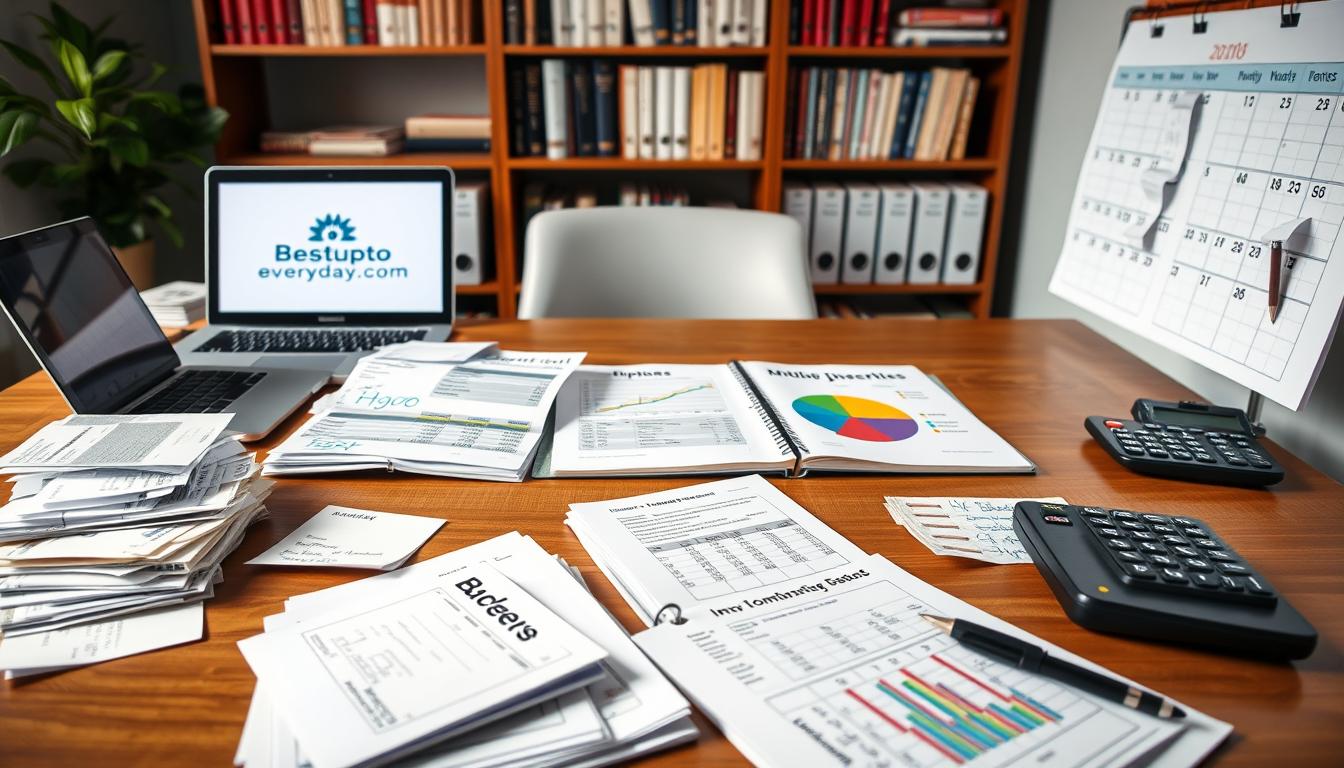
Before drawing up your monthly budget, it’s essential to gather your bank statements, payslips, receipts, and bills together. This will provide a solid foundation for creating an accurate financial picture. Having all your financial documents in one place will help you understand your spending habits and identify areas where you can cut back.
Using digital tools like spreadsheets or budgeting apps can help you organize your financial information efficiently. These tools enable you to categorize your expenses, track your spending, and make adjustments as needed.
Calculating Your Total Monthly Income
To create a realistic budget, you need to calculate your total monthly income. This includes your take-home pay, any benefits you receive, and pension income. Make sure to include all sources of income, such as side hustles and investment returns, to get an accurate picture of your financial situation.
Tracking Your Monthly Expenses
Tracking your monthly expenses is crucial to creating a budget that works. Start by categorizing your expenses into fixed expenses (rent, utilities, loan payments) and variable expenses (groceries, entertainment, clothing). Be sure to account for irregular expenses like annual insurance premiums or holiday spending by dividing them into monthly amounts.
Reviewing at least three months of spending will help you identify patterns and get a realistic view of your expenses. Being honest and thorough when tracking your expenses is vital to creating an accurate financial picture.

The Step-by-Step Budget Creation Process
The key to successful budgeting lies in a straightforward, three-step process. By following these steps, you can create a budget that not only helps you manage your finances effectively but also aids in achieving your long-term financial goals.
Step 1: List All Income Sources
Begin by compiling a comprehensive list of all your income sources. This includes your regular paychecks, any freelance work, benefits, and passive income streams such as dividends or rental income. Calculating your total monthly income is crucial as it forms the basis of your budget. Ensure you account for any irregular income by averaging it out over the year.
- Regular paychecks
- Freelance work
- Benefits
- Passive income streams (dividends, rental income)
Step 2: Categorize Your Expenses
Next, categorize your expenses into three main categories: essential expenses, financial goals, and discretionary spending. Essential expenses include housing, utilities, food, and transportation. Financial goals encompass debt repayment and savings. Discretionary spending includes entertainment, dining out, and hobbies. This categorization helps in understanding where your money is going and identifying areas for potential cutbacks.

- Essential expenses (housing, utilities, food)
- Financial goals (debt repayment, savings)
- Discretionary spending (entertainment, dining out)
Step 3: Balance Your Budget
Finally, balance your budget by comparing your total income against your total expenses. If your expenses exceed your income, you need to make adjustments. Start by reducing discretionary spending. Any surplus income should be allocated towards your financial goals, such as building an emergency fund or paying off debt. Regularly reviewing and adjusting your budget is crucial as your income, expenses, and financial goals change over time.
- Compare total income and total expenses
- Reduce discretionary spending if necessary
- Allocate surplus income towards financial goals
By following these three steps and regularly reviewing your budget, you can ensure that you are making the most of your money and moving closer to your financial goals.
Effective Budgeting Methods to Try
Effective budgeting is the cornerstone of financial health, and there are various approaches to suit different needs and preferences. By understanding and implementing the right budgeting method, you can take control of your finances and achieve your financial goals.
The 50/30/20 Rule

The 50/30/20 rule is a straightforward budgeting method where you allocate 50% of your income towards essential expenses like bills and rent, 30% towards discretionary spending or wants, and 20% towards savings and debt repayment. This method helps in maintaining a balance between spending and saving.
The Envelope System

The envelope system is a tangible way to manage your expenses by dividing your spending into categories such as food, travel, and entertainment. You allocate a specific amount of cash to each category, helping you stick to your budget and avoid overspending.
Zero-Based Budgeting

Zero-based budgeting involves assigning every dollar of your income a job, whether it’s for bills, savings, or spending. The goal is to have your entire budget add up to zero, ensuring that every dollar is working towards your financial objectives.
Reverse Budgeting

Reverse budgeting, or “pay yourself first,” prioritizes your savings goals by setting aside money for them before allocating funds to other expenses. This method ensures that you focus on building your savings and achieving your long-term financial goals.
Different budgeting methods work for different people, and it’s essential to find the approach that best suits your financial habits, goals, and preferences. You may also consider combining elements from multiple methods to create a personalized budgeting strategy that works best for you.
Practical Tips to Stick to Your Budget
To achieve financial stability, it’s crucial to not only create a budget but also stick to it. This requires a combination of the right strategies and tools. By implementing a few practical tips, you can ensure that your budget works for you, not against you.
Automating Your Bills and Savings
One effective way to stick to your budget is by automating your bills and savings. Setting up Direct Debits and standing orders can help you pay bills on time, avoiding late payment fees and extra interest charges. Additionally, automating your savings by transferring money from your bank account to your savings account each month can help you achieve your financial goals faster.
Using Budgeting Apps and Tools
Utilizing budgeting apps and tools can simplify tracking your expenses, categorizing your spending, and monitoring your progress toward your financial goals. Some of the best budgeting apps in the UK include Money Dashboard, YNAB (You Need a Budget), and Starling Bank. These apps offer features such as automated expense tracking, budgeting, and savings goals.

Regularly Reviewing and Adjusting Your Budget
It’s essential to regularly review your budget to assess what’s working and what isn’t. This could be done monthly or quarterly, depending on your financial situation. By making necessary adjustments, you can ensure that your budget remains aligned with your financial goals.
Setting Realistic Financial Goals
Setting SMART (Specific, Measurable, Achievable, Relevant, Time-bound) financial goals can motivate you to stick to your budget. Whether it’s saving for a big purchase, paying off debt, or building an emergency fund, having clear goals in place can help you stay focused and committed to your budget.
Tackling Common Budgeting Challenges
Effective budgeting requires tackling common challenges head-on. Budgeting is not a one-size-fits-all solution; it demands flexibility and adaptability to various financial situations.
Dealing with Irregular Income
Managing finances with irregular income can be challenging. To mitigate this, calculate your minimum monthly expenses and save during higher-income periods. This way, you can ensure a stable financial foundation.
For example, if you’re a freelancer, you can set aside a portion of your income during busy months to cover expenses during slower periods.
Managing Unexpected Expenses
Unexpected expenses, such as car repairs or medical bills, can derail your budget. Building and maintaining an emergency fund is crucial to handle such expenses.
A good rule of thumb is to save 3-6 months’ worth of expenses in your emergency fund. This fund will help you avoid going into debt when unexpected expenses arise.
| Expense Type | Average Cost | Emergency Fund Allocation |
|---|---|---|
| Car Repairs | $500 | 10% |
| Medical Bills | $1000 | 20% |
| Other Expenses | $500 | 10% |
Avoiding the Debt Spiral
A debt spiral occurs when you consistently spend more than you earn and need to borrow to cover your costs. To avoid this, prioritize debt repayment and avoid new debt.
“The key to avoiding a debt spiral is to be mindful of your spending and make conscious financial decisions.”
Consider consolidating your debts into a lower-interest loan or credit card, and make timely payments to avoid further financial strain.

Conclusion: Taking Control of Your Financial Future
Budgeting might seem daunting at first, but with the right approach, it becomes a powerful tool for managing your money. By creating a budget, you gain clarity on your financial situation, enabling you to make informed decisions about your savings and spending. The key benefits of budgeting include improved financial control, reduced debt, and increased savings over time.
To get started, begin with small steps, focusing on one aspect of budgeting at a time. Remember, budgeting is a personal process that can be tailored to fit your individual financial goals and situation. The ultimate goal isn’t restriction but achieving financial freedom and reducing money stress. By taking control of your finances, you open up more opportunities and choices for the future.
Even small budgeting efforts can lead to significant financial improvements over time. So, start your budgeting journey today and watch your financial health improve.
FAQ
What’s the best way to track my monthly expenses?
You can track your monthly expenses by gathering bank statements, credit card statements, and receipts, then categorizing them into needs, wants, and debt payments. You can also use budgeting apps like Mint or Personal Capital to make it easier.
How do I calculate my total monthly income?
To calculate your total monthly income, add up all your income sources, including your salary, investments, and any side hustles. Make sure to include any irregular income, such as freelance work or bonuses, by averaging it out over the year.
What’s the 50/30/20 rule in budgeting?
The 50/30/20 rule is a budgeting method that allocates 50% of your income towards necessary expenses like rent and utilities, 30% towards discretionary spending, and 20% towards saving and debt repayment.
How can I avoid credit card debt?
To avoid credit card debt, pay your balance in full each month, and avoid overspending. You can also set up automatic payments to ensure you never miss a payment. Consider using a credit card with a 0% interest rate or a rewards program that aligns with your spending habits.
What’s zero-based budgeting, and how does it work?
Zero-based budgeting is a method where you allocate every dollar of your income towards a specific category, ensuring that your income minus expenses equals zero. This approach helps you account for every dollar and make intentional financial decisions.
How often should I review and adjust my budget?
You should review and adjust your budget regularly, ideally every few months, to ensure you’re on track with your financial goals. Adjust your budget as your income, expenses, or financial goals change.
What’s the best way to save for unexpected expenses?
To save for unexpected expenses, build an emergency fund by setting aside 3-6 months’ worth of living expenses in a readily accessible savings account. This fund will help you cover unexpected costs, such as car repairs or medical bills.
Can I use a budgeting app to track my expenses and stay on top of my finances?
Yes, you can use a budgeting app like You Need a Budget (YNAB) or Quicken to track your expenses, create a budget, and set financial goals. These apps can help you stay on top of your finances and make informed financial decisions.




Thanks for sharing. I read many of your blog posts, cool, your blog is very good. https://www.binance.info/register?ref=JW3W4Y3A
Thank you for your sharing. I am worried that I lack creative ideas. It is your article that makes me full of hope. Thank you. But, I have a question, can you help me?
Спасибо за разбор дозировок жаропонижающих, а то вечно
путаюсь в этих миллилитрах.
https://gerds-wissen.online/index.php/Vracha_Na_Dom
Thank you for your sharing. I am worried that I lack creative ideas. It is your article that makes me full of hope. Thank you. But, I have a question, can you help me?