Lifetime Fitness: A simple Guide to Staying Healthy, Active, and Strong for Life

Lifetime fitness is about building healthy habits that support your body and mind throughout every stage of life. Instead of focusing only on short-term weight loss, physical appearance, or temporary workout goals, it encourages people to stay active, eat balanced meals, get enough rest, and make choices that support long-term well-being. Lifetime Fitness A simple Guide to Staying Healthy, Active, and Strong for Life.
Many people begin exercising because they want to lose weight, gain muscle, or improve their appearance. These can be useful goals, but lasting fitness involves much more. It also means having enough energy for everyday activities, maintaining strength and mobility, managing stress, and developing a healthier relationship with your body.
The good news is that lifetime fitness does not require an expensive gym membership or complicated training program. Simple activities such as walking, cycling, stretching, dancing, and exercising at home can help you develop a more active lifestyle.
This guide explains what lifetime fitness means, why it matters, which habits support long-term health, and how beginners can create a realistic fitness routine. Lifetime Fitness A simple Guide to Staying Healthy, Active, and Strong for Life.
What is lifetime fitness?

It focuses on consistency, personal well-being, and adapting exercise routines to changing needs as people grow older.
Unlike a short fitness challenge, lifetime fitness does not have a fixed finishing date. It is an ongoing commitment to taking care of your body and supporting your overall quality of life.
For example, a person might begin with a ten-minute daily walk, gradually increase their activity, and later add strength exercises or cycling. As their schedule, fitness level, or physical abilities change, they can adjust their routine without abandoning physical activity altogether.
The main idea is simple: choose healthy habits that you can maintain, rather than following an extreme routine that becomes difficult to continue. Lifetime Fitness A simple Guide to Staying Healthy, Active, and Strong for Life.
Why is lifetime fitness important?
Maintaining an active lifestyle can support many aspects of physical and mental well-being. The benefits depend on a person’s health, activity level, and consistency, but regular movement is an important part of long-term health. Lifetime Fitness A simple Guide to Staying Healthy, Active, and Strong for Life.
1.Supports heart health
Activities such as brisk walking, swimming, cycling, and dancing challenge the cardiovascular system. When performed regularly at an appropriate intensity, aerobic exercise can improve cardiovascular fitness and help support healthy blood pressure.
Staying active can also reduce the risk of several chronic health conditions. People who have existing health problems should choose activities suitable for their circumstances and seek professional guidance when necessary. Lifetime Fitness A simple Guide to Staying Healthy, Active, and Strong for Life.
2.helps maintain muscle strength
Muscles are important for everyday tasks, including carrying groceries, climbing stairs, lifting objects, and getting up from a chair.
Strength exercises help maintain muscle function and make daily activities easier. Beginners can start with suitable bodyweight movements, resistance bands, or light weights before gradually increasing difficulty.
The goal is not necessarily to develop large muscles. It is to maintain the strength needed for an active and independent life. Lifetime Fitness A simple Guide to Staying Healthy, Active, and Strong for Life.
3.Improves mobility and balance
Mobility refers to the ability to move comfortably through everyday activities. Balance helps people control their bodies while standing, walking, and changing direction.
Walking, gentle stretching, balance exercises, and appropriate strength training can help support these abilities. They become particularly valuable as people age.
Exercise should always be adjusted to individual ability. Anyone who has frequent falls, significant balance problems, or movement-related pain should consult a qualified healthcare professional before attempting challenging exercises. Lifetime Fitness A simple Guide to Staying Healthy, Active, and Strong for Life.
4.supports mental well being
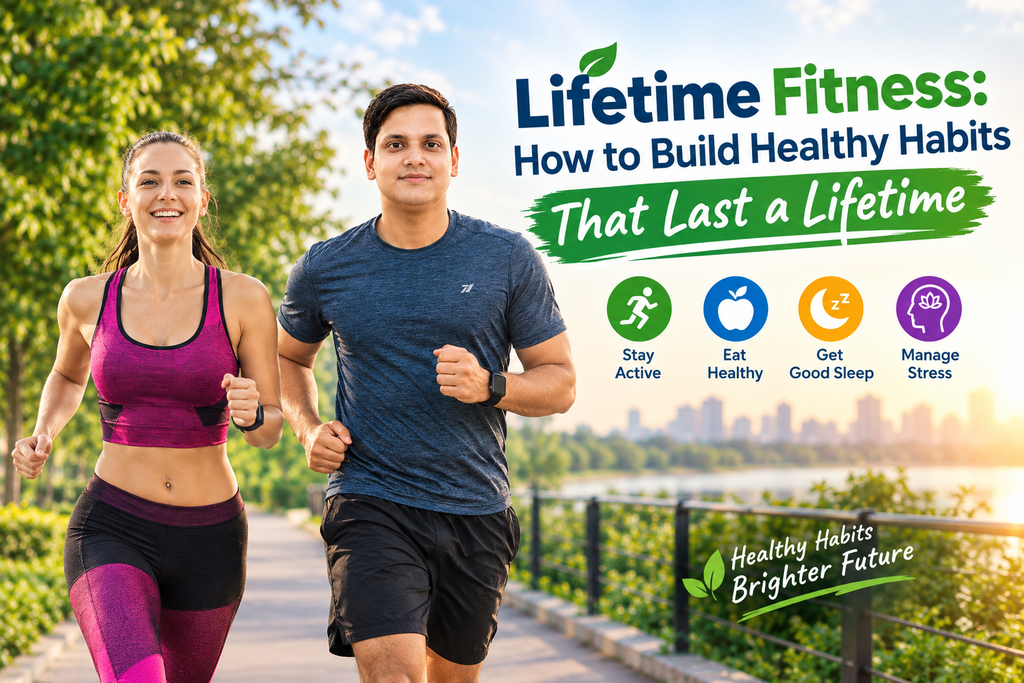
Physical activity can help improve mood, reduce feelings of stress, and support better sleep. Some people also find that exercise provides a useful break from work, study, and daily responsibilities.
A walk outdoors, a short home workout, or a recreational sport can become a healthy way to manage everyday pressure.
Exercise is not a replacement for professional mental health care, but it can be one useful part of a broader approach to well-being. Lifetime Fitness A simple Guide to Staying Healthy, Active, and Strong for Life.
5.Encourages long term independence
Being physically capable helps people manage many ordinary responsibilities. Maintaining strength, endurance, coordination, and mobility can make it easier to participate in family activities, travel, hobbies, and community life.
Lifetime fitness is therefore not only about improving athletic performance. It is also about preserving the ability to do meaningful activities as life changes.
The main components of lifetime fitness
A balanced approach to fitness includes several different physical abilities. Focusing on only one area may leave other important needs unaddressed.
Cardiovascular endurance
Cardiovascular endurance is the ability to sustain physical activity while the heart and lungs supply oxygen to working muscles.
Examples include:
- Brisk walking
- Cycling
- Swimming
- Dancing
- Jogging at a suitable pace
Beginners do not need to run long distances to start improving their endurance.
Muscular strength
Muscular strength is the ability of a muscle or group of muscles to produce force. It supports everyday movements and helps people perform physical tasks.
Examples of strength exercises include:
- Chair squats
- Wall push-ups
- Resistance-band exercises
- Light dumbbell exercises
- Suitable lifting and carrying activities
Learn proper technique before increasing resistance. Good form and gradual progress are more useful than lifting weights that are too heavy. Lifetime Fitness A simple Guide to Staying Healthy, Active, and Strong for Life.
Muscular endurance
Muscular endurance describes the ability of muscles to continue working during repeated movements or sustained activity.
For example, repeatedly standing up from a chair or performing controlled bodyweight exercises challenges muscular endurance.
Developing this ability can make routine tasks feel less tiring. Training should still allow adequate recovery between demanding sessions. Lifetime Fitness A simple Guide to Staying Healthy, Active, and Strong for Life.
Flexibility and mobility
Flexibility refers to the range through which muscles and joints can move, while mobility also involves controlling movement through that range.
Gentle stretching and controlled movement can help maintain comfortable movement. Avoid forcing a stretch or continuing through sharp pain. Lifetime Fitness A simple Guide to Staying Healthy, Active, and Strong for Life.
Balance and coordination
Being able to stay steady and control your movements makes many everyday activities easier. Balance helps you maintain a stable position, while coordination allows different parts of your body to work together smoothly.
You can practice these skills through simple movements such as standing on one foot while holding a sturdy support, changing direction while walking, dancing, or participating in suitable recreational activities. If you feel unsteady, begin with exercises that provide reliable support and avoid movements that could cause a fall.
Building a Long-Term Fitness Habit for a Healthier Life
Long-term fitness is not about following an intense program for a short period. It is about finding a realistic way to stay active that can fit into your daily life as your needs and responsibilities change.
Step 1:Evaluate your existing skills and knowledge
Take a moment to consider how much movement you currently get, how much time you can dedicate to exercise, and which activities are appropriate for your physical condition.
If you have spent a long time sitting or doing very little exercise, begin with short, comfortable sessions. For example, you could start with a brief walk and extend it as your endurance improves. If you already exercise regularly, you may be able to begin at a higher level that matches your experience.
People who have ongoing pain, long-term medical conditions, or concerns about exercising safely should consult a qualified healthcare professional before making significant changes to their routine. Lifetime Fitness A simple Guide to Staying Healthy, Active, and Strong for Life.
Step 2: choose physical activities that fit your daily routine

A fitness routine becomes easier to maintain when it feels enjoyable rather than like another unwanted responsibility. You do not need to imitate a celebrity’s workout or choose an activity simply because it is popular.
You might explore options such as:
- Taking regular walks with a friend or relative
- Cycling in an appropriate, safe area
- Playing badminton for recreation
- Doing gardening and other active outdoor tasks
- Moving or dancing to music you like
- Practicing simple exercises at home
Your choice should reflect your available time, budget, surroundings, and physical abilities. A modest activity that fits your lifestyle is often a more practical starting point than a demanding routine you struggle to enjoy. Lifetime Fitness A simple Guide to Staying Healthy, Active, and Strong for Life.
Step 3: Turn big ambitions into manageable targets
Starting a fitness routine can feel overwhelming if you try to transform your entire lifestyle overnight. Instead of making too many changes at the same time, focus on a few manageable steps that fit your daily schedule. Small, consistent efforts can help you develop healthier habits, stay motivated, and gradually move closer to your long-term fitness goals.
For example, you could plan a short walk several times a week. After this becomes a comfortable habit, gradually extend the walking time or introduce another activity that suits your needs.
Other people’s fitness levels are not a reliable measure of your progress because everyone has different circumstances, experience, and physical abilities. Lifetime Fitness A simple Guide to Staying Healthy, Active, and Strong for Life.
Step 4:Give your body different kinds of movement
A varied exercise routine can help you develop several aspects of physical fitness instead of concentrating on just one.
Aerobic activities support endurance, strength exercises help maintain muscle function, and suitable balance and flexibility movements can improve body control and mobility.
According to general World Health Organization guidance, adults should aim for around 150–300 minutes of moderate-intensity aerobic activity per week, or an equivalent amount of vigorous activity. Muscle-strengthening exercises involving the major muscle groups are also recommended on at least two days each week.
Treat these figures as a longer-term goal rather than something you must achieve immediately. If you are new to exercise, begin with an amount you can manage and increase it progressively. Lifetime Fitness A simple Guide to Staying Healthy, Active, and Strong for Life.
Step 5: Connect exercise with your everyday activities

You are more likely to follow a routine when it works with your existing schedule.
Consider walking before starting work, stretching after a period of studying, or setting aside a short period for home exercises. Choosing a regular time can make physical activity feel like a natural part of your day.
Some days will be busier than others, and you may occasionally miss a planned session. Instead of feeling discouraged, return to your routine when circumstances allow. A missed workout does not mean you have lost all the progress you made. Lifetime Fitness A simple Guide to Staying Healthy, Active, and Strong for Life.
Step 6: Measure improvement in practical ways
Fitness progress is not limited to changes on a weighing scale. You may discover that climbing stairs feels easier, you can walk for longer without becoming as tired, or everyday tasks require less effort.
To understand how your habits are developing, keep a simple record of:
- The activities you practice each week
- How long you remain physically active
- The exercises you complete
- Changes in your energy and recovery
- Milestones that matter to you personally
Review your notes occasionally and make changes when necessary.
A flexible weekly exercise example for beginners
Planning different activities across the week can help you avoid doing the same type of exercise every day. The following example offers a basic structure that you can adjust according to your fitness level and available time.
Monday — Gentle aerobic activity: Take a comfortable walk and finish with a few easy mobility movements.
Tuesday — Strength practice: Try a brief session using suitable bodyweight exercises that work different muscle groups.
Wednesday — Enjoyable movement: Choose walking, cycling, or another aerobic activity you find comfortable.
Thursday — Light activity: Spend some time stretching, practising gentle mobility exercises, or enjoying a relaxed recreational activity.
Friday — Strength practice: Complete another manageable strength session, allowing for adequate recovery between workouts.
Saturday — An activity you enjoy: Consider swimming, dancing, cycling, a longer walk, or an appropriate sport.
Sunday — Recovery: Rest or choose gentle movement depending on your energy, comfort, and recovery needs.
This example is not a fixed prescription. A beginner may need shorter sessions or additional rest, while someone with more experience may prefer a different arrangement. Adjust the plan to suit your needs rather than forcing yourself to follow it exactly.
How nutrition supports long term fitness
Exercise alone cannot provide everything your body needs for a healthy lifestyle. Your daily food choices supply energy and nutrients that support movement, recovery, and normal bodily functions.
Build meals around a variety of foods
Rather than relying on a narrow selection of foods, aim for a balanced eating pattern that includes vegetables, fruit, whole grains, protein sources, and suitable foods containing unsaturated fats.
Depending on your preferences and what is available, everyday meals might include rice, lentils, eggs, fish, beans, vegetables, fruit, and milk or suitable alternatives. Lifetime Fitness A simple Guide to Staying Healthy, Active, and Strong for Life.
Your nutritional needs may differ according to your health, activity level, culture, and personal circumstances. There is no single meal plan that works equally well for every individual, so focus on a balanced approach that you can maintain.
Make drinking water a regular habit
Water supports temperature regulation and many other processes throughout the body. The amount you need depends on several factors, including the climate, your activity level, and your individual health needs.
Drink fluids regularly during the day and pay attention to thirst. Physical activity in hot weather or for an extended period may increase your need for fluids.
Choose sustainable eating habits instead of extreme restrictions
Strict diets that remove too many foods or severely limit how much you eat can make it difficult to maintain energy and follow an active routine. Lifetime Fitness A simple Guide to Staying Healthy, Active, and Strong for Life.
A more practical approach is to eat balanced meals, choose suitable portions, and develop habits that fit your everyday life. If a medical condition requires specific dietary changes, seek advice from a qualified healthcare professional or registered dietitian.
Sleep and recovery: important parts of fitness
Physical activity places demands on your body, and recovery provides time for it to adapt. When rest is insufficient, you may feel more tired during exercise and notice changes in your concentration, mood, or performance.
Many adults need approximately seven to nine hours of sleep each night, although the right amount can vary from person to person. Lifetime Fitness A simple Guide to Staying Healthy, Active, and Strong for Life.
You can improve your body’s recovery by building a few healthy habits into your daily routine:
- Maintain a regular sleep schedule by going to bed and getting up at similar times each day.
- Give your muscles enough time to rest between challenging exercise sessions.
- Switch to gentle movement, such as easy walking or stretching, when you feel tired or need a break.
- Eat balanced, adequate meals to provide your body with the energy and nutrients it needs.
- Pay attention to unusual, severe, or increasing pain. Stop the activity rather than pushing through it, and seek medical advice when necessary.
Rest should be considered part of your fitness routine, not an interruption to it. A sensible balance between activity and recovery can make regular exercise easier to sustain.
Fitness habits that can hold you back
Recognizing common difficulties can help you approach exercise more realistically and develop habits that last. Lifetime Fitness A simple Guide to Staying Healthy, Active, and Strong for Life.
Looking for results too quickly
Physical improvements generally happen gradually. Expecting a dramatic transformation after only a few workouts can create unnecessary pressure.
Instead, concentrate on actions you can repeat, such as completing a planned walk or practising an exercise safely. Appearance and body weight are not the only ways to evaluate progress.
Increasing exercise before your body is ready
Adding too much distance, speed, duration, or resistance in a short period can leave you excessively sore and may increase your risk of injury. Lifetime Fitness A simple Guide to Staying Healthy, Active, and Strong for Life.
Choose a starting level that feels manageable and increase the challenge gradually. Stop and seek appropriate medical advice if you experience concerning symptoms such as sharp pain, dizziness, or unusual shortness of breath.
Using a routine that does not match your fitness level
An exercise plan designed for an experienced athlete may place unrealistic demands on a beginner.
Select activities that reflect your current abilities and learn unfamiliar movements carefully. A qualified instructor can help when an exercise requires particular technique or supervision.
Treating rest as unnecessary
More exercise is not always better. Your body needs recovery, and those needs can change according to workout intensity, health, age, and experience.
Including easier days in your schedule can help you manage fatigue and maintain a more consistent pattern of physical activity.
Allowing a short break to end your routine
Illness, work, travel, and family commitments can interfere with even a well-planned exercise schedule.
When this happens, avoid trying to make up for every missed session at once. Restart with an activity that feels comfortable and gradually return to your usual routine. Lifetime Fitness A simple Guide to Staying Healthy, Active, and Strong for Life.
Adapting your fitness habits as you age
Your exercise preferences, physical abilities, and recovery needs may change over the years. A useful fitness routine should be flexible enough to adapt to these changes.
In young adulthood: Focus on developing regular activity habits, learning safe techniques, and discovering forms of exercise that you genuinely enjoy.
In middle age: Try to maintain a suitable combination of aerobic movement, strength exercises, mobility work, and rest while managing professional and family responsibilities. Lifetime Fitness A simple Guide to Staying Healthy, Active, and Strong for Life.
In older adulthood: Give particular attention to activities that support strength, balance, flexibility, and independence in daily life. Depending on your abilities, this might include walking, appropriate resistance exercises, and balance practice with suitable support or supervision.
Age alone does not determine which exercise is right for you. Your medical history, physical abilities, previous injuries, and personal goals are also important when choosing activities.
You do not need to wait until you reach a particular age or fitness level before becoming more active. Beginning with small, appropriate steps can be useful at many stages of life.
How to make fitness a lasting part of your everyday life
Motivation is not always consistent. Instead of relying on enthusiasm every day, develop simple habits that make physical activity easier to continue. Lifetime Fitness A simple Guide to Staying Healthy, Active, and Strong for Life.
Reduce the effort needed to begin. Keep the items you need for exercise ready or choose a short activity that requires little preparation.
Use a regular reminder. Add movement to your daily schedule or connect it with an activity you already do consistently.
Pay attention to meaningful changes. Notice improvements in your energy, physical confidence, strength, or ability to complete everyday tasks. Lifetime Fitness A simple Guide to Staying Healthy, Active, and Strong for Life.
Adjust your plan when life changes. If your schedule, interests, or abilities shift, choose activities that fit your new circumstances.
Allow room for imperfect days. A healthy routine does not require you to exercise perfectly every day. Rest, schedule changes, and occasional breaks are normal parts of maintaining a long-term habit.
Conclusion
Lifetime fitness is not a short-term challenge or a demand to exercise intensely every day. It is a gradual approach to making movement and other supportive habits part of your everyday life. Lifetime Fitness A simple Guide to Staying Healthy, Active, and Strong for Life.
You can begin without expensive equipment or a complicated workout plan. Start with activities that suit your current abilities, choose nutritious foods, allow enough time for sleep and recovery, and set goals that are realistic for your circumstances.
A combination of aerobic movement, strength training, flexibility exercises, and appropriate rest can help you create a routine that develops alongside your changing needs. The best approach is one you can follow comfortably and adjust when necessary.
Choose one achievable action to begin with today. A short walk, a few gentle movements, or a simple change to your daily schedule can be the beginning of a more active lifestyle. Lifetime Fitness A simple Guide to Staying Healthy, Active, and Strong for Life.
Thank you for visiting BestUpToEveryday.com.