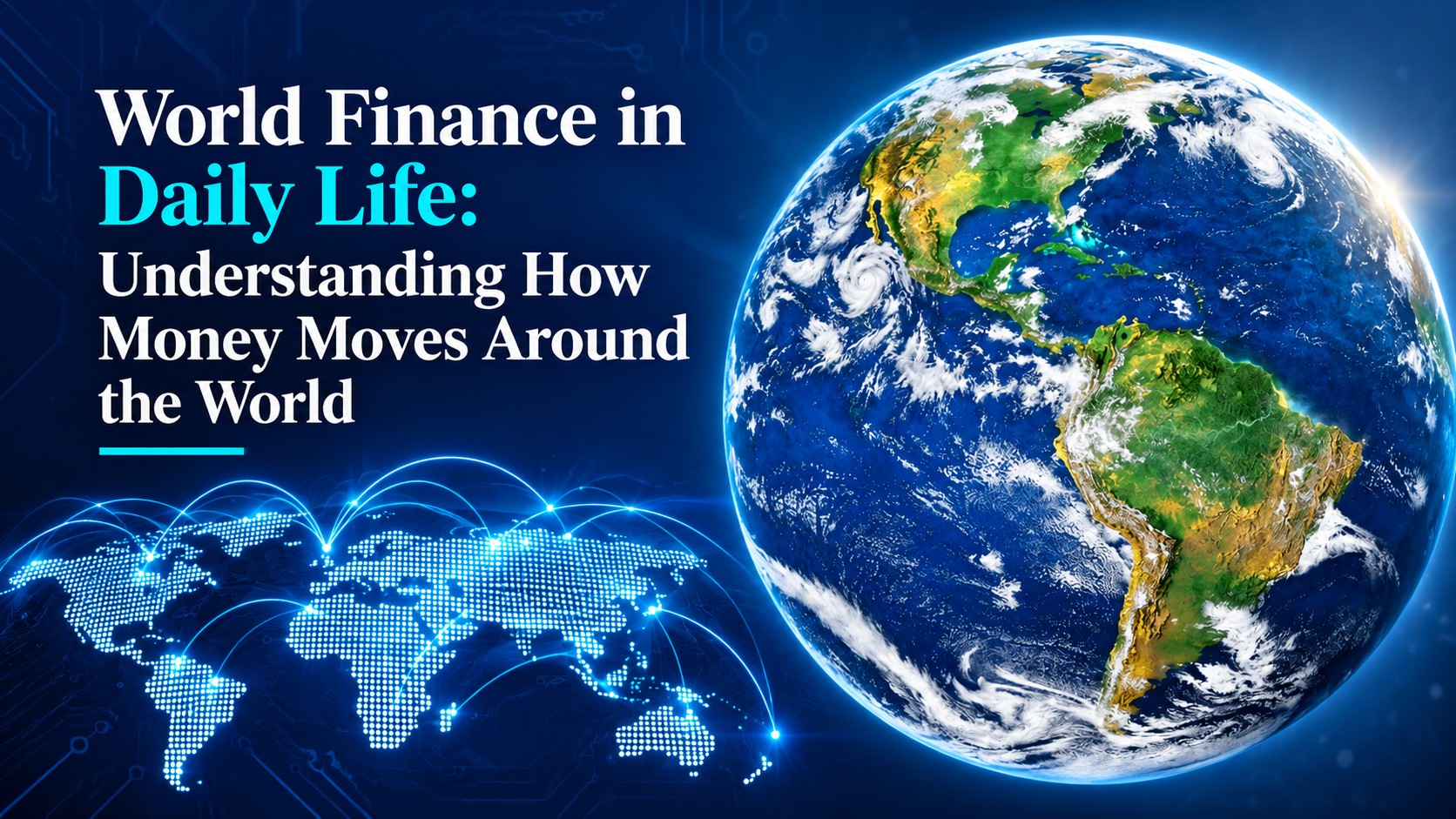
World Finance in Daily Life: Understanding How Money Moves Around the World

Introduction
Money moves across national borders every day, connecting businesses, governments, financial institutions, investors, and ordinary people. A company might purchase raw materials from another country, a student may pay tuition fees to an overseas university, or a family might receive money from a relative working abroad. Although these activities serve different purposes, they all depend on the global financial system. World Finance in Daily Life Understanding How Money Moves Around the World.
World finance refers to the financial relationships and activities that connect countries and economies. It includes international payments, currency exchange, cross-border investments, lending, borrowing, and the movement of money between financial markets. These activities allow countries to conduct business, help companies reach international customers, and create opportunities for economic development.
The influence of world finance extends far beyond banks and investment companies. Changes in international markets can affect the price of imported products, the cost of running a business, the availability of jobs, and the purchasing power of households.
This guide explains the fundamentals of world finance, explores its major components, and examines the opportunities and challenges created by an increasingly connected global economy. World Finance in Daily Life Understanding How Money Moves Around the World.
1.What is world Finance?
World finance is the system through which money, credit, investments, and financial risks move between countries. It provides the financial connections needed for international trade, business expansion, government borrowing, and economic cooperation. World Finance in Daily Life Understanding How Money Moves Around the World.
Consider a business that manufactures electronic devices in one country but purchases components from several others. The company must pay international suppliers, convert currencies when necessary, manage payment risks, and arrange financing for its operations. These activities are all connected to world finance.
The same system supports international investment. An investor may purchase shares in a foreign company, while a government may issue bonds that international investors can buy. Banks can also provide loans to companies operating in different markets.
World finance and the global economy work together, but each has a different focus. The global economy is concerned with how countries create products, provide services, exchange resources, and meet people’s needs. World finance looks at the financial side of these activities, including how money crosses borders, where businesses obtain funding, and how countries manage international payments and investments. These financial connections help turn economic plans into real activities, allowing businesses to operate internationally and countries to build stronger economic relationships.
In simple terms, the global economy describes how countries produce and exchange value, while world finance explains many of the financial mechanisms that make those exchanges possible. World Finance in Daily Life Understanding How Money Moves Around the World.
2. Understanding How the Global Financial Network Operates
The global financial system connects people and organizations that need money with those that have money available to invest or lend. It operates through banks, financial markets, payment networks, governments, and international institutions. World Finance in Daily Life Understanding How Money Moves Around the World.
Several processes help this system function.
International payments
Businesses and individuals frequently send money across borders. Importers pay overseas suppliers, companies compensate international service providers, and migrant workers send money to their families. World Finance in Daily Life Understanding How Money Moves Around the World.
Banks and payment service providers help process these transactions. Depending on the countries involved, the currencies used, and the payment method, transfers may require currency conversion and intermediary institutions.
Currency exchange
Different countries use different currencies. When a business earns revenue in one currency but pays its expenses in another, it may need to exchange money.
Currency exchange rates determine how much one currency is worth relative to another. These rates can change because of differences in interest rates, inflation, economic performance, investor expectations, and other factors.
Lending and borrowing
Governments, companies, and financial institutions sometimes borrow money from international lenders or investors. The funds may support infrastructure, business expansion, public services, or other activities. World Finance in Daily Life Understanding How Money Moves Around the World.
Borrowing can help finance productive investments, but it also creates repayment obligations. If a borrower earns revenue in one currency and owes debt in another, changes in exchange rates can increase the cost of repayment.
International investment
Investors can direct their money toward businesses, bonds, funds, and projects located in other countries. These investments may help companies obtain capital and allow investors to diversify their holdings.
However, international investment also involves risks, including political uncertainty, currency fluctuations, market volatility, and changes in regulations. World Finance in Daily Life Understanding How Money Moves Around the World.
Together, these activities form a financial network through which money supports economic activity across borders.
3.Major components of world finance
World finance consists of several interconnected areas. Each performs a different function, but changes in one area can influence the others.
International banking
International banks provide services such as cross-border payments, trade financing, foreign currency transactions, and loans to businesses operating in multiple countries.
For example, an exporter may use a bank to receive payment from a foreign customer. The bank may also help the exporter manage currency exposure or arrange financing while waiting for the payment to arrive. World Finance in Daily Life Understanding How Money Moves Around the World.
International banking makes it easier for companies to conduct business beyond their domestic markets.
Foreign exchange markets
The foreign exchange market, often called the forex market, is where currencies are exchanged. It supports international trade, tourism, investment, and financial transactions.
If a country’s currency loses value against another currency, imported products priced in that foreign currency may become more expensive for local buyers.
Businesses that depend heavily on imported materials may therefore face higher costs when exchange rates move against them.
International stock and bond markets
Stock markets allow investors to purchase ownership interests in companies. Bond markets allow governments and businesses to borrow money from investors under agreed terms.
When investors buy securities issued in another country, they participate in international capital markets. These markets can help companies raise money for expansion and give governments additional ways to finance public spending.
Nevertheless, investment returns are not guaranteed. Changes in economic conditions, interest rates, company performance, and investor confidence can cause financial assets to lose value. World Finance in Daily Life Understanding How Money Moves Around the World.
International trade finance
International trade often involves a gap between shipping products and receiving payment. Trade finance helps businesses manage this gap and reduce some of the risks associated with transactions between buyers and sellers in different countries. World Finance in Daily Life Understanding How Money Moves Around the World.
Common arrangements include letters of credit, documentary collections, and trade-related loans.
For a small exporter, appropriate trade financing can make it easier to accept orders from overseas customers without placing excessive pressure on day-to-day cash flow.
Foreign direct investment
Foreign direct investment, commonly known as FDI, occurs when a business or investor establishes a lasting interest in a business operation in another country.
Examples include opening a factory, establishing a local subsidiary, or acquiring a significant ownership interest in a foreign business. World Finance in Daily Life Understanding How Money Moves Around the World.
FDI can introduce capital, technology, management experience, and employment opportunities. Its overall effects depend on how investments are managed, local economic conditions, labor practices, and the benefits retained by the host country.
4. The role of central banks in world finance
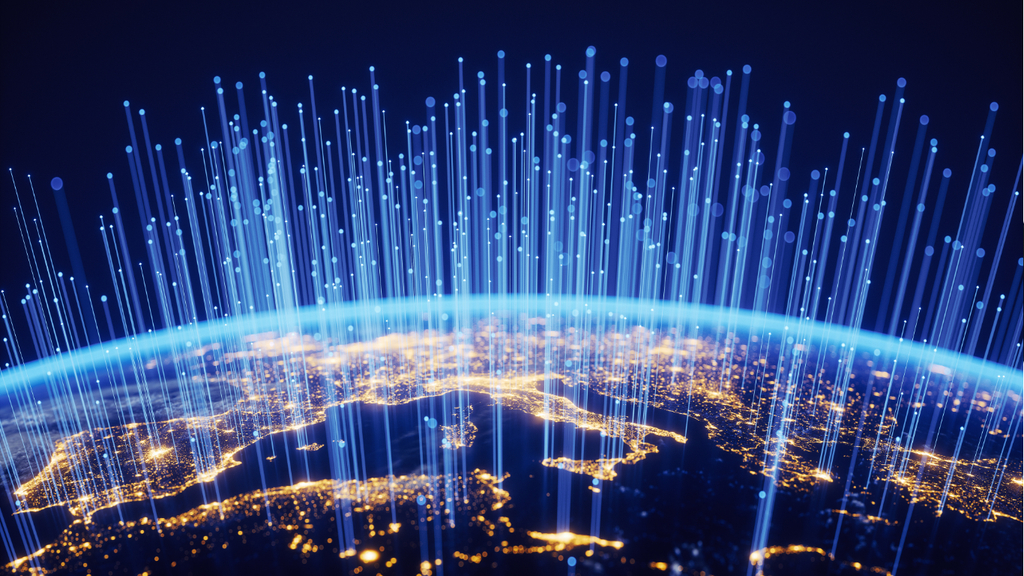
Central banks play an important role in their domestic financial systems, and their decisions can influence international markets. World Finance in Daily Life Understanding How Money Moves Around the World.
They generally work to maintain monetary and financial stability according to their legal responsibilities. Their tools may include setting policy interest rates, managing liquidity, regulating certain banking activities, and conducting monetary operations.
Interest rates are especially important because they influence the cost of borrowing and the potential return on savings and investments.
When a major central bank raises interest rates, some investors may find assets denominated in that country’s currency more attractive. Depending on market expectations and other conditions, this can influence currency values and the movement of international capital.
Lower interest rates may have different effects, potentially encouraging borrowing and investment while changing the relative appeal of financial assets.
Investors also consider inflation, economic growth, political developments, and expectations about future policy. World Finance in Daily Life Understanding How Money Moves Around the World.
5.How exchange rates affect everyday life
Currency exchange rates may seem relevant only to international traders, but they can affect ordinary households in several ways.
Imported products
When a country’s currency weakens against the currency used to purchase imports, foreign goods may become more expensive in local currency.
For example, a business importing machinery may have to pay more local currency to purchase the same equipment after an unfavorable exchange-rate movement. If the business cannot absorb the additional expense, it may increase its selling prices.
The final effect depends on factors such as supplier prices, shipping costs, taxes, competition, and the company’s pricing decisions.
Education and travel
Students paying tuition fees abroad may face higher expenses when their home currency loses value against the currency used by their university.World Finance in Daily Life Understanding How Money Moves Around the World.
Travelers can experience a similar effect. A budget that previously covered accommodation, transportation, and meals may no longer be sufficient if the exchange rate changes significantly.
Planning ahead and allowing room for currency fluctuations can help reduce financial surprises.
International remittances
The amount a recipient receives in local currency depends partly on the exchange rate and the fees charged by the transfer provider.
For countries with large overseas worker communities, remittances can be an important source of foreign currency and household income.
Business costs and employment
Companies that depend on imported raw materials, fuel, equipment, or software may be affected by currency movements.
If operating costs increase, a business may respond by changing prices, finding alternative suppliers, improving efficiency, or reducing other expenses. These decisions can influence hiring and investment.
Exchange-rate changes do not always produce negative outcomes. Exporters may become more competitive when their domestic currency weakens, depending on their cost structure and the currencies in which they receive payments. World Finance in Daily Life Understanding How Money Moves Around the World.
6.What is the international balance of payments?
The balance of payments is a record of economic transactions between residents of a country and the rest of the world over a particular period. World Finance in Daily Life Understanding How Money Moves Around the World.
It helps economists and policymakers understand how a country interacts financially with other economies.
The balance of payments includes several major categories.
Current account
Examples include exports and imports, payments for international services, certain investment income, and personal transfers.
If a country imports more goods and services than it exports, it may record a trade deficit in those categories. However, the broader current account also includes income and transfers, so the trade balance and current account balance are not necessarily identical.
Capital account
The capital account records certain capital transfers and transactions involving non-produced, non-financial assets. World Finance in Daily Life Understanding How Money Moves Around the World.
Although it is part of the balance of payments, it is generally smaller than the current and financial accounts in many economies.
Financial account
These may include direct investment, portfolio investment, financial derivatives, and other investment flows. World Finance in Daily Life Understanding How Money Moves Around the World.
Together, the accounts help show how a country’s international economic transactions are financed and how its financial relationships with the rest of the world change over time.
A current account deficit does not automatically mean that an economy is in crisis. Its significance depends on the reasons behind the deficit, the way it is financed, the productivity of the underlying economic activity, and the country’s ability to meet its external obligations.
7.International financial institutions and their functions
Several international institutions help countries address financial challenges, support development, and coordinate economic cooperation.
International monetary fund (IMF)
It monitors economic developments, provides policy advice, and offers financial assistance to eligible countries facing balance-of-payments difficulties.
IMF support can help a country address external financing pressures, but assistance may come with policy conditions intended to address the problems underlying the financial difficulties. World Finance in Daily Life Understanding How Money Moves Around the World.
The effects of these programs can vary, and their economic and social consequences are often debated.
World bank group
The World Bank Group works to reduce poverty and support development through financing, research, and advisory services.
Its activities include projects related to infrastructure, education, healthcare, agriculture, energy, and institutional development.
The purpose of development financing is not simply to provide money. Effective projects also require appropriate planning, transparent implementation, responsible financial management, and attention to long-term results.
Bank for international settlements
The Bank for International Settlements, or BIS, supports cooperation among central banks and contributes to research on monetary and financial stability. World Finance in Daily Life Understanding How Money Moves Around the World.
It provides a forum for central banks and other relevant authorities to discuss shared challenges. Its work can help improve understanding of international banking, financial regulation, and systemic risk.
Regional development banks
Regional development banks finance and support projects in particular geographical areas.
They may assist with transportation networks, clean energy, water systems, private-sector development, and other priorities.
These institutions can complement national development efforts by providing financial resources and technical expertise. World Finance in Daily Life Understanding How Money Moves Around the World.
Although their mandates differ, international financial institutions contribute to the broader framework within which countries manage financial challenges and pursue development goals.
8.Benefits of global finance

A well-functioning international financial system can provide important benefits to countries, companies, and households. World Finance in Daily Life Understanding How Money Moves Around the World.
Greater access to capital
Businesses are not always limited to financing available within their own countries. International lenders and investors may provide additional funding for expansion, research, infrastructure, and new products.
Access to capital can be particularly valuable when domestic financial markets are small or have limited resources.
Support for international trade
Reliable payment systems and trade financing help buyers and sellers conduct transactions across borders.
This allows businesses to reach new customers, purchase specialized materials, and participate in international supply chains. World Finance in Daily Life Understanding How Money Moves Around the World.
For consumers, international trade can increase product variety and improve access to goods that may not be produced locally.
Investment and job creation
International investment can help establish factories, improve technology, and develop new industries.
When investments are used effectively and managed with care, they can open up employment opportunities, strengthen workers’ abilities, and contribute to the growth of local businesses and the wider economy.
However, these benefits are not automatic. Outcomes depend on investment quality, local policies, infrastructure, labor conditions, and the distribution of economic gains.
Financial diversification
International markets provide investors with access to assets from different countries and industries.
Diversification may reduce dependence on a single market, although it cannot eliminate investment risk. Financial markets can become highly correlated during periods of global stress, and foreign investments introduce additional currency and regulatory risks.
Development opportunities
International financing can support projects that might otherwise struggle to obtain sufficient funding.
Roads, electricity systems, schools, hospitals, and digital infrastructure can contribute to long-term development when projects are economically sound and managed effectively. World Finance in Daily Life Understanding How Money Moves Around the World.
9.Major risks and challenges in world finance
Despite its advantages, global finance creates challenges that governments, businesses, and individuals must manage.
Financial crises
Financial crises can arise when excessive borrowing, falling asset prices, banking problems, or sudden losses of confidence disrupt financial activity. World Finance in Daily Life Understanding How Money Moves Around the World.
Because countries and institutions are connected, financial difficulties in one market can spread to others through lending relationships, investment losses, trade, and changes in investor behavior.
Strong supervision, transparent financial reporting, responsible lending, and effective crisis-management arrangements can help reduce these risks.
Exchange rate volatility
Currency movements can make it difficult for businesses to estimate future costs and revenue.
A company that borrows in a foreign currency but earns revenue in its domestic currency may face higher repayment costs if its domestic currency depreciates. World Finance in Daily Life Understanding How Money Moves Around the World.
Some businesses manage this exposure through financial hedging, matching foreign-currency income with expenses, or maintaining suitable reserves. Each approach has costs and limitations.
Excessive debt
Borrowing can finance useful investments, but excessive debt may make households, companies, or governments vulnerable to economic shocks.
Problems become more serious when borrowers must refinance large debts at higher interest rates or repay obligations in currencies they do not earn. World Finance in Daily Life Understanding How Money Moves Around the World.
Responsible borrowing requires realistic repayment plans, careful assessment of risks, and transparent information about financial obligations.
Unequal access to financial services
Not everyone has equal access to affordable credit, secure payment systems, savings products, or investment opportunities.
People in rural communities, small businesses, and households with limited financial resources may face barriers that prevent them from benefiting fully from the global financial system.
Improving financial inclusion requires more than expanding digital services. It also involves affordability, consumer protection, reliable infrastructure, financial education, and appropriate regulation.
Fraud and cybersecurity threats
Digital payments and online financial services make international transactions more convenient, but they also create opportunities for fraud, identity theft, and cyberattacks.
Individuals should use trusted financial providers, protect account credentials, verify payment requests, and avoid sharing sensitive information through suspicious messages.
Businesses and financial institutions also need effective security controls, staff training, and procedures for responding to incidents. World Finance in Daily Life Understanding How Money Moves Around the World.
10.How global finance relates to Bangladesh
Bangladesh provides a useful example of how international finance affects a developing economy. World Finance in Daily Life Understanding How Money Moves Around the World.
The country participates in the global financial system through exports, imports, overseas employment, remittances, foreign investment, and international development financing.
Export earnings
Bangladesh’s export-oriented industries, particularly ready-made garments, connect domestic production with international buyers.
Exporters receive payments from overseas customers and may use foreign currencies to purchase imported machinery, fabrics, chemicals, and other inputs.
Changes in international demand, shipping costs, currency values, and production expenses can therefore influence the performance of exporting businesses.
Remittances from overseas workers
Money sent home by Bangladeshi workers abroad can help families cover daily expenses, education, healthcare, housing, and savings. World Finance in Daily Life Understanding How Money Moves Around the World.
Remittances also contribute to the country’s foreign-currency inflows. The benefits received by households depend on factors such as transfer costs, exchange rates, and how funds are used.
Impots and foreign currency
Bangladesh imports various products and inputs, including fuel, machinery, industrial materials, and some essential commodities.
Importers need access to the currencies required to pay foreign suppliers. Changes in international prices or exchange rates can increase the local-currency cost of imports. World Finance in Daily Life Understanding How Money Moves Around the World.
When businesses face higher costs, the effects may pass through to consumer prices, production decisions, and investment plans, although the extent varies across industries.
Foreign investment and development
Foreign investment can help businesses expand production, introduce new technologies, and create employment opportunities. World Finance in Daily Life Understanding How Money Moves Around the World.
International development partners may also finance projects involving infrastructure, education, public health, climate resilience, and economic development.
For these resources to produce lasting benefits, projects need effective oversight, sound financial planning, transparent implementation, and a clear understanding of future costs.
Financial knowledge for individuals
Understanding world finance can help people in Bangladesh make better-informed decisions about international transfers, foreign-currency expenses, online business transactions, and financial news.
Small business owners may benefit from tracking imported input costs, comparing payment providers, and understanding how currency changes affect profit margins.
Financial awareness does not remove uncertainty, but it can help people prepare for it more effectively. World Finance in Daily Life Understanding How Money Moves Around the World.
11.How technology is changing world finance
Technology is changing how money moves, how financial services are delivered, and how institutions manage risk. World Finance in Daily Life Understanding How Money Moves Around the World.
Digital payments
Digital payment systems allow individuals and businesses to transfer money electronically rather than relying entirely on cash or traditional paper-based processes.
When cross-border systems work efficiently, they can reduce administrative burdens and improve access to international transactions.
However, fees, settlement times, currency conversion costs, and regulatory requirements can still vary considerably between providers and countries.
Financial technology
Financial technology, commonly called fintech, uses digital tools to improve or deliver financial services. World Finance in Daily Life Understanding How Money Moves Around the World.
Examples include mobile banking, online lending platforms, digital wallets, electronic payment processing, and software that helps businesses manage their finances.
These services can make financial tools more accessible, but users should still evaluate provider reliability, privacy protections, fees, and complaint-handling procedures. World Finance in Daily Life Understanding How Money Moves Around the World.
Artificial intelligence and data analysis
Financial institutions increasingly use data-analysis systems and artificial intelligence to identify unusual transactions, support customer service, assess certain risks, and improve operational efficiency.
These tools can help detect patterns that may be difficult to identify manually.
Nevertheless, automated systems can make mistakes, rely on incomplete data, or produce unfair outcomes. Human oversight, privacy safeguards, and appropriate testing remain important.
Blockchain and digital assets
It has applications in areas such as transaction verification, asset records, and certain payment systems.
Cryptocurrencies and other digital assets have attracted attention because they can introduce new ways of transferring or representing value. World Finance in Daily Life Understanding How Money Moves Around the World.
However, digital assets can be highly volatile and may involve fraud, cybersecurity, regulatory, and consumer-protection risks. Blockchain technology itself should not be confused with a guarantee that a particular financial product is safe or useful.
12.The future of world finance
The global financial system will continue to evolve as countries adopt new technologies, respond to economic changes, and develop financial regulations.
Several developments are likely to remain important.
Faster international payments: Financial institutions and payment networks are working to improve the speed, transparency, and cost of cross-border transactions. Progress will depend on technical compatibility, regulation, and cooperation between countries. World Finance in Daily Life Understanding How Money Moves Around the World.
Greater use of digital financial services: Mobile banking, electronic payments, and online financial tools may expand access to services for individuals and businesses. Their long-term value will depend on security, affordability, and public trust.
More attention to climate-related financial risks: Investors and financial institutions increasingly examine how climate change and the transition to lower-emission economic activity may affect assets, lending, and long-term investment decisions. World Finance in Daily Life Understanding How Money Moves Around the World.
Changing international investment patterns: Businesses may reconsider where they manufacture products, obtain supplies, and invest capital in response to costs, trade policies, technology, and geopolitical uncertainty.
Stronger cybersecurity requirements: As more financial activity becomes digital, protecting customer information and payment systems will remain a major priority for institutions and regulators.
These changes may create new opportunities, but they will also require careful risk management. Good governance, public confidence, responsible innovation, and effective consumer protection will remain essential.
13.How beginners can improve their understanding of world finance
Learning about international finance does not require an advanced degree in economics. Beginners can build a useful foundation by studying a few important concepts and observing how they appear in everyday life.
Learn basic financial terms
Start by understanding terms such as inflation, interest rates, exchange rates, foreign investment, public debt, and balance of payments. World Finance in Daily Life Understanding How Money Moves Around the World.
Knowing these concepts makes financial news easier to interpret and helps explain why economic events may influence prices, businesses, and households.
Follow reliable economic news
Read reports from credible financial publications, central banks, national statistical agencies, and international institutions.
When reading a report, distinguish between confirmed information, expert interpretation, and forecasts.
Understand currency movements
Observe how exchange rates change and consider the reasons that may contribute to those movements.
Avoid assuming that a currency will always rise or fall for a single reason. Currency markets reflect many factors, including interest rates, inflation expectations, political developments, and investor sentiment.
Connect global events to everyday costs
Consider how changes in fuel prices, shipping costs, or foreign exchange rates might influence a local business. World Finance in Daily Life Understanding How Money Moves Around the World.
For example, a shop that imports products may face different costs from a shop that sells locally produced goods. Thinking through such examples helps connect financial concepts with real-world decisions.
Develop personal financial skills
Budgeting, saving, comparing fees, understanding borrowing costs, and recognizing financial scams are useful skills regardless of income level. World Finance in Daily Life Understanding How Money Moves Around the World.
Learning about global finance should support informed decision-making rather than encourage speculation or promises of quick profits.
Compare information from multiple sources
Different sources may emphasize different aspects of an economic event. Checking more than one reliable source can provide a clearer picture and reduce the risk of misunderstanding a complex issue.
Conclusion
World finance is the network of financial relationships that connects countries, businesses, institutions, and individuals. Through international banking, currency exchange, investment, lending, and payment systems, it helps money move across borders and supports economic activity around the world. World Finance in Daily Life Understanding How Money Moves Around the World.
Its influence can be seen in international trade, employment, remittances, imported goods, business investment, and the cost of borrowing. For countries such as Bangladesh, these connections create opportunities for export growth, overseas income, investment, and development, while also exposing the economy to changes in global demand, currency values, and financial conditions.
Understanding world finance does not mean predicting every market movement or knowing every financial instrument. It means recognizing how international financial decisions connect with everyday economic life, understanding the benefits and risks involved, and using reliable information to make more informed choices.
As technology and international trade continue to evolve, financial knowledge will remain valuable for students, workers, entrepreneurs, and anyone who wants to understand the modern economy. A basic understanding of world finance provides a practical starting point for exploring how the global financial system works and why it matters. World Finance in Daily Life Understanding How Money Moves Around the World.