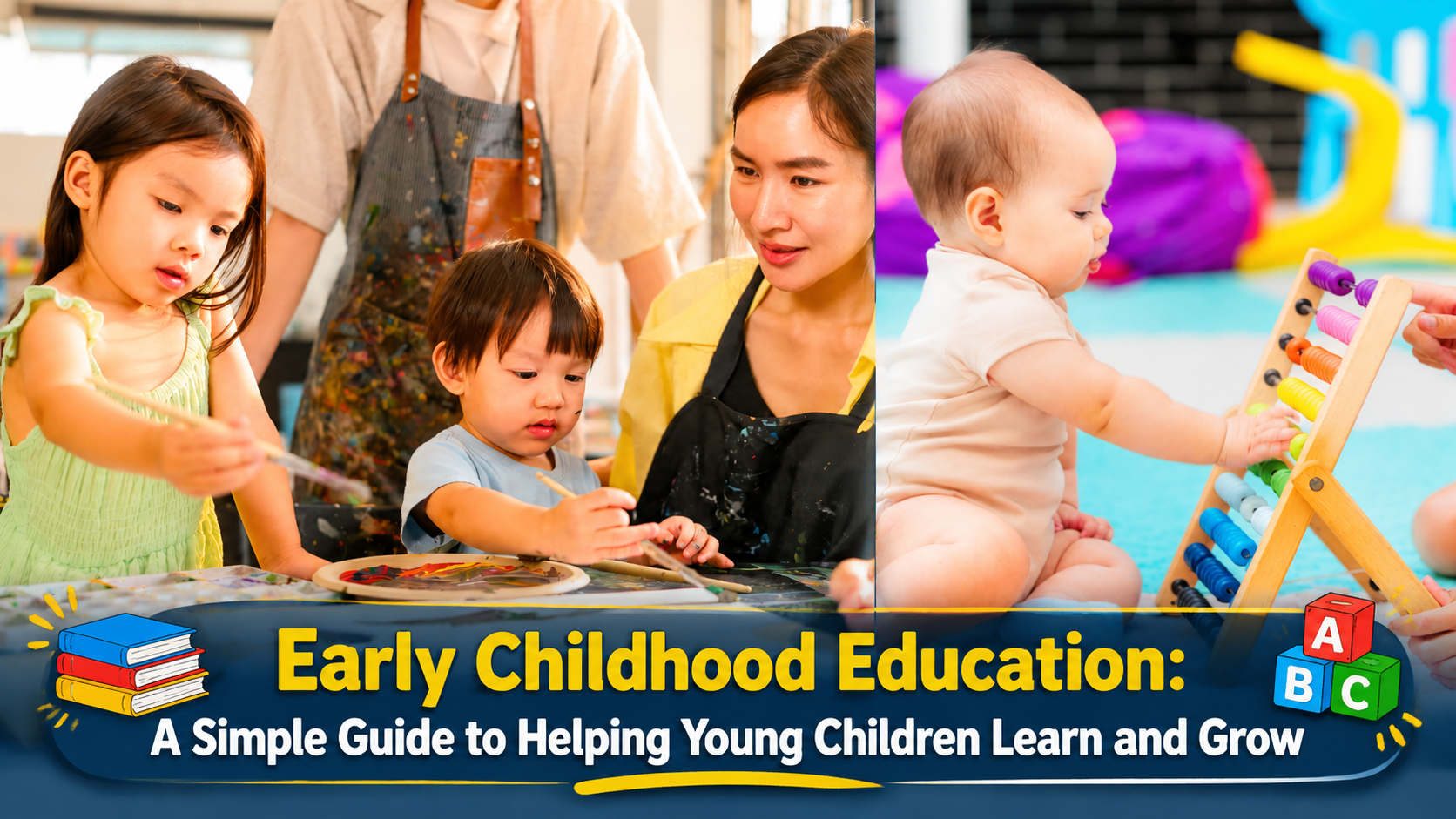
Early Childhood Education: A Simple Guide to Helping Young Children Learn and Grow

Introduction
A child’s early years are filled with discovery, curiosity, and rapid development. During this period, children begin to understand language, recognize emotions, explore their surroundings, and build relationships with other people. The experiences they receive at home and in educational settings can influence how they learn and interact with the world as they grow. Early Childhood Education a Simple Guide to Helping Young Children Learn and Grow.
Early childhood education provides young children with opportunities to develop essential skills through play, communication, exploration, and meaningful everyday activities. It is not simply about teaching children letters and numbers before they enter primary school.
Parents, caregivers, and teachers all have important roles in this process. By creating a supportive environment and responding to children’s individual needs, adults can help young learners develop a positive attitude toward education.
This guide explains what early childhood education means, why it matters, which skills it supports, and how families can encourage learning at home. Early Childhood Education a Simple Guide to Helping Young Children Learn and Grow.
What is early childhood education?
Early childhood education refers to organized and informal learning experiences that support children’s development during their early years. It commonly includes the period from birth to around eight years of age, although definitions and educational systems vary between countries.
These experiences may take place in preschools, childcare centers, kindergartens, community programs, or family homes. Some children attend formal learning programs, while others develop important abilities through everyday interactions with parents and caregivers.
Early childhood education focuses on several connected areas of development:
- Cognitive development, including thinking, memory, and problem-solving.
- Physical development, including movement and coordination.
- Social development, including cooperation and communication.
- Emotional development, including recognizing feelings and managing frustration.
- Creative development, including drawing, music, storytelling, and imaginative play.
These areas do not develop separately. For example, when children build a tower with blocks, they practice coordination, explore balance, solve problems, and learn to describe their ideas.
The purpose of early education is to provide children with suitable opportunities to practice these skills at their own pace. Early Childhood Education a Simple Guide to Helping Young Children Learn and Grow.
Why is early childhood education important?
1.It builds the foundation for future learning
Young children naturally investigate unfamiliar objects, ask questions, and experiment with different activities. Early education helps guide this curiosity into useful learning experiences.
A child who regularly listens to stories may gradually improve vocabulary, attention, and understanding. A child who sorts objects by color or shape begins to recognize patterns and categories. Early Childhood Education a Simple Guide to Helping Young Children Learn and Grow.
These experiences introduce foundational skills that children can build upon during primary education. However, readiness for school involves more than academic knowledge. Children also benefit from learning how to follow simple instructions, express their needs, and participate in group activities.
2.It encourages language and communication
Language allows children to share ideas, express emotions, ask questions, and understand others. Regular conversations are therefore an important part of early learning.
Adults can support communication by reading picture books aloud, naming familiar objects, singing simple songs, and encouraging children to describe what they see.
Questions like these encourage children to think and respond rather than simply listen.
Families can also use their home language when communicating with children. A familiar language provides a valuable foundation for understanding ideas and expressing thoughts. Additional languages can be introduced through enjoyable and age-appropriate activities.
3.It supports social skills
Children often learn social behavior through everyday experiences with siblings, classmates, relatives, and caregivers.
Group activities can help them practice sharing materials, waiting for a turn, listening to others, and working toward a common goal. Early Childhood Education a Simple Guide to Helping Young Children Learn and Grow.
These abilities usually develop gradually. A young child may find sharing difficult at first, especially when a toy feels important. Instead of expecting perfect behavior immediately, adults can demonstrate fair turn-taking and explain simple ways to solve disagreements.
Learning to cooperate does not mean that children must always agree. It means helping them understand other people’s perspectives and communicate respectfully.
4.It helps children understand emotions
Emotional development is another important part of early childhood education. Young children may experience strong feelings without yet having the words or experience needed to manage them.
A caring adult can help by naming emotions and responding calmly.
For example, if a child becomes upset after losing a game, an adult might say, “You seem disappointed because you wanted to win.” This response acknowledges the feeling while creating an opportunity to discuss what happened.
Children can also learn simple calming strategies, such as taking slow breaths, asking for help, or spending a little time in a quiet space. Early Childhood Education a Simple Guide to Helping Young Children Learn and Grow.
The goal is not to prevent children from experiencing difficult emotions. Instead, it is to help them recognize feelings and gradually develop healthier ways to respond.
5.It encourages independence and confidence
Small daily responsibilities can help children develop independence.
Adults should offer guidance without completing every task for the child. When children have reasonable opportunities to try things themselves, they can discover what they are capable of doing.
Mistakes are a normal part of this process. A supportive response encourages children to try again rather than feel ashamed of an unsuccessful attempt.
Confidence grows when children receive encouragement for their effort, curiosity, and progress—not only when they produce perfect results.
Five Essential Areas of Development in Young Children
Understanding different areas of development helps parents and educators create balanced learning experiences.
Cognitive development
Cognitive development describes how young children process information, recognize patterns, remember experiences, and begin solving problems independently. Everyday activities can help strengthen these abilities without requiring formal lessons or expensive educational materials.
For example, parents can invite children to sort objects by color, count household items, identify differences between pictures, or build simple structures using blocks. These activities encourage observation, comparison, memory, and logical thinking.
Mistakes are also part of this process. When children discover that one approach does not work, they gain an opportunity to reconsider their ideas and experiment with another solution. Early Childhood Education a Simple Guide to Helping Young Children Learn and Grow.
Physical development: building strength and coordination
Physical development involves the gradual improvement of body movement, balance, coordination, and control over smaller muscles. These abilities allow children to participate more comfortably in everyday activities.
Running, climbing age-appropriate play equipment, dancing, throwing soft balls, and jumping can support the development of larger muscle groups. Activities such as drawing, stacking blocks, turning pages, and using child-safe utensils help children practice smaller hand movements.
Movement and quiet activities should both have a place in a child’s daily routine. Active play offers opportunities to develop physical confidence, while quieter tasks allow children to practice concentration and hand control. Early Childhood Education a Simple Guide to Helping Young Children Learn and Grow.
Parents and teachers should choose activities that suit a child’s abilities and provide appropriate supervision. The purpose is not to make every child perform at the same level but to give each child regular opportunities to practice and improve.
Language development and early literacy
Language development begins through listening, observing, interacting, and gradually learning how to express ideas. Early literacy grows alongside these experiences, preparing children for later reading and writing. Early Childhood Education a Simple Guide to Helping Young Children Learn and Grow.
Talking about familiar objects, sharing picture books, singing songs, repeating rhymes, and telling family stories can introduce new words and sentence patterns. Children may also begin to recognize familiar symbols, pretend to write messages, or explain what they see in a picture.
Parents do not need to wait until a child can speak clearly before encouraging communication. Listening patiently to sounds, gestures, words, and questions helps children understand that communication is meaningful. Early Childhood Education a Simple Guide to Helping Young Children Learn and Grow.
Reading together can become a conversation rather than a task. Adults might ask what a character is doing, invite children to describe an illustration, or encourage them to guess what could happen next.
Everyday communication is especially valuable because children learn language in context. A conversation during a walk or a discussion about preparing food can introduce useful vocabulary in a familiar setting.
Social and emotional development
Social and emotional development helps children understand their feelings, build relationships, communicate needs, and gradually learn how to manage challenging situations.
Young children may need considerable guidance when they feel disappointed, frustrated, excited, or angry. Adults can help by naming emotions, acknowledging feelings, and demonstrating calm ways to respond.
For instance, instead of dismissing a child’s disappointment, a parent might say, “You seem upset because it is time to stop playing.” This response recognizes the emotion while allowing the adult to maintain appropriate boundaries.
Group games, pretend play, and shared activities provide opportunities to practice cooperation, patience, and turn-taking. Children can also learn from watching adults listen respectfully, apologize after mistakes, and resolve disagreements without aggression. Early Childhood Education a Simple Guide to Helping Young Children Learn and Grow.
Emotional growth takes time. Rather than expecting children to manage every feeling independently, adults can offer consistent support while gradually encouraging age-appropriate independence. Early Childhood Education a Simple Guide to Helping Young Children Learn and Grow.
Creative development : encouraging imagination
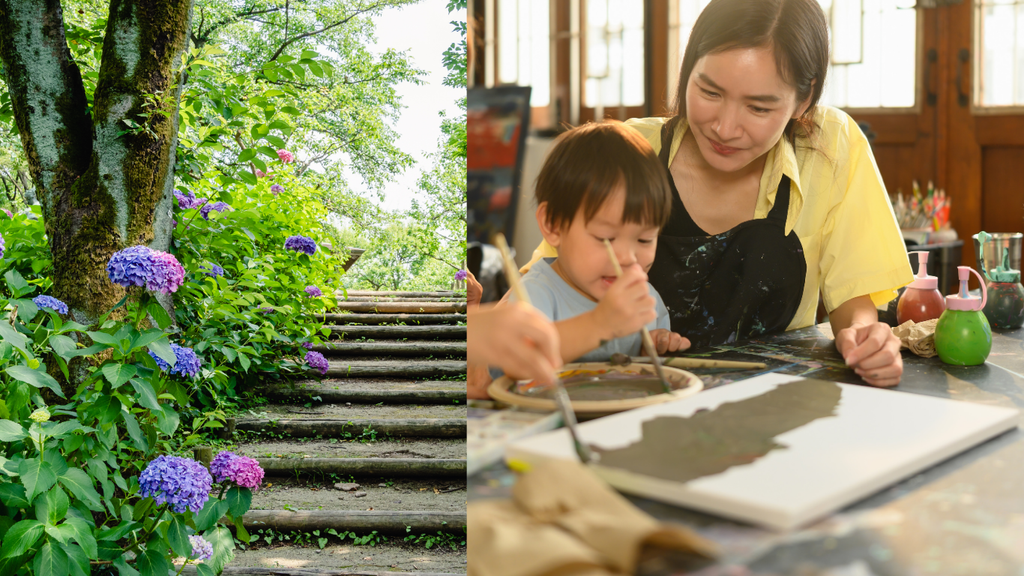
Creativity allows children to experiment with ideas, communicate feelings, and explore different ways of approaching a task. It is not limited to artistic talent or producing beautiful drawings.
Children can express creativity through music, movement, storytelling, imaginative games, painting, and constructing objects from safe materials. An ordinary cardboard box, for example, might become a pretend shop, a vehicle, or a small house during imaginative play.
Open-ended activities are particularly useful because they do not require every child to produce the same result. One child might draw a family scene, while another creates an imaginary animal.
Adults can encourage this process by asking children to describe their creations and explain the choices they made. Instead of focusing only on whether a result looks correct, they can recognize the child’s ideas, effort, and willingness to experiment.
The importance of play in early childhood learning
Play gives children a practical way to explore ideas and develop abilities through direct experience. While playing, they can test possibilities, repeat actions, communicate with others, and practice new skills in an enjoyable setting.
Different forms of play provide different learning experiences. Early Childhood Education a Simple Guide to Helping Young Children Learn and Grow.
Imaginative play: Pretending to operate a shop, care for a doll, or prepare a meal gives children opportunities to use language and explore familiar social situations.
Outdoor exploration: Supervised outdoor activities allow children to observe plants, notice natural changes, move their bodies, and investigate their surroundings.
Creative play: Drawing, singing, dancing, and making up stories provide different ways to communicate ideas and emotions. Early Childhood Education a Simple Guide to Helping Young Children Learn and Grow.
Simple rule-based games: Age-appropriate games introduce turn-taking, attention, cooperation, and the practice of following instructions.
Adults can make play more valuable by providing safe materials, observing children’s interests, and allowing enough time for independent exploration. Constantly correcting or directing every action may limit opportunities for children to make discoveries themselves.
Meaningful play does not require expensive toys. Everyday household objects, homemade games, songs, and reusable materials can provide useful experiences when selected and handled safely.
Simple ways to support learning at home
A home does not need a dedicated classroom to become a supportive learning environment. Regular conversations, shared activities, and caring relationships can turn ordinary routines into opportunities for development.
Make reading and storytelling part of daily life
Sharing a story introduces children to new words, characters, situations, and ideas. Parents can choose books with clear illustrations and language appropriate to the child’s stage of development. Early Childhood Education a Simple Guide to Helping Young Children Learn and Grow.
Children can also benefit from stories told in the family’s own words or language. Adults might describe a familiar event, invent a simple adventure, or ask children to imagine a different ending.
The goal is not to finish a certain number of pages. It is to create an enjoyable opportunity to listen, talk, imagine, and ask questions.
Use everyday routines to introduce new ideas
Daily activities naturally involve numbers, shapes, language, and observation. While organizing clothes, children might compare colors or group similar items. During meal preparation, they might identify ingredients or count objects that are safe to handle.
A walk can become an opportunity to notice different leaves, listen to birds, or compare the shapes of buildings. These experiences help children connect new concepts with the world around them.
Adults should adapt each activity to the child’s abilities and supervise tasks involving food, tools, traffic, or other potential hazards. Early Childhood Education a Simple Guide to Helping Young Children Learn and Grow.
Welcome questions and curiosity
Responding with patience helps children feel comfortable sharing their thoughts.
When an answer is uncertain, adults can investigate together using a suitable book or a reliable educational resource. This demonstrates that learning involves asking questions, looking for evidence, and revising ideas when necessary.
Offer small ,meaningful choices
Allowing children to choose between two suitable activities can support independence and decision-making. For example, they might select a story, choose drawing materials, or decide which toy to put away first.
Choices should remain realistic and safe. The purpose is to help children practice expressing preferences while understanding that some routines and boundaries are necessary. Early Childhood Education a Simple Guide to Helping Young Children Learn and Grow.
Maintain a flexible daily routine
Predictable patterns around meals, play, rest, and bedtime can help children feel more secure..
However, a useful routine does not need to follow an identical timetable every day. Families can adjust activities according to children’s energy, needs, and changing circumstances.
Recognize effort and improvement
Encouragement can help children recognize the strategies and persistence involved in learning. Specific feedback is often more useful than praise that focuses only on success.
For example, an adult might say, “You tried several ways to balance those blocks before they stayed in place.” This identifies the child’s effort and problem-solving process. Early Childhood Education a Simple Guide to Helping Young Children Learn and Grow.
Children should have room to make mistakes without feeling embarrassed. Supportive feedback helps them understand that improvement often comes through practice.
How early childhood educators support development
Early childhood educators help create environments where children can explore, communicate, and develop new abilities. Their responsibilities extend beyond teaching letters and numbers. Early Childhood Education a Simple Guide to Helping Young Children Learn and Grow.
Teachers plan age-appropriate activities, observe children’s interests, encourage positive relationships, and adjust learning experiences when necessary. They also help maintain routines and establish clear expectations for safety and respectful behavior.
Some may respond enthusiastically to music and movement, while others may prefer storytelling, visual materials, or hands-on exploration. Offering different ways to participate can make activities more accessible.
Observation is another important part of teaching. By noticing how children communicate, solve problems, interact with classmates, and respond to activities, educators can identify strengths and areas where further support may be helpful.
Cooperation between families and teachers strengthens this process. Sharing information about a child’s interests, home language, routines, and learning experiences can help adults provide more consistent guidance. Early Childhood Education a Simple Guide to Helping Young Children Learn and Grow.
Barriers that can affect early childhood education
Access to quality early learning opportunities differs between families and communities. Understanding common barriers can help parents identify realistic ways to support development.
Financial limitations
Preschool fees, transportation, books, and educational supplies may be difficult for some families to afford. Nevertheless, many useful learning activities require few or no additional expenses.
Storytelling, drawing on reusable paper, counting household objects, singing familiar songs, and exploring the natural environment can provide meaningful experiences. These activities can complement formal education, although they cannot replace every service provided by a suitable early childhood program.
Limited educational facilities
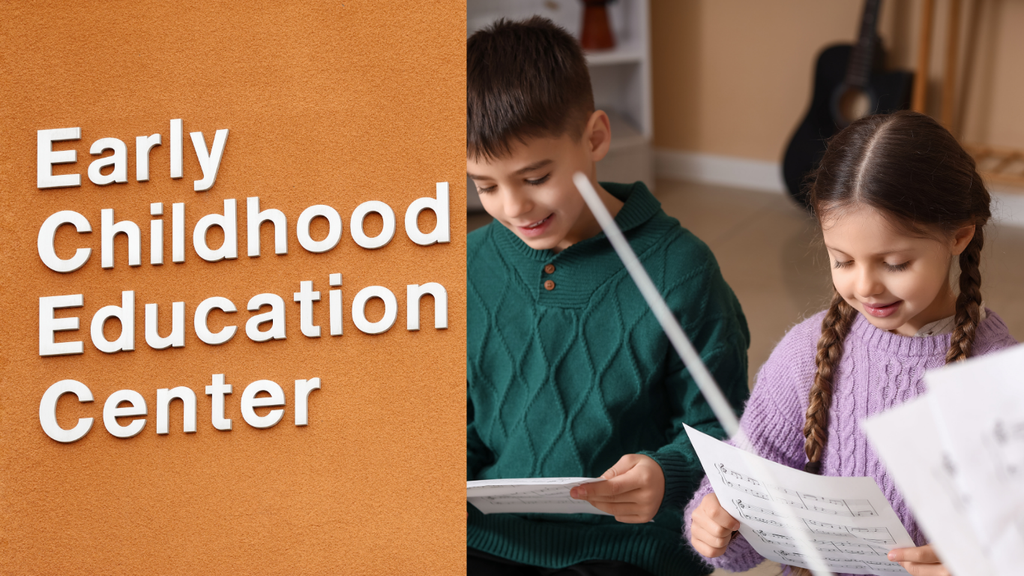
Some communities have few accessible childcare centers or preschools. Families may need to explore local community initiatives, libraries, parent groups, or other trusted educational resources where available.
When choosing a program, parents should consider staff preparation, supervision, cleanliness, child protection, and whether the activities suit the child’s age and needs. Early Childhood Education a Simple Guide to Helping Young Children Learn and Grow.
Balancing screen use
Digital devices can introduce stories, music, and educational concepts, but they should not displace sleep, physical movement, face-to-face interaction, or hands-on exploration. Early Childhood Education a Simple Guide to Helping Young Children Learn and Grow.
Screen recommendations depend on a child’s age. The American Academy of Pediatrics generally advises avoiding screen media for children younger than 18 months, except video chatting. For children aged 18–24 months, caregivers who introduce digital media should select high-quality content and watch it together.
Families should consult current pediatric guidance for age-specific recommendations. The quality of the content and the way adults participate are important considerations.
Supporting individual learning needs
Children develop at different rates, and some may require additional assistance with communication, movement, hearing, vision, behavior, or other areas.
Comparing children harshly can overlook their individual strengths and circumstances. Parents who notice persistent developmental concerns can discuss them with a qualified healthcare professional or child development specialist. Early Childhood Education a Simple Guide to Helping Young Children Learn and Grow.
Seeking advice does not mean assuming that a child has a disorder. It provides an opportunity to understand the child’s needs and identify suitable support when necessary.
Using digital resources responsibly
Digital learning resources can supplement early childhood education when selected carefully. Interactive stories, recorded songs, educational videos, and suitable applications may introduce ideas that children can explore further.
However, a resource should not be considered educational simply because it is marketed for children.
Connecting screen-based learning with real experiences can make the information more meaningful.
Families should also pay attention to privacy. Applications that collect personal details, request unnecessary permissions, or encourage public sharing of children’s photographs deserve particular caution.
Digital tools work best as a supplement to caring relationships, play, conversation, and direct exploration. Early Childhood Education a Simple Guide to Helping Young Children Learn and Grow.
How to choose a supportive early learning environment
Choosing an early childhood program involves more than looking at its building, equipment, or advertised curriculum. The way children are treated and supported is equally important.
Parents can consider the following questions when visiting a preschool or childcare center:
- Are children supervised appropriately throughout the day?
- Are toys, furniture, and learning materials safe and suitable for their ages?
- Do educators communicate patiently and respectfully?
- Is there enough time for play, movement, rest, and creative exploration?
- Can children ask questions and express feelings without being humiliated?
- Are differences in ability, language, and learning pace treated respectfully?
- Do teachers share useful information with families about children’s progress?
- Are hygiene, emergency planning, and child protection taken seriously?
No single feature proves that a program is effective. Families should consider the overall quality of care, staff preparation, learning activities, safety procedures, and communication with parents.
Children benefit from environments where they feel protected, respected, and encouraged to explore new experiences. Early Childhood Education a Simple Guide to Helping Young Children Learn and Grow.
Conclusion
Early childhood education is about more than preparing children for their first school lessons. It supports the development of thinking, communication, movement, creativity, emotional understanding, and relationships that contribute to everyday life. Early Childhood Education a Simple Guide to Helping Young Children Learn and Grow.
Parents can encourage these abilities through shared stories, meaningful conversations, simple household activities, and opportunities for safe exploration. Educators contribute by observing individual needs, preparing engaging experiences, and maintaining supportive learning environments.
Families do not need costly toys or complicated teaching methods to encourage early development. Consistent attention, patient guidance, and opportunities to explore can turn ordinary moments into valuable learning experiences.
Every child follows an individual developmental path. When adults respect these differences and provide appropriate opportunities, children can gradually build confidence, strengthen their abilities, and develop a positive attitude toward lifelong learning.
By making space for curiosity, play, communication, and discovery, families and educators can help young children take meaningful steps toward future learning. Early Childhood Education a Simple Guide to Helping Young Children Learn and Grow.