Technology in Education: How Digital Tools Improve Learning

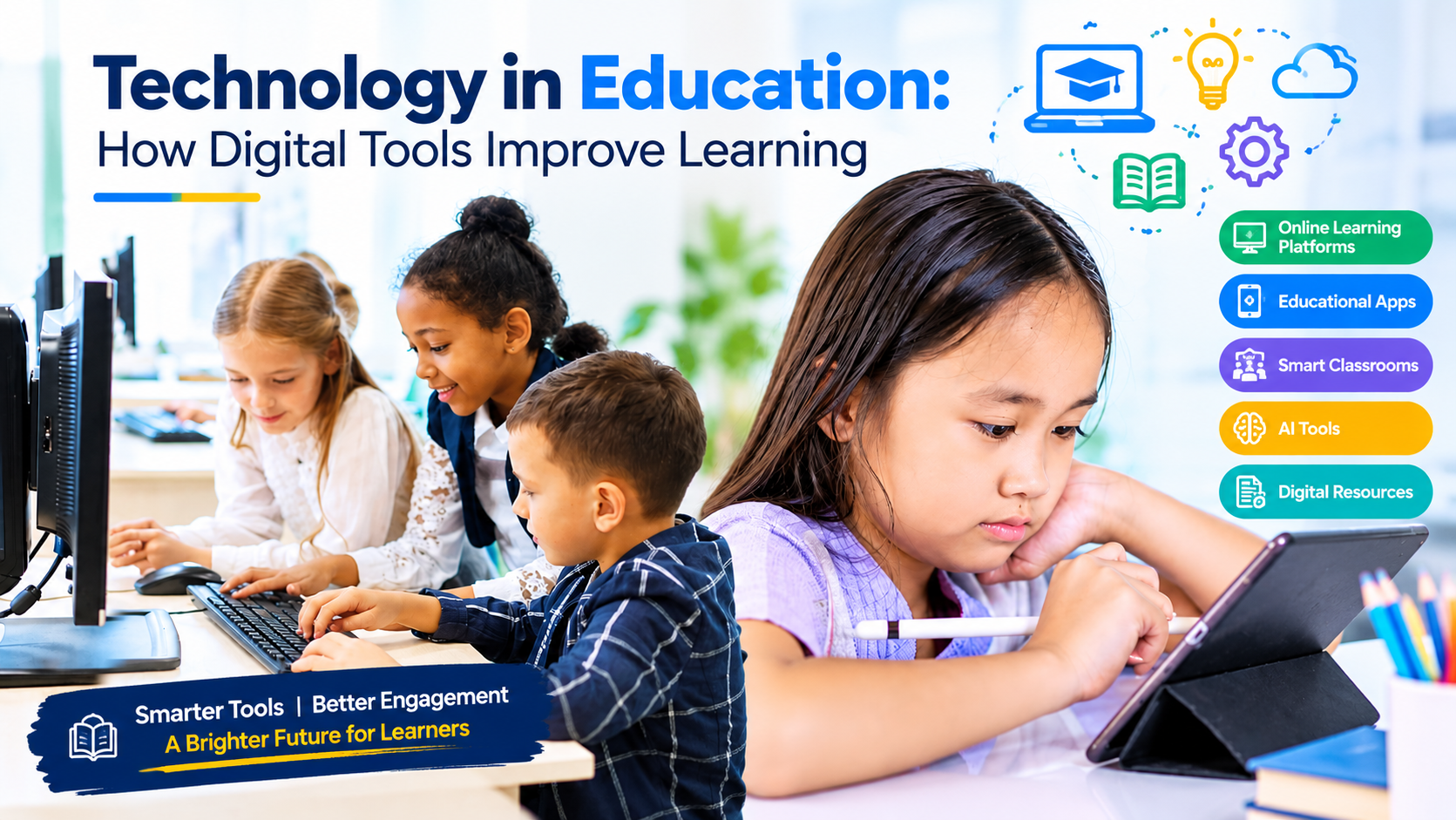
Students can now watch lessons online, search for information within seconds, practice through educational apps, communicate with teachers remotely, and use digital tools to organize their studies. Classrooms are also changing as teachers combine traditional teaching methods with computers, tablets, smartphones, interactive resources, and artificial intelligence.
This change does not mean that technology should replace teachers or traditional learning. Instead, digital tools can give teachers and students more ways to explain, practice, communicate, and explore ideas. Technology in Education Digital Tools Improve Learning.
UNESCO highlights digital technology as an important part of creating more inclusive and flexible education systems. At the same time, it emphasizes digital skills, equal access, and a human-centred approach to technology.
So, how exactly is technology changing education? Let’s explore the major changes and what they mean for students and teachers.
What is technology in Education?
Technology in education means using digital devices, software, online platforms, and other technological resources to support teaching and learning.
It can include:
- Computers and laptops
- Smartphones and tablets
- Online learning platforms
- Educational websites and apps
- Video lessons and digital presentations
- Virtual classrooms
- Cloud-based collaboration tools
- Artificial intelligence tools
- Digital libraries and open educational resources
- Interactive learning software
The purpose is not simply to put a screen in front of a student. The real value comes from using technology to solve learning problems, explain difficult subjects, provide useful resources, or make communication easier. Technology in Education Digital Tools Improve Learning.
How digital tools are changing learning
1.Education Beyond the Classroom
In the traditional model, learning often depended on being in a particular classroom at a particular time. Digital technology has expanded that environment.
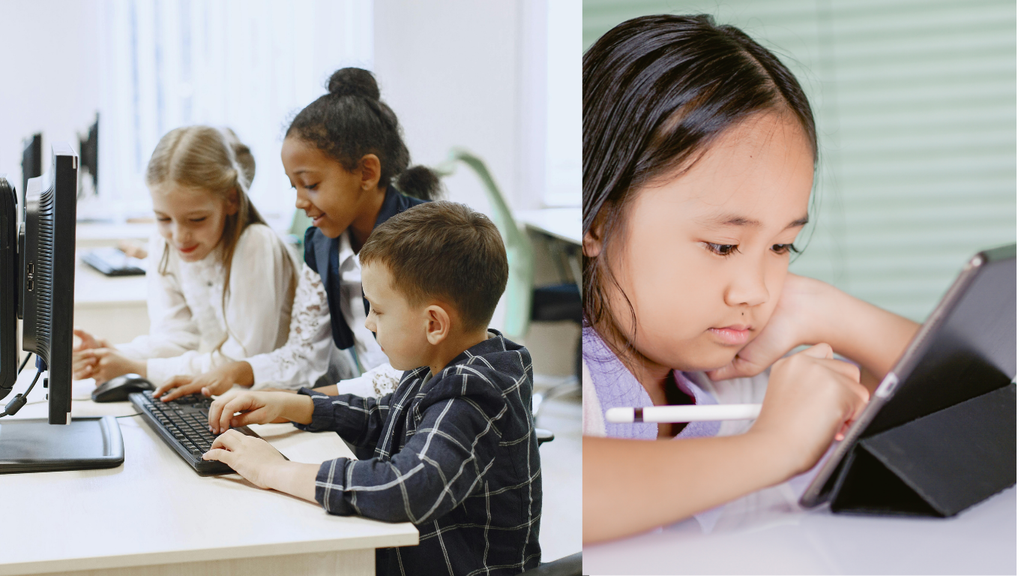
A student can review a recorded lesson at home, read an online article, watch an educational video, or join a virtual class from another location. This flexibility can be particularly useful for learners who cannot always follow a fixed classroom schedule.
Digital learning has also expanded access to educational materials. Online courses, podcasts, videos, digital books, and other resources allow learners to explore subjects beyond the materials available in their physical classroom. Technology in Education Digital Tools Improve Learning.
This creates a more flexible learning environment where students can continue studying outside school or college hours.
2.Students can learn at their own pace
Every student learns differently.
Some learners understand a concept after one explanation, while others need additional examples and practice. A traditional lesson may not always provide enough time for every learner to study at a comfortable pace.
Digital resources can help solve part of this problem.
For example, a student who does not understand a mathematics lesson can replay an explanation, find another example, and practice similar questions. Someone who understands quickly can move forward and explore more advanced material.
This flexibility can make learning more personalized rather than forcing every student to follow exactly the same path.
3.Educational content has become more interactive

Technology can turn a lesson from a passive reading experience into an interactive activity.
Instead of only reading about the solar system, students can watch an animation or explore an interactive model. Instead of memorizing vocabulary from a list, they can practice through quizzes or language-learning applications. Technology in Education Digital Tools Improve Learning.
Interactive resources can include:
- Quizzes
- Educational games
- Simulations
- Videos
- Animations
- Digital experiments
- Interactive presentations
These resources do not automatically make learning better, but they can provide additional ways to understand a difficult idea.
4.Smartphones have become learning devices
Smartphones are often associated with entertainment and social media, but they can also provide access to educational resources.
Students can use their phones to search for information, read digital materials, attend online classes, record notes, practice questions, or communicate with classmates.
Research from Oxford University Press provides a useful example of how digital learning is being used in real educational settings. Its September 2026 survey of 400 teachers and 600 secondary students across the UK, Brazil, Hong Kong, and South Africa found that 64% of students reported using digital tools most of the time for homework.
However, smartphones are not automatically educational simply because they are available. Their value depends on how students and teachers use them. Technology in Education Digital Tools Improve Learning.
5.Techers have more ways to explain difficult topics
Technology can give teachers additional methods for presenting information. Technology in Education Digital Tools Improve Learning.
A teacher can combine a spoken explanation with a presentation, diagram, video, digital activity, or online exercise. Students can then use these resources to review the topic after class.
Digital communication can also make it easier for teachers and students to exchange questions, assignments, feedback, and learning materials. Technology in Education Digital Tools Improve Learning.
This does not remove the importance of teachers. In fact, the teacher’s role becomes especially important when deciding which digital resource is useful and how it should fit into a lesson.
Oxford University Press reported that 60% of surveyed teachers believed digital tools improve student engagement during lessons. The same research also emphasized that technology should be selected according to learning goals rather than used simply because it is available.
6.Collaboration can happen beyond the classroom
Digital tools can make collaboration easier.
Students working on the same project can share documents, exchange ideas, review each other’s work, and communicate online. A group does not always need to be physically together to complete a learning activity.
Cloud-based tools can also allow several students to contribute to the same document or presentation. Technology in Education Digital Tools Improve Learning.
This type of collaboration can help students develop skills that are useful beyond school, including communication, teamwork, research, and digital organization.
7. Artificial intelligence is creating new learning possibilities
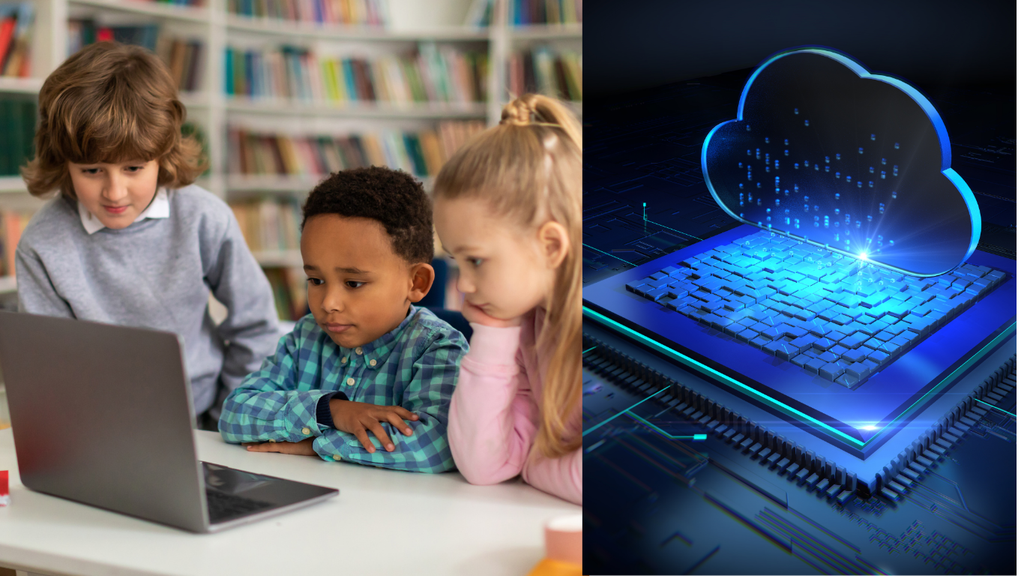
Artificial intelligence is becoming another important part of educational technology.
AI tools can help students brainstorm ideas, explain difficult concepts, practice language, summarize information, generate questions, or receive feedback. Teachers can also explore AI-assisted tools for lesson planning and other educational tasks.
However, AI should be treated as a learning support rather than a replacement for thinking. Technology in Education Digital Tools Improve Learning.
A student who asks an AI tool to complete an assignment without understanding the subject may finish the task but miss the learning opportunity. A better approach is to use AI to ask questions, explore explanations, compare ideas, and improve understanding.
UNESCO says AI has potential to support teaching and learning but stresses that its use should be guided by inclusion, equity, and a human-centred approach.
8.Open education resources can expand access
Not every student can afford a large collection of textbooks or paid learning materials. Technology in Education Digital Tools Improve Learning.
Open Educational Resources, commonly called OER, can help address this problem. UNESCO defines OER as teaching, learning, or research materials that are freely accessible.
These resources can include openly available:
- Textbooks
- Lesson materials
- Research resources
- Videos
- Educational activities
- Digital reading materials
When reliable free resources are available, learners may have more opportunities to study subjects independently.
9.Learning has become more connected
Digital education has reduced some of the geographical limitations associated with traditional learning.
A student can access a course created in another country, watch a lecture from a distant institution, communicate with learners from different backgrounds, or explore educational resources from international organizations.
This creates opportunities for broader exposure to ideas and perspectives. Technology in Education Digital Tools Improve Learning.
At the same time, access is not equal everywhere. UNESCO points out that digital inclusion remains an important challenge, particularly for disadvantaged groups and communities with limited access to technology or connectivity.
Benefits of technology in education
When used appropriately, technology can offer several benefits.
Greater access to information
Students can access a huge range of digital materials beyond their school textbooks. This can make independent research easier.
Flexible learning
Online resources allow students to study from different locations and, in many cases, at different times.
More learning choices
A student may learn through text, audio, video, animation, interactive exercises, or practical simulations.
Faster communication
Teachers and students can communicate through learning platforms, email, messaging systems, and virtual classrooms. Technology in Education Digital Tools Improve Learning.
Support for independent learning
Digital resources can encourage students to research questions and practice skills independently.
Better access during disruptions
Distance learning technologies can help maintain educational activities when normal classroom attendance becomes difficult. UNESCO’s experience during the COVID-19 disruption demonstrated the importance of digital learning systems when schools are unable to operate normally.
Technology in education also has challenges
Technology can create opportunities, but it also introduces problems that schools, teachers, and students need to consider.
1.Digital distraction
A smartphone or computer can be used for learning, but the same device can also provide games, social media, entertainment, and other distractions.
Oxford University Press found that 52% of teachers and 47% of students in its survey identified distraction as the biggest challenge related to digital learning. Technology in Education Digital Tools Improve Learning.
This shows why simply providing devices is not enough. Students need guidance on how and when to use them.
2.Unequal access
Not every learner has a reliable internet connection, suitable device, or supportive digital environment.
This difference is often described as the digital divide. If educational systems depend heavily on technology without addressing access problems, some students may benefit much more than others.
3.Too much screen time
Digital learning can increase the amount of time students spend looking at screens. Technology in Education Digital Tools Improve Learning.
The goal should therefore be meaningful technology use rather than maximum technology use. Reading a printed book, discussing a topic with a teacher, writing by hand, conducting a practical activity, or working face-to-face with classmates can still be valuable.
4.Digital skills are necessary
Having a device does not automatically mean a student knows how to use technology effectively.
Students need skills such as:
- Searching for reliable information
- Protecting personal information
- Recognizing misleading content
- Using digital learning platforms
- Communicating responsibly online
- Managing files and documents
- Using AI tools carefully
UNESCO specifically identifies digital literacy and digital competencies for both teachers and students as important parts of digital transformation in education.
5.Technology should not replace teachers
A computer can provide information, but education involves much more than information delivery.
Teachers help students understand difficult ideas, ask better questions, receive feedback, work with others, and develop confidence. They also understand classroom situations and individual learner needs.
Recent OUP research similarly emphasizes that educational goals and teaching practice should guide technology adoption, rather than technology being used simply for its own sake. Technology in Education Digital Tools Improve Learning.
How students can use digital tools more effectively
do not need to use every new educational application they discover. A smaller number of useful tools can often be more valuable. Technology in Education Digital Tools Improve Learning.
Here are some practical habits:
set a clear learning goal.
Before opening an app or website, decide what you want to learn.
Choose reliable sources
Do not assume that everything found online is accurate. Compare information and check trustworthy sources.
Use technology actively
Instead of watching videos continuously, pause, take notes, answer questions, and practice what you learned.
control distractions
Turn off unnecessary notifications and avoid switching between study materials and entertainment.
Use AI as a learning assistant
Ask AI to explain concepts, create practice questions, or provide alternative explanations instead of simply copying its answers. Technology in Education Digital Tools Improve Learning.
combine digital and traditional methods.
Use online research alongside textbooks, handwritten notes, discussions, and practical exercises.
protect your digital information.
Use strong passwords and think carefully before sharing personal information online.
What could the future of education look like?
The future of education will likely involve an increasingly connected combination of classroom teaching and digital learning.
AI may become more common in educational platforms. Virtual and interactive learning environments may provide new ways to explore complex subjects. Mobile devices may continue to support learning outside school. Digital libraries and open resources may help more people access educational materials.
However, the future of education should not be measured by how many devices a classroom contains. Technology in Education Digital Tools Improve Learning.
A classroom with expensive technology can still provide a poor learning experience if the tools do not support clear educational goals. On the other hand, a simple digital resource can be highly useful when a teacher chooses it for the right purpose.
The most effective approach may therefore be a balanced one: use technology when it adds value, keep traditional methods when they work well, and place learning needs before the technology itself.
Final thoughts
Technology in education is changing how students access information, communicate, practice skills, and participate in learning. Online courses, smartphones, educational apps, AI systems, digital resources, and collaborative platforms have expanded the possibilities available to modern learners.
But technology is not a magic solution to every educational problem. Technology in Education Digital Tools Improve Learning.
Students still need teachers, critical thinking, discipline, communication, and real-world practice. They also need the ability to decide when technology is helpful and when it becomes a distraction. Technology in Education Digital Tools Improve Learning.
Recent research and international guidance point toward a similar idea: the goal should not be technology for its own sake. Digital tools should be selected because they help learners understand, practice, communicate, or achieve a meaningful educational goal.
As education continues to evolve, the strongest learning environment may be one where
Technology supports good teaching rather then trying to replace it