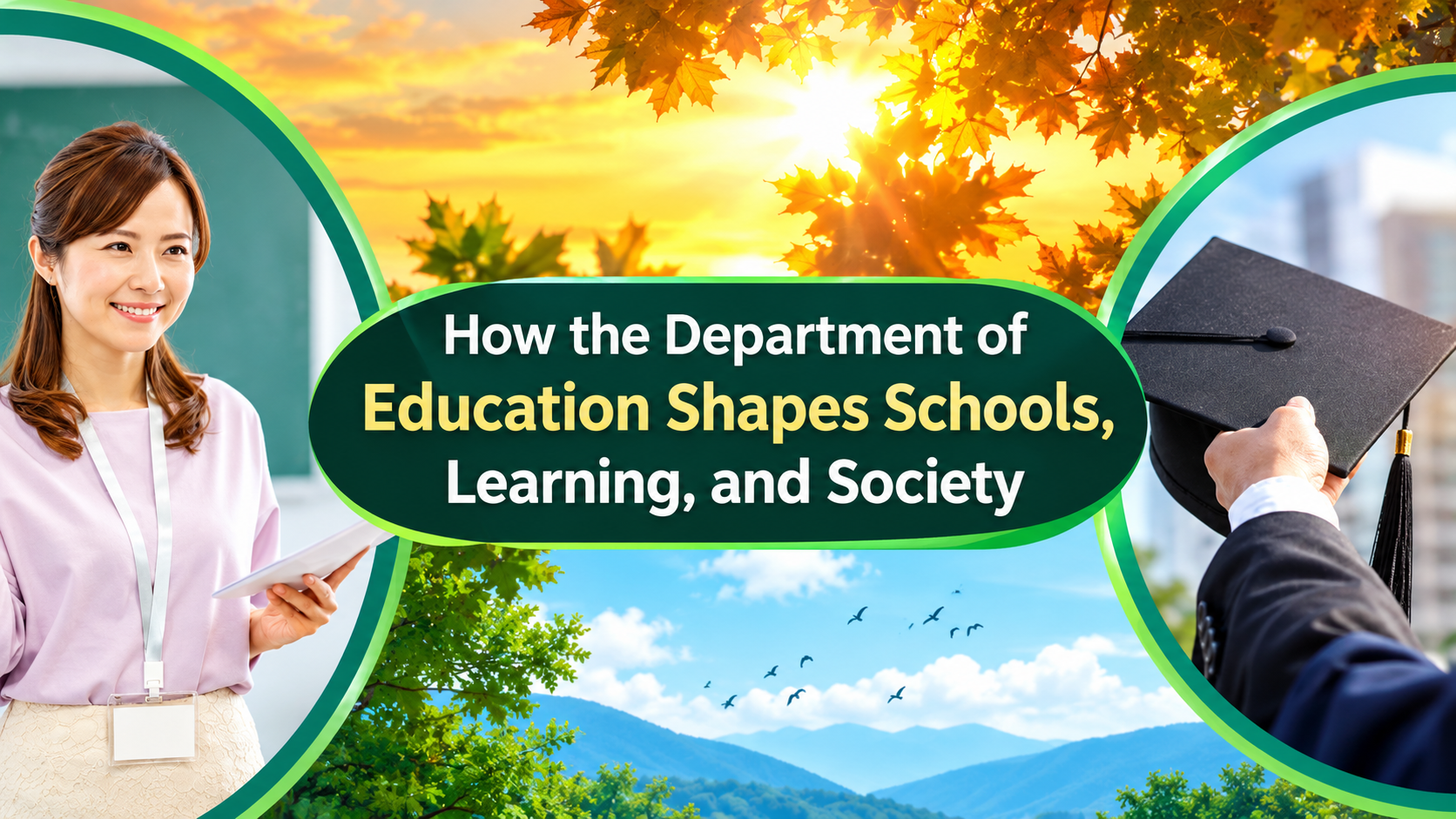
How the Department of Education Shapes Schools, Learning ,and Society

Introduction
Behind every successful education system is a network of people, institutions, and decisions that help students learn and prepare for life. Schools provide classrooms and teachers, families encourage children to continue their studies, and communities contribute to educational development. Government education authorities also play an important part by establishing policies, organizing resources, and creating conditions that support learning. The Department of Education Shapes Schools, Learning ,and Society.
The Department of Education is one name commonly used for a government organization responsible for managing or coordinating important educational activities. Some education departments oversee national programs and financial assistance, while others have direct responsibility for school administration, curriculum development, teacher recruitment, and educational standards.
Understanding how a Department of Education influences schools, learning, and society helps explain why educational administration matters. Its decisions can affect what students study, how teachers receive support, which communities receive resources, and how educational opportunities develop over time.
This article explores the relationship between education departments and everyday learning, the challenges they face, and the ways effective educational management can contribute to a stronger society. Department of Education, Education Policy, School Management, Student Learning, Teacher Development, Education System, Social Development
What does a department of education do?
A Department of Education is a public institution that carries out responsibilities assigned to it by the relevant government. Its purpose is generally connected with improving educational opportunities, implementing education policies, managing programs, or supporting institutions that provide learning.
However, the organization is not identical in every country. In some places, national authorities establish broad policies while regional governments and local school districts manage daily operations. Other countries use a more centralized structure in which national ministries and directorates have substantial administrative responsibilities.
An education department may participate in several activities, including:
- Developing education policies and long-term plans.
- Establishing or coordinating curriculum standards.
- Supporting teachers and educational institutions.
- Managing public education funding and resources.
- Monitoring educational performance and school conditions.
- Expanding opportunities for disadvantaged learners.
- Collecting information to evaluate educational programs.
- Coordinating with other government bodies and community organizations.
These activities are connected. A curriculum policy, for example, may require new teaching materials, professional training, updated assessments, and additional funding. Effective administration helps ensure that different parts of the education system work toward compatible objectives. Department of Education, Education Policy, School Management, Student Learning, Teacher Development, Education System, Social Development
1.Shaping the direction of schools through education policy
Education policy provides a framework for making decisions about teaching, learning, school operations, and educational priorities. Department of Education, Education Policy, School Management, Student Learning, Teacher Development, Education System, Social Development
An education department may help determine which issues require attention, how public programs should be implemented, and what outcomes educational institutions should work toward. Depending on its authority, it may develop policies directly or coordinate their implementation with other organizations.
Consider a government that wants students to develop stronger reading skills. Achieving this goal requires more than announcing a new policy. Schools may need suitable books, teachers may require additional training, and administrators may need ways to measure students’ progress.
A practical policy connects the desired outcome with the resources and actions necessary to achieve it.
Education policies also influence school safety, attendance, assessment, digital learning, and support for students with different needs. Well-planned policies take account of local circumstances rather than assuming every school faces identical challenges. Department of Education, Education Policy, School Management, Student Learning, Teacher Development, Education System, Social Development
Consultation can improve the process. Teachers understand classroom conditions, parents can explain barriers affecting their children, and students can describe difficulties that may not appear in official reports.
2.Helping schools create better learning environments
Students need a suitable environment in which they can concentrate, ask questions, participate in activities, and feel safe. Department of Education, Education Policy, School Management, Student Learning, Teacher Development, Education System, Social Development
Education departments can influence these conditions through infrastructure programs, school regulations, resource allocation, and administrative support.
Some schools may need additional classrooms because enrollment has increased. Others may require safe drinking water, accessible facilities, libraries, laboratories, or reliable electricity. Identifying these needs helps authorities determine where investment is most urgent.
The quality of the learning environment also depends on how resources are used. A well-equipped classroom cannot guarantee effective teaching if students receive little guidance or teachers lack sufficient preparation.
For this reason, school improvement should consider physical facilities and the everyday experience of learning together. Department of Education, Education Policy, School Management, Student Learning, Teacher Development, Education System, Social Development
Monitoring systems can help education authorities understand whether institutions meet established requirements. When problems are identified, schools should receive practical guidance and an appropriate opportunity to address them.
A supportive learning environment allows students to spend more time developing knowledge instead of struggling with avoidable obstacles.
3.Supporting teachers and improving classroom instruction
They explain concepts, answer questions, recognize misunderstandings, and help students develop confidence in their abilities.
Education departments may support this work by coordinating teacher training, establishing professional standards, planning recruitment, and helping educational institutions address staffing needs.
Initial teacher preparation is important, but learning should not stop when a teacher enters the classroom. New curriculum requirements, digital tools, and changing student needs create reasons for continuing professional development.
For example, a teacher may understand a subject well but need new techniques to explain it to students with different levels of prior knowledge. Training in classroom assessment and lesson planning can help make instruction more effective. Department of Education, Education Policy, School Management, Student Learning, Teacher Development, Education System, Social Development
Teacher support should also address practical working conditions. Schools need appropriate staffing, access to teaching materials, clear administrative procedures, and opportunities for educators to exchange ideas with colleagues.
In areas where qualified teachers are difficult to recruit, education authorities may need targeted workforce plans and incentives that follow local rules.
Teachers should also have opportunities to provide feedback about policies. Their classroom experience can reveal whether a new requirement is realistic or whether additional resources are needed.
Investing in teachers helps connect educational goals with the needs of real students.
4.Influencing what students learn
The curriculum determines the knowledge, skills, and subjects students are expected to study at different stages of education.
Depending on the national system, an education department may develop curriculum frameworks, approve learning standards, coordinate curriculum changes, or supervise the organizations responsible for these tasks.
A useful curriculum should establish strong foundations while preparing learners to understand more complex ideas. Reading, writing, mathematics, and scientific reasoning help students build the skills required for further study.
Other areas, including history, digital literacy, communication, creative thinking, and environmental awareness, can help learners understand the wider world. Department of Education, Education Policy, School Management, Student Learning, Teacher Development, Education System, Social Development
Curriculum planning must also consider how subjects connect with everyday life. Students may understand mathematics more clearly when they apply it to budgeting, measurements, or practical problems. Science lessons can become more meaningful when learners observe their surroundings and investigate questions.
Assessment is another part of curriculum implementation. Examinations can measure certain aspects of achievement, but they do not capture every ability. Projects, classroom discussions, practical tasks, and teacher feedback can provide additional information about student learning.
Curriculum reviews help educational authorities identify outdated material, address gaps, and respond to new educational requirements. Changes should be introduced with suitable preparation so teachers and schools have time to adapt.
It is to help students understand, apply, and build upon what they learn.
5.Expnading educational opportunities for every learner
Some have access to books, computers, private tutoring, and quiet study spaces. Others may experience financial difficulties, long journeys to school, inadequate facilities, or limited access to learning materials. Department of Education, Education Policy, School Management, Student Learning, Teacher Development, Education System, Social Development
Education departments can help reduce these differences through public programs, targeted assistance, accessible school facilities, and policies designed to remove barriers to participation.
Financial support may take different forms depending on the country, such as scholarships, school stipends, subsidized materials, or assistance with other educational expenses.Department of Education, Education Policy, School Management, Student Learning, Teacher Development, Education System, Social Development
Inclusive education is equally important. Students with disabilities may require accessible buildings, adapted resources, assistive technology, or appropriate classroom support. Schools may also need training to respond to different learning needs.
Gender-related barriers, discrimination, language differences, and social exclusion can also affect attendance and achievement. Department of Education, Education Policy, School Management, Student Learning, Teacher Development, Education System, Social Development
Providing identical resources to every school does not always produce fair outcomes. An institution serving a community with greater needs may require additional assistance to provide comparable learning opportunities.
Education authorities should therefore examine who is benefiting from existing programs and who continues to face obstacles.
6.Managing education funding responsibly
Educational improvements require financial resources. Governments must decide how to fund teachers, facilities, textbooks, technology, training, transportation support, and other services.
An education department may prepare budget proposals, administer approved programs, distribute funds, or monitor spending according to the responsibilities assigned to it. Department of Education, Education Policy, School Management, Student Learning, Teacher Development, Education System, Social Development
Resource allocation involves difficult choices. One school may need urgent building repairs, while another requires additional teachers or improved laboratory equipment.
Reliable information can help authorities identify priorities. Enrollment figures, staffing records, building assessments, and local feedback provide a clearer picture of educational needs.
Financial transparency matters as well. Proper documentation, clear procurement procedures, audits, and public reporting can help ensure that resources are used for their intended purposes. Department of Education, Education Policy, School Management, Student Learning, Teacher Development, Education System, Social Development
Long-term costs must also be considered. Purchasing computers, for example, may involve future expenses for maintenance, software, connectivity, replacement equipment, and technical assistance.
Effective financial management does not necessarily mean spending the smallest possible amount. It means using available resources responsibly to achieve meaningful educational outcomes.
When funding decisions are connected to clearly identified needs, schools have a better chance of receiving support that makes a practical difference. Department of Education, Education Policy, School Management, Student Learning, Teacher Development, Education System, Social Development
7.Using educational data to improve decisions
Education authorities need reliable information to understand how well schools and programs are performing. Department of Education, Education Policy, School Management, Student Learning, Teacher Development, Education System, Social Development
Relevant information may include student enrollment, attendance, examination results, teacher availability, classroom conditions, and the distribution of educational resources.
These measurements can reveal patterns that require investigation. For instance, a school may report falling attendance, while another may experience persistent difficulties in a particular subject.
The figures alone cannot always explain why a problem exists. Officials may need to speak with teachers and families, review local conditions, and examine whether existing support programs are reaching the students who need them.
Educational data can also help evaluate whether a policy is achieving its intended purpose. If a new training program is introduced, authorities can examine participation, teaching practices, and relevant learning outcomes over time.
However, information must be interpreted carefully. Test scores may be influenced by attendance, family circumstances, access to learning materials, and differences in assessment conditions.
Protecting privacy is another responsibility. Student records should be handled according to applicable laws and appropriate data protection practices. Department of Education, Education Policy, School Management, Student Learning, Teacher Development, Education System, Social Development
When information is accurate, relevant, and used responsibly, it can help education departments replace assumptions with better-informed decisions.
8.Preparing students for work and adult life
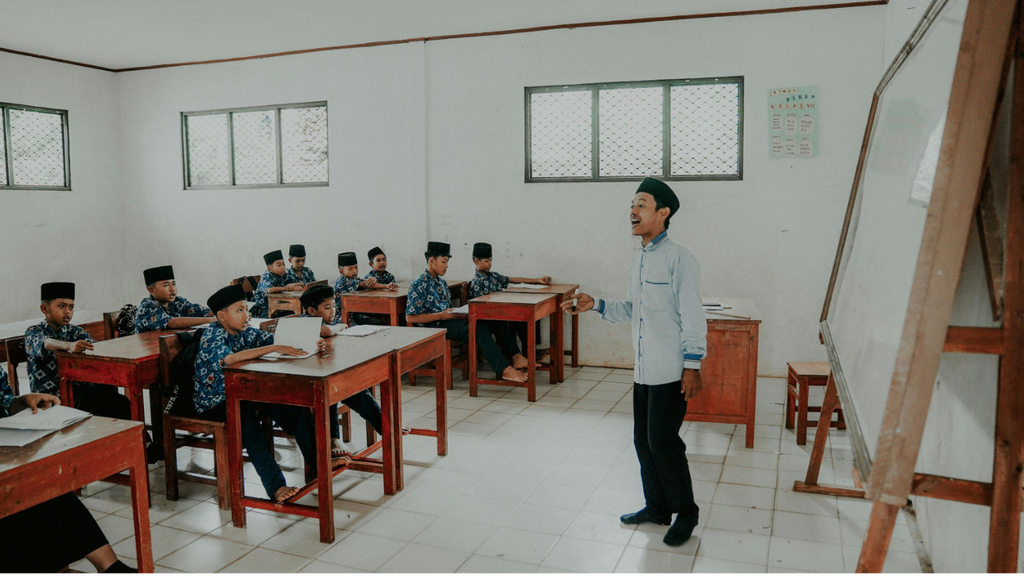
Schools help students gain academic knowledge, but education also prepares people to make decisions, communicate with others, solve problems, and participate in society.
Education departments may work with vocational institutions, colleges, universities, employers, and training providers to improve pathways from education to employment or further study.
Technical and vocational programs can help learners develop practical abilities for particular occupations. Depending on the country, these opportunities may include workshops, industry placements, technical qualifications, or specialized training. Department of Education, Education Policy, School Management, Student Learning, Teacher Development, Education System, Social Development
Digital literacy has become important in many areas of modern life. Students benefit from learning how to evaluate online information, use digital tools responsibly, and protect personal information.
Financial awareness, communication, teamwork, and problem-solving can also help learners manage everyday responsibilities. Department of Education, Education Policy, School Management, Student Learning, Teacher Development, Education System, Social Development
Career guidance is valuable because students have different interests and strengths. Understanding available pathways can help them make more informed choices about subjects, training, and future opportunities.
Nevertheless, education should not be judged only by how quickly students find employment. It also supports cultural understanding, creativity, responsible citizenship, and lifelong learning.
A balanced education system prepares individuals for changing circumstances rather than a single expected career path. Department of Education, Education Policy, School Management, Student Learning, Teacher Development, Education System, Social Development
9.connecting education with community development
The influence of education extends beyond individual students. Schools and educational institutions are part of the communities in which people live and work.
When people develop stronger literacy, numeracy, and critical-thinking skills, they may find it easier to understand information, communicate effectively, and make informed decisions.
Education can support economic participation by helping people develop knowledge relevant to employment and entrepreneurship. It can also improve awareness of public health, environmental issues, and community responsibilities.
Education departments can contribute by coordinating programs that respond to local needs and by encouraging cooperation between schools, families, and community organizations.
For example, a community may identify a need for adult literacy classes or additional educational support for children who have fallen behind.
Schools can also create opportunities for students to participate in community projects, environmental activities, and collaborative learning. Department of Education, Education Policy, School Management, Student Learning, Teacher Development, Education System, Social Development
These benefits do not appear automatically. They depend on the quality of education, the accessibility of opportunities, and the wider social and economic conditions.
Still, education provides an important foundation for communities seeking to improve living conditions and prepare future generations.
10.Understanding the department of education in different countries

The title Department of Education can refer to different organizations, and their responsibilities should not be assumed to be identical. Department of Education, Education Policy, School Management, Student Learning, Teacher Development, Education System, Social Development
In the United States, the federal Department of Education supports federal education programs and carries out responsibilities established by federal law. State and local authorities retain major responsibilities for operating public schools.
In other countries, education administration may be organized through national ministries, regional departments, specialized directorates, or several agencies responsible for different educational levels.
Bangladesh, for example, has separate government structures for important parts of its education system. The Ministry of Primary and Mass Education handles responsibilities related to primary education and mass literacy within its mandate. The Ministry of Education oversees other major sectors, including secondary, technical, and higher education through its divisions and associated organizations.
The Directorate of Secondary and Higher Education is one of the organizations involved in administering and supervising relevant educational activities in Bangladesh.
This distinction matters when people look for official notices, teacher recruitment information, education policies, or institutional services. The correct authority depends on the subject and the type of assistance required.
Readers should consult official government sources when verifying current responsibilities, application procedures, eligibility rules, or public announcements.
11.challenges that can limit educational progress
Even carefully designed education policies can encounter practical difficulties during implementation.
Unequal resources: Schools may differ considerably in staffing, infrastructure, learning materials, and technology. Improving access requires identifying these differences and allocating support according to need.
Teacher shortages: Some institutions struggle to recruit qualified educators in particular subjects or locations. Long-term planning and professional support can help address these problems.
Digital inequality: Online learning tools are less useful when students lack reliable internet access, appropriate devices, or technical assistance.
Administrative delays: Complicated procedures and unclear responsibilities can slow down school improvements and access to services. Department of Education, Education Policy, School Management, Student Learning, Teacher Development, Education System, Social Development
Limited funding: Education authorities must balance competing demands while maintaining essential services and planning for future needs.
Difficulty measuring quality: Enrollment figures and examination results provide useful information, but neither alone captures the complete educational experience.
These challenges require practical solutions rather than one universal approach. The circumstances of each school system influence which interventions are most appropriate.
Regular evaluation, consultation, transparent administration, and cooperation among institutions can help identify weaknesses and improve implementation.
12.What makes an education department more effective?
An effective education department connects policy decisions with the real conditions in schools.
First, it should establish clear objectives and explain how progress will be evaluated. Teachers, parents, and administrators need to understand what a policy is intended to achieve.
Second, it should listen to the people affected by educational decisions. Feedback can reveal barriers that may be overlooked during central planning. Department of Education, Education Policy, School Management, Student Learning, Teacher Development, Education System, Social Development
Third, it should direct resources toward documented needs and monitor whether those resources are being used appropriately.
Fourth, it should provide teachers and school leaders with practical guidance, relevant training, and reasonable implementation timelines.
Fifth, it should make official information accessible. Clear communication helps families and educators understand available services, requirements, and procedures.
Finally, it should review results and make adjustments when evidence shows that an approach is not working as intended.
Effectiveness is not measured simply by the number of policies published or programs launched. It is reflected in whether students gain better opportunities to learn and whether schools receive the support they need.
Conclusion
The Department of Education can influence schools, learning, and society through the policies it develops, the resources it manages, and the educational programs it supports. Its responsibilities may involve curriculum planning, teacher development, school oversight, financial management, inclusion, and the evaluation of learning outcomes.
The exact structure and authority of an education department vary from one country to another.
Educational progress also depends on people beyond government offices. Teachers bring lessons to life, families encourage learning, schools create opportunities, and communities help identify local priorities.
When these groups work together, supported by responsible planning and reliable information, education can become more accessible and meaningful. Department of Education, Education Policy, School Management, Student Learning, Teacher Development, Education System, Social Development
Strong educational administration can support individual development, strengthen communities, and contribute to a society in which more people have the opportunity to build a better future.