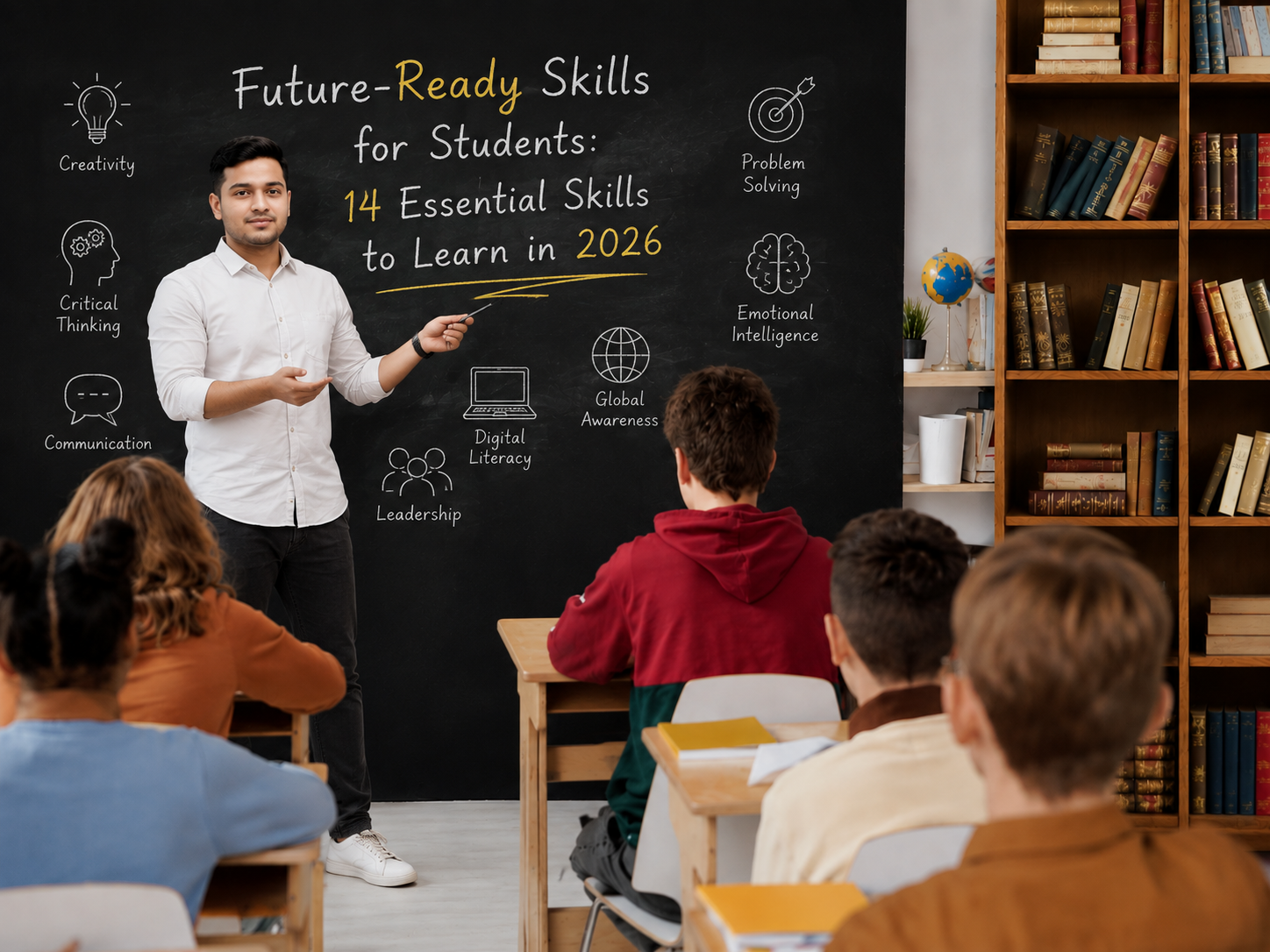
Future-Ready Skills for Students: 14 Essential Skills to Learn in 2026

Introduction
Education is changing quickly. Students today are growing up in a world where technology, artificial intelligence, digital communication, and new types of careers are becoming part of everyday life. The knowledge students learn in school is still important, but knowledge alone may not prepare them for every challenge they will face in the future. Future-Ready Skills for Students 14 Essential Skills to Learn in 2026
Students also need practical abilities that help them think clearly, communicate effectively, solve unfamiliar problems, use technology responsibly, and continue learning as the world changes.
This is why future ready skills for students have become increasingly important in modern education. These skills are not only useful for getting a job. They can help students become better learners, make thoughtful decisions, work with others, and handle changes with greater confidence.
The good news is that students do not need to master all these abilities at once. Most skills can be developed gradually through school projects, reading, practice, online learning, teamwork, and everyday experiences. Future-Ready Skills for Students 14 Essential Skills to Learn in 2026
Here are 14 essential skills students can start developing in 2026.
1.Critical Thinking
Critical thinking is the ability to examine information carefully before deciding whether it is reliable or useful. Students receive information from textbooks, websites, social media, videos, news platforms, and increasingly from artificial intelligence tools.
Because information is so easy to access, knowing how to evaluate it has become just as important as finding it. Future-Ready Skills for Students 14 Essential Skills to Learn in 2026
A student with good critical-thinking skills does not automatically believe every claim. Instead, they ask questions such as:
- Where did this information come from?
- Is the source trustworthy?
- What evidence supports the claim?
- Are there different opinions on the topic?
- Does the conclusion actually follow from the evidence?
Critical thinking can help students make better academic decisions and become more responsible digital citizens.
How to develop critical thinking
Students can compare different sources about the same topic, discuss both sides of an argument, solve logic problems, and explain the reasons behind their opinions.
Even something as simple as asking “Why?” and “How do we know?” can encourage deeper thinking.
2.Communication skills
Strong communication is one of the most useful abilities a student can develop. It includes speaking, writing, listening, presenting ideas, and understanding other people’s perspectives.
Students use communication skills every day. They communicate with teachers, classmates, family members, and eventually employers, customers, and colleagues.
Good communication does not mean using complicated vocabulary. It means expressing an idea clearly and choosing language that the audience can understand.
For example, a student may understand a difficult topic but struggle to explain it during a presentation. Improving communication can help turn knowledge into something others can understand.
How to improve communication
Students can practice by reading regularly, writing short essays, participating in discussions, giving presentations, and learning to listen carefully.
They can also record themselves speaking about a topic and review the recording to identify areas that need improvement.
3. Digital literacy
Digital literacy is more than knowing how to operate a phone or computer. It involves using digital technology effectively, safely, and responsibly.
Modern students may use online classrooms, cloud documents, search engines, educational platforms, presentation tools, spreadsheets, video-conferencing software, and other digital resources.
Digital literacy also includes understanding online privacy, passwords, misinformation, copyright, digital footprints, and responsible internet behavior.
A student who understands these areas can use technology as a learning tool rather than simply as a source of entertainment.
How to build digital literacy
Students can learn how to organize digital files, create presentations, work with documents and spreadsheets, research information online, and protect their accounts with strong security practices.
Learning one useful digital tool at a time is often more effective than trying to learn everything at once.
4.AI literacy
Artificial intelligence is becoming an important part of education, business, technology, and many other industries. Students do not necessarily need to become AI specialists, but they should understand the basics of how AI tools work and where their limitations are.
AI literacy means knowing how to use AI tools thoughtfully rather than depending on them for every task.
For example, a student may use an AI tool to brainstorm ideas, simplify a difficult explanation, create practice questions, or organize information. However, the student should still verify important facts and understand the final answer.
AI can support learning, but it should not replace curiosity, independent thinking, or genuine effort.
How students can develop AI literacy
Students can explore educational AI tools, learn how to write clear prompts, compare AI responses with reliable sources, and understand why AI-generated information can sometimes be incomplete or incorrect.
Learning about privacy and responsible AI use is equally important.
5.Problem-solving skills
Problems are part of both education and everyday life. Sometimes the solution is obvious, but many real-world challenges require people to analyze the situation and consider several possible approaches.
Problem solving skills teach students how to understand challenges ,explore possible solutions ,and make thoughtful decisions when situations become difficult.
A useful approach is to:
- Define the problem.
- Identify possible causes.
- Think about several solutions.
- Compare the options.
- Test a solution.
- Learn from the result.
This process can be useful in mathematics, science, business, technology, personal decisions, and future careers.
How to practice problem solving
Students can work on puzzles, practical projects, coding challenges, science experiments, case studies, and group assignments.
They should also learn that failure does not necessarily mean the process was wasted. An unsuccessful attempt can provide information that helps improve the next solution.
6.Creativity
Creativity is often associated with art, music, writing, or design, but it is much broader than that.
Creativity means finding new ways to express ideas, approach challenges, or produce something useful. A creative student may see several possible solutions to a problem instead of only one.
In the future workplace, creativity can work together with technology and technical knowledge. Even when AI tools can generate content, people still need to decide what ideas are meaningful, appropriate, original, and useful.
How to develop creativity
Students can write stories, create presentations, design posters, make videos, experiment with different project formats, or find alternative solutions to everyday problems.
The goal should not always be perfection. Experimenting and making mistakes are important parts of creative learning.
7.Adaptability
Change is unavoidable. New technologies appear, industries evolve, educational methods change, and people sometimes need to learn skills they never expected to use.
Adaptability is the ability to respond positively when circumstances change.
An adaptable student does not necessarily know the answer to every new situation. Instead, they are willing to learn, adjust their approach, and try again.
This skill can be especially valuable when students move from school to university or from education into professional life.
How to become more adaptable
Students can deliberately try unfamiliar activities, learn new software, participate in different types of projects, accept constructive feedback, and become comfortable with changing plans.
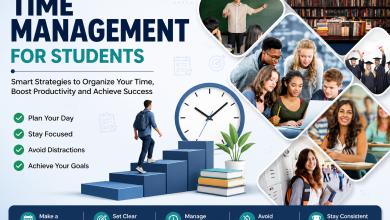
8.Time management
Students often have many responsibilities competing for their attention. Classes, assignments, examinations, family responsibilities, hobbies, social activities, and personal goals can make time management difficult.
Good time management helps students decide what should be done first and how much time should be given to different tasks.
It does not mean studying every minute of the day. In fact, effective time management also includes breaks, rest, and personal activities.
Simple ways to manage time
Students can:
- Create a weekly study plan.
- Break large assignments into smaller tasks.
- Set realistic deadlines.
- Identify important tasks first.
- Reduce unnecessary distractions.
- Keep some flexible time for unexpected work.
A simple schedule that a student actually follows is more useful than a complicated plan that is quickly abandoned.
9.Teamwork and collaboration
Many important projects require people to work together. Students may encounter group assignments at school or university, and professional workplaces commonly involve collaboration between people with different skills.
Teamwork involves sharing responsibilities, listening to others, communicating clearly, respecting different opinions, and working toward a common goal.
Students can learn a lot from working with people who think differently from them.
How to improve teamwork
Students can participate actively in group projects, clubs, sports, volunteer activities, and community programs.
They should practice contributing ideas while also giving others an opportunity to speak. Learning how to disagree respectfully is another important part of collaboration.
10.Reasarch skills
Research skills help students find, evaluate, organize, and use information effectively.
Searching the internet can produce thousands of results in seconds, but not all of those results are equally reliable. Students need to understand how to distinguish useful information from weak or misleading sources.
Good research involves checking evidence, comparing sources, identifying original information, and keeping track of where information came from.
These skills are particularly important when students write assignments, prepare presentations, conduct projects, or investigate unfamiliar subjects.
How to improve research skills
Students can compare several credible sources instead of relying on the first search result they find.
They can also learn basic citation practices and understand why copying someone else’s work without proper acknowledgment is a form of academic dishonesty.
11.Financial literacy
Financial education is another valuable skill that students can begin learning early.
Financial literacy involves understanding basic concepts such as budgeting, saving, spending, income, debt, needs, wants, and financial planning.
Students who develop these habits may find it easier to make responsible financial decisions as they become adults.
Financial literacy does not require students to understand complicated investment strategies. Basic money management is a useful starting point.
How students can develop financial literacy
Students can track their spending, create a simple budget, set saving goals, and learn to distinguish between necessary purchases and optional spending.
Parents and teachers can also use everyday situations to explain how money works.
12. Self -learning skills
One of the most valuable future-ready skills for students is the ability to learn independently.
Formal education provides a foundation, but people continue learning throughout their lives. New software, technologies, industries, and professional requirements can create a need for continuous learning.
Self-learning means taking responsibility for personal development rather than waiting for someone else to provide every lesson.
A student who knows how to learn independently can explore subjects beyond the standard curriculum and develop skills based on personal interests or future goals.
How to develop self learning habits
Students can choose one topic, set a clear learning goal, find reliable resources, practice regularly, and review their progress.
For example, a student interested in digital marketing could learn basic SEO, content writing, analytics, or social media marketing through structured practice.
13.Emotional intelligence
Emotional intelligence involves understanding emotions, managing reactions, recognizing how others may feel, and responding appropriately.
Students experience many situations that require emotional awareness. They may face academic pressure, disagreements with classmates, group-work challenges, disappointment, or uncertainty about the future.
Emotional intelligence can help students handle these situations more constructively.
It also supports communication and teamwork because understanding other people’s feelings can make cooperation easier.
How to develop emotional intelligence
Students can practice identifying their emotions before reacting, listening carefully to others, considering different perspectives, and learning healthy ways to deal with frustration.
Simple habits such as reflection and journaling can help students become more aware of their emotional responses.
14.Leadership skills
Leadership is not only about becoming the head of a group. It is also about taking responsibility, making thoughtful decisions, helping others, and working toward a shared objective.
Students can develop leadership skills even without holding an official leadership position.
For example, organizing a school project, helping classmates, coordinating an event, or taking responsibility for a group assignment can provide leadership experience.
How to develop leadership skills
Students can volunteer for responsibilities, organize small projects, support teammates, practice decision-making, and learn how to accept responsibility when something goes wrong.
Good leadership also requires listening. A strong leader does not simply tell people what to do; they understand the team and help others contribute.
How these 14 skills work together
The real value of these skills becomes clearer when they are combined.
Imagine a student working on a technology project. They may need research skills to gather information, critical thinking to evaluate sources, creativity to develop an idea, problem-solving to overcome challenges, and digital literacy to use the necessary tools.
If the project involves a team, communication, collaboration, and leadership become important. Time management helps the group meet its deadline, while adaptability helps them respond when the original plan does not work.
If AI tools are involved, AI literacy helps the student use them responsibly.
This shows that future-ready skills are not separate abilities that exist independently. They support one another.
How students can start developing these skills in 2026
Students do not need an expensive course or a large amount of free time to begin.
A practical approach is to choose two or three skills and connect them to existing activities.
For example:
During study: Practice critical thinking and research skills.
During group projects: Focus on communication and teamwork.
While using technology: Improve digital literacy and AI awareness.
During personal planning: Practice time management and financial literacy.
During creative activities: Develop creativity and problem-solving.
During difficult situations: Practice adaptability and emotional intelligence.
The important thing is consistent practice. Spending a small amount of time every day can be more effective than trying to learn everything in a single week.
Common mistakes students should avoid
Developing new skills can be difficult when students approach the process with unrealistic expectations.
One common mistake is trying to learn too many skills simultaneously. This can create unnecessary pressure and make it difficult to see progress.
Another mistake is focusing only on theory. Reading about communication, leadership, or time management is useful, but actual improvement requires practice.
Students should also avoid depending completely on technology. Digital tools and AI can support learning, but students still need to develop their own judgment and understanding.
Finally, students should not compare their progress too closely with others. Everyone has different strengths, opportunities, and learning speeds.
Why future ready skills matter beyond school
Education should prepare students for more than academic success. It should them develop the knowledge and abilities needed to handle real life situations. Education can also prepare people to participate effectively in society and respond to real-world challenges.
A student may eventually change careers, learn new technologies, start a business, work with international teams, or enter a profession that does not yet exist in its current form.
Skills such as adaptability, communication, critical thinking, and self-learning can remain useful even when specific technologies or job requirements change.
That is what makes these skills valuable. They are not tied to one particular textbook, examination, or profession.
Final thoughts
The future cannot be predicted perfectly, but students can prepare for it by developing abilities that remain useful across different situations.
These 14 future-ready skills for students—critical thinking, communication, digital literacy, AI literacy, problem-solving, creativity, adaptability, time management, teamwork, research, financial literacy, self-learning, emotional intelligence, and leadership—can create a strong foundation for academic and personal growth.
Students do not need to become experts in every area immediately. The better approach is to start small, practice consistently, learn from mistakes, and gradually expand their abilities.
Technology will continue to change, but the ability to learn, think, communicate, adapt, and solve problems will remain valuable.
In 2026 and beyond, students who combine academic knowledge with practical skills can be better prepared not only for future careers but also for the challenges and opportunities of everyday life.
Thank you for reading
Thank you for taking the time to read this article. We hope these 14 future-ready skills have given you useful ideas about what students can start learning and practicing in 2026.
Remember, you do not need to master every skill at once. Every small step you take today can contribute to a stronger and more confident future.
Keep learning, keep improving, and never stop believing in your potential.