From Practice Projects to Paid Work: A Beginner’s Digital Skills Guide

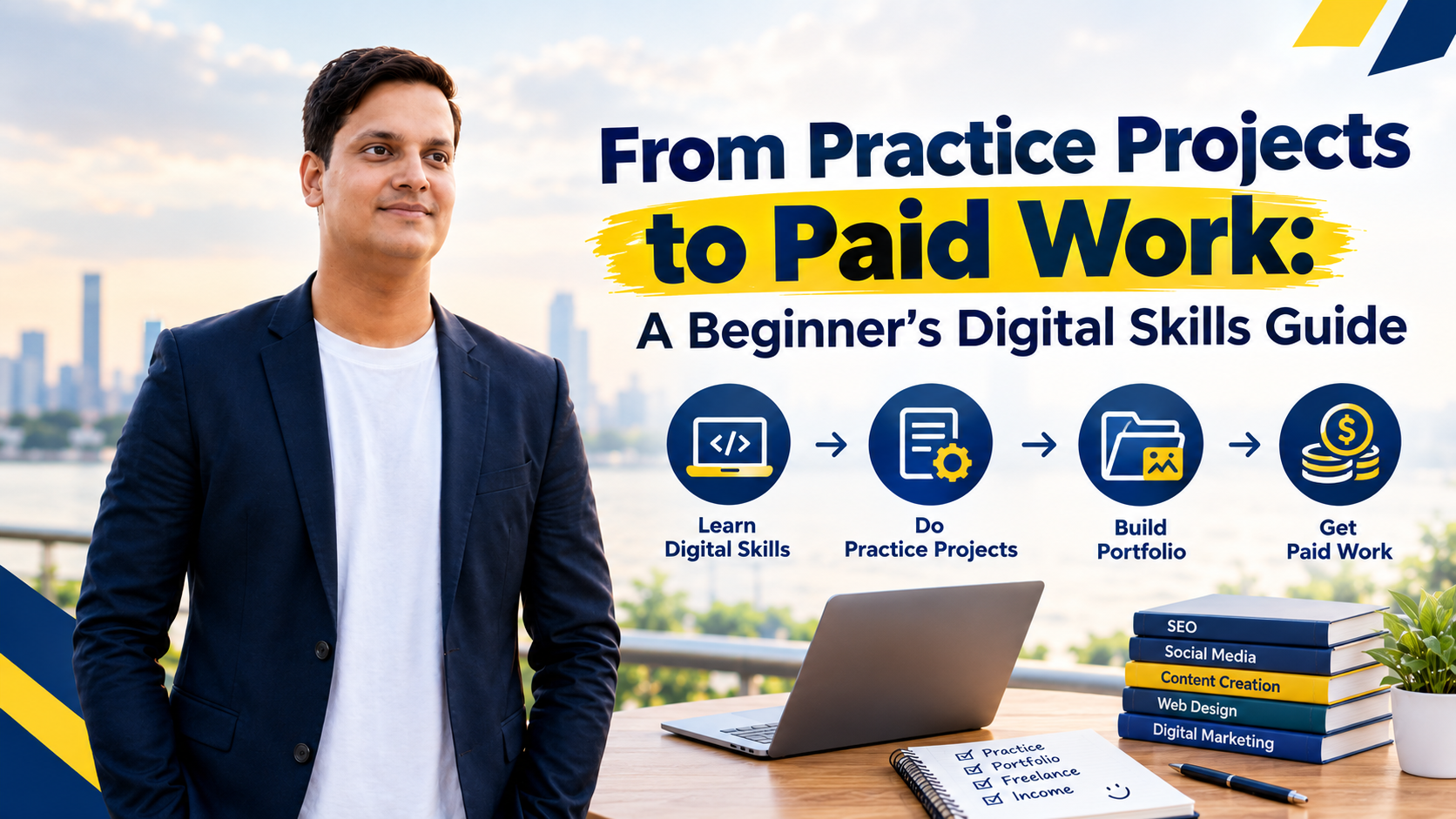
Starting an online career can feel confusing when you have little experience and do not know which skill to learn first. The internet offers many possibilities, but not every opportunity is suitable for someone who is just getting started. From Practice Projects to Paid Work A Beginner’s Digital Skills Guide.
Digital skills are useful because many everyday business activities now involve online tools. Shops need product information, creators need organized content, and small companies need help communicating with customers. These tasks create opportunities for people who are willing to develop relevant abilities and deliver dependable work.
However, learning a digital skill does not automatically lead to employment or income. Finding work also requires practice, communication, patience, and an understanding of what clients expect.
This guide explores practical digital skills for beginners, explains how each can be applied to real tasks, and provides a manageable plan for preparing to seek online work. From Practice Projects to Paid Work A Beginner’s Digital Skills Guide. From Practice Projects to Paid Work A Beginner’s Digital Skills Guide.
What makes a digital skill useful for online work?
A digital skill becomes commercially useful when it helps someone complete a task, improve a process, or solve a recognizable problem. Knowing how to operate an application is a starting point, but being able to use it effectively is what makes the ability valuable.
Consider a small clothing business that receives product photographs every day. The owner may struggle to create attractive promotional posts, write product descriptions, and keep social media content organized. A beginner who can perform one of these tasks consistently may be able to offer a useful service.
Before choosing a skill, consider three factors:
- Practical ability: Can you complete the task without constant guidance?
- Demand: Are businesses, creators, or individuals looking for this type of assistance?
- Personal suitability: Are you interested enough to practice and improve?
You can investigate demand by reviewing genuine project descriptions, business websites, and professional communities. Look for specific tasks that appear repeatedly rather than relying on claims about which skill earns the most money. From Practice Projects to Paid Work A Beginner’s Digital Skills Guide.
1.Social media content planning
Social media content planning involves organizing what a business publishes, why it publishes it, and who it wants to reach. The work goes beyond uploading occasional photographs.
A beginner may help a local shop prepare a weekly content calendar, organize product announcements, write captions, or suggest topics for educational posts. These activities can help a business maintain a consistent online presence.
For example, a clothing store might publish a product introduction on Monday, a styling suggestion on Wednesday, and answers to common customer questions on Friday.
How to practice: Choose an imaginary business and prepare a seven-day content plan. Include a topic, intended audience, caption idea, and suggested visual for each post.
Do not promise that a content calendar will automatically increase sales. Business results depend on factors such as product quality, pricing, audience interest, and the effectiveness of the overall marketing strategy. From Practice Projects to Paid Work A Beginner’s Digital Skills Guide.
2.Simple graphic design for businesses

Graphic design helps businesses communicate information visually. A promotional image needs to attract attention, but it must also make the message easy to understand.
Beginners can practice creating product announcements, event posters, offer graphics, and social media templates. Free or low-cost design tools can be sufficient for learning basic layout, typography, spacing, and image selection.
Imagine a small bakery announcing a weekend offer. A useful design would make the product, price, offer conditions, and ordering instructions easy to identify without overcrowding the image.
How to practice: Create three related promotional graphics for one imaginary business. Use consistent colors and typography so the designs appear to belong to the same brand.
A small portfolio can demonstrate your ability more effectively than simply stating that you know a design tool. Label practice projects honestly and do not present imaginary businesses as paying clients. From Practice Projects to Paid Work A Beginner’s Digital Skills Guide.
Before accepting a design project, confirm the required dimensions, brand assets, delivery format, and number of revisions. From Practice Projects to Paid Work A Beginner’s Digital Skills Guide.
3.Content writing and product descriptions
Content writing involves explaining ideas, products, or services in a way that helps readers understand them. Possible assignments include blog posts, website pages, product descriptions, email messages, and social media captions.
Starting with a familiar area can make research and fact-checking easier.
For example, an online clothing seller may need descriptions that explain a garment’s fabric, fit, available sizes, care instructions, and ordering details. Clear information can help customers decide whether a product meets their needs.
How to practice: Write five original product descriptions using fictional product information. Then prepare a short informational article on a subject you understand. Review each piece for clarity, factual accuracy, repetition, and grammar.
AI writing tools can support brainstorming and editing, but their output should not replace independent thinking or verification. Writers should check claims, follow client requirements, respect copyright, and avoid presenting unsupported information as fact. From Practice Projects to Paid Work A Beginner’s Digital Skills Guide.
A useful writing portfolio should show that you can communicate clearly, organize information, and adapt your language to different audiences. From Practice Projects to Paid Work A Beginner’s Digital Skills Guide.
4.Basic search engine optimization
Search engine optimization, commonly called SEO, involves improving website content and structure so search engines can understand its purpose and users can find useful information.
Beginners can learn keyword research, search intent, title writing, heading organization, internal linking, and basic on-page checks. From Practice Projects to Paid Work A Beginner’s Digital Skills Guide.
Suppose a website publishes a guide about organizing digital files. An SEO beginner could examine what readers want to know, identify relevant search phrases, organize the article around useful questions, and prepare a descriptive page title.
These tasks require research and judgment rather than simply inserting a keyword repeatedly.
How to practice: Select a sample article and prepare a small SEO worksheet. Include its main topic, intended reader, search intent, proposed title, meta description, relevant secondary phrases, and possible internal links.
You can learn to use available search and analytics tools as your experience develops. Practice on your own website or a demonstration project before offering work that requires access to a client’s website. From Practice Projects to Paid Work A Beginner’s Digital Skills Guide.
Avoid promising first-page rankings or guaranteed traffic. Search performance depends on many factors, including competition, content quality, website condition, and search engine changes.
5.short form video editing
Short videos are used by businesses, educators, creators, and community organizations to explain ideas and present products. Video editing turns recorded footage into a clear and engaging final piece. From Practice Projects to Paid Work A Beginner’s Digital Skills Guide.
Beginner video editors can start by selecting the most useful footage, removing distracting pauses, adding clear subtitles, and adjusting sound levels. They can also prepare the finished video to suit the platform where it will be published.
For instance, a small business owner may record several clips to introduce a new product. A video editor can combine the best moments, arrange them in a logical order, and add brief on-screen explanations so viewers can understand the product more easily. A simple closing screen can then guide interested customers toward the next step, such as visiting the shop or requesting more information.
How to practice: Use your own footage or media that you have permission to use. Create a short demonstration video with a clear beginning, informative middle, and appropriate ending. From Practice Projects to Paid Work A Beginner’s Digital Skills Guide.
Learn basic pacing, audio quality, caption placement, and export settings. Avoid using copyrighted music or footage without the necessary permission.
A portfolio should include a few polished examples that demonstrate different editing tasks. As you improve, you may explore storytelling, more advanced transitions, and editing workflows for regular clients. From Practice Projects to Paid Work A Beginner’s Digital Skills Guide.
6.Virtual assistance and online research
Virtual assistants help individuals and businesses manage routine administrative work remotely. The responsibilities vary, but they may include organizing spreadsheets, formatting documents, preparing schedules, researching publicly available information, and maintaining records.
This type of work can suit people who are organized, careful with details, and comfortable following instructions. From Practice Projects to Paid Work A Beginner’s Digital Skills Guide.
For instance, a business owner may need a spreadsheet containing product names, prices, publicly available supplier details, and website links. A virtual assistant could organize the information into consistent columns and identify missing entries.
How to practice: Create a sample spreadsheet with fictional product records. Use clear column headings, consistent formatting, and basic sorting or filtering. You could also prepare a meeting schedule or a well-formatted document.
Accuracy matters. Check information before submitting it, keep files organized, and ask questions when instructions are unclear. From Practice Projects to Paid Work A Beginner’s Digital Skills Guide.
Client confidentiality is equally important. Do not share private documents or customer information without permission, and never claim professional experience you do not have.
7.Basic website and online store support
Not every online business task requires advanced programming. Some businesses need help updating product listings, formatting pages, organizing categories, checking links, or making routine content changes through a website management system.
These tasks may be suitable for beginners who are comfortable learning software and following instructions carefully. From Practice Projects to Paid Work A Beginner’s Digital Skills Guide.
For example, an online store assistant might add product descriptions, organize items into appropriate categories, check image sizes, and verify that product information is consistent.
How to practice: Build a simple demonstration website or use a practice environment. Add sample pages, organize a small product catalog, and check how the content appears on mobile and desktop screens.
Learn the difference between routine content updates and technical changes that require specialist knowledge. Do not experiment on a live client website without authorization, and make sure backups and access permissions are handled appropriately.
Website support can become more specialized as you develop skills in accessibility, performance, analytics, or web development. From Practice Projects to Paid Work A Beginner’s Digital Skills Guide.
8.Using AI tools to support digital tasks

AI tools can assist with research planning, brainstorming, summarization, drafting, and repetitive administrative work. Their usefulness depends on how carefully people apply and review their output.
A social media assistant might use AI to generate initial topic ideas. A writer might request an outline before conducting research. A virtual assistant could use an approved tool to organize non-confidential notes. From Practice Projects to Paid Work A Beginner’s Digital Skills Guide.
The important skill is knowing how to evaluate the result.
AI systems can produce inaccurate claims, overlook important context, or generate material that sounds convincing but does not meet the task requirements. Beginners should verify factual information, review the final output, and follow the client’s rules for AI use.
How to practice: Choose one routine task and complete it both manually and with an AI assistant. Record where human review was necessary. From Practice Projects to Paid Work A Beginner’s Digital Skills Guide.
Avoid uploading confidential client data without appropriate permission. Do not assume that AI-generated work is automatically original, correct, or suitable for publication.
How to choose your first skill
Trying to learn all these skills simultaneously can make progress difficult to measure. A better approach is to select one main skill based on your interests, available resources, and the types of tasks you can realistically practice. From Practice Projects to Paid Work A Beginner’s Digital Skills Guide.
Use this simple process:
- Choose a task you understand. Start with something you can explain in ordinary language.
- Investigate real opportunities. Review project listings and identify the work clients actually request.
- Learn the fundamentals. Use reliable educational resources and practice the same task repeatedly.
- Create demonstration work. Prepare examples that show what you can deliver.
- Request useful feedback. Ask someone to review clarity, accuracy, presentation, and completeness.
- Refine your service. Offer a clearly defined task rather than claiming to be an expert in everything.
You can add related skills later. For example, a content writer may eventually learn basic SEO, while a graphic designer may develop skills in social media planning. From Practice Projects to Paid Work A Beginner’s Digital Skills Guide.
Preparing to find your first online project

When your samples are ready, identify suitable opportunities through reputable freelance marketplaces, professional networks, or direct outreach to businesses.
Before contacting someone, learn a little about their work and identify a task you can genuinely help with. Explain what you offer, provide a relevant sample, and keep your introduction concise. From Practice Projects to Paid Work A Beginner’s Digital Skills Guide.
For example, instead of saying, “I can do every kind of digital marketing,” describe a specific service: preparing a weekly social media content calendar for a small business.
Agree on the scope, deadline, payment arrangements, and revision limits before beginning. Review platform fees and payment options if you use a freelance marketplace. From Practice Projects to Paid Work A Beginner’s Digital Skills Guide.
Be cautious of offers that require large upfront payments to secure a job, promise guaranteed income, or request passwords and verification codes. Legitimate opportunities should have understandable responsibilities and payment terms.
A realistic four-week preparation plan
Week 1: Learn one skill. Choose a specific service, identify trustworthy learning resources, and practice its basic tasks. From Practice Projects to Paid Work A Beginner’s Digital Skills Guide.
Week 2: Complete sample projects. Produce two or three examples and review them for quality. Correct mistakes before adding them to your portfolio. From Practice Projects to Paid Work A Beginner’s Digital Skills Guide.
Week 3: Organize your portfolio. Present your best work with short explanations of the task, your process, and the intended result. Clearly identify demonstrations as sample projects.
Week 4: Explore suitable opportunities. Research potential clients, prepare personalized introductions, and apply to projects that match your current abilities.
This schedule is a starting framework, not a promise of employment within a month. Some skills require considerably more practice, and the time needed to secure paid work varies. From Practice Projects to Paid Work A Beginner’s Digital Skills Guide.
Conclusion
Practical digital skills can help beginners prepare for online work, but choosing a skill is only the beginning. You must learn how to complete useful tasks, demonstrate your ability, communicate professionally, and understand what potential clients need.
Start with one manageable service. Build a few strong examples, improve them through feedback, and look for opportunities that match your experience. Avoid expensive shortcuts and unrealistic income promises. From Practice Projects to Paid Work A Beginner’s Digital Skills Guide.
The aim is not to know every digital tool. It is to become dependable at a task that someone genuinely needs. With consistent practice and sensible decisions, you can build a stronger foundation for exploring freelance projects, remote work, or other online opportunities.