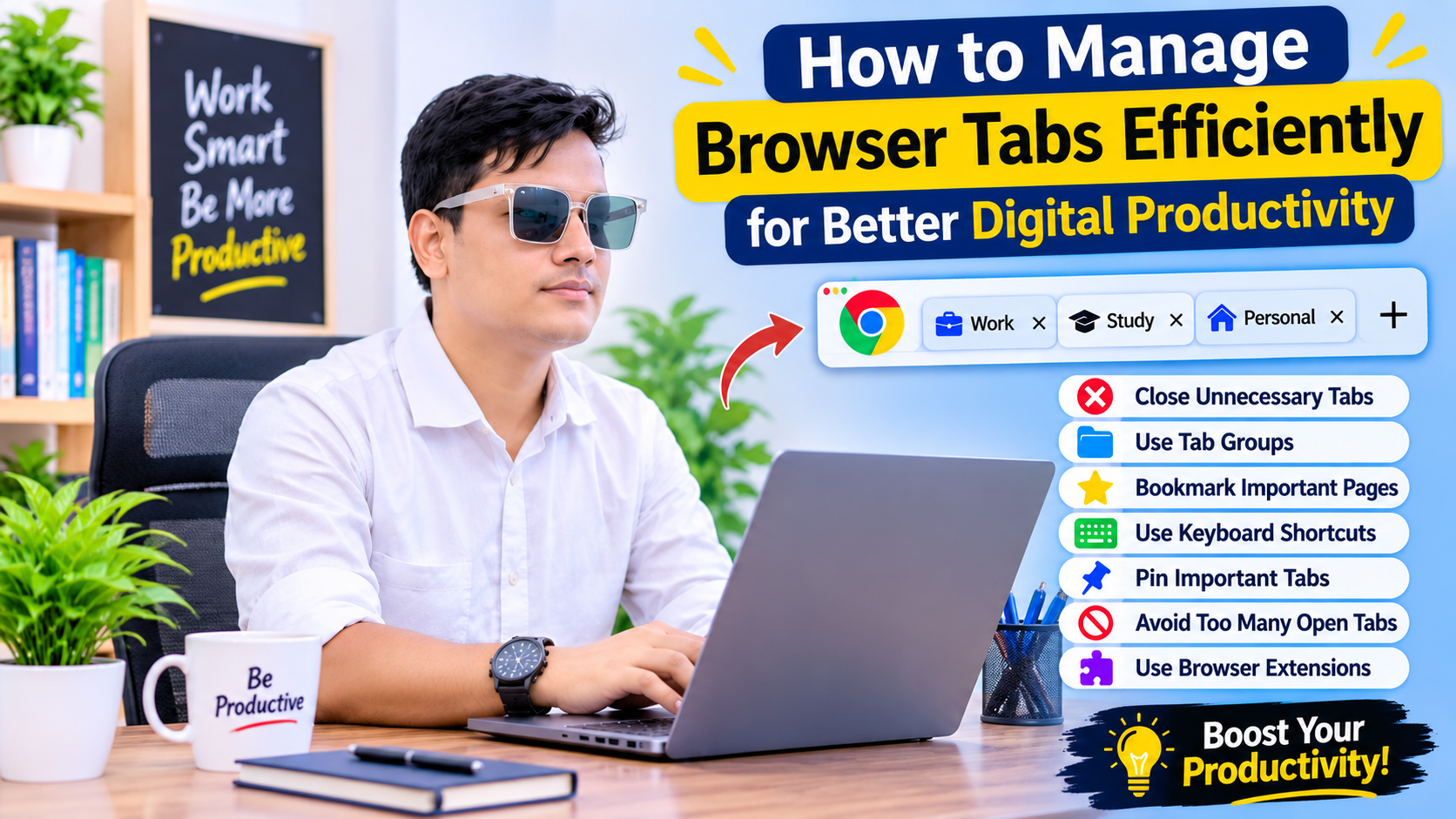
How to Manage Browser Tabs Efficiently for Better Digital Productivity

Introduction
People depend on web browsers to study, complete office tasks, research information, communicate with others, and manage online activities. However, one small habit can make these activities more difficult: keeping too many browser tabs open at the same time. How to Manage Browser Tabs Efficiently for Better Digital Productivity
You might open several websites to compare information, read articles, watch tutorials, or complete different tasks. After a while, your browser becomes crowded with tabs. Finding a particular webpage takes longer, important information becomes difficult to locate, and your attention may shift between unrelated activities. How to Manage Browser Tabs Efficiently for Better Digital Productivity
Learning how to manage browser tabs efficiently can make everyday computer use more organized. It helps users find information faster, maintain better concentration, and create a more comfortable browsing experience. How to Manage Browser Tabs Efficiently for Better Digital Productivity
This guide explores practical ways to organize browser tabs, reduce unnecessary distractions, and develop better browsing habits without relying on complicated software.
1.Understand why too many browser tabs become a problem
Opening multiple tabs is not necessarily a bad habit. In fact, it can make research and multitasking easier when used carefully. The problem begins when users keep opening new pages without closing or organizing the previous ones.
A crowded browser can create several difficulties.
First, identifying the correct webpage becomes challenging. When many tabs display similar website icons, users may need to click through several pages before finding the information they need.
Second, excessive tabs can consume computer memory. Some websites continue running background activities even when users are not actively viewing them. Depending on the browser and computer, this may affect performance.
Another issue is reduced concentration. Seeing numerous open pages can encourage people to switch between unrelated activities instead of completing one task.
Understanding these problems is the first step toward developing a more organized browsing routine.
2. Keep only relevant tabs open
One simple way to improve browser organization is to remove webpages that are no longer necessary. How to Manage Browser Tabs Efficiently for Better Digital Productivity
Before opening another website, consider whether the existing tabs are still useful. If you have already collected the required information from a webpage, there may be no reason to keep it open.
For example, someone researching a technology topic might open ten different articles. After reviewing them, only three pages may contain information that is genuinely useful.
Closing the unnecessary pages creates a cleaner workspace.
A practical approach is to review open tabs after completing each major activity. Keep the pages required for your current task and close the rest. How to Manage Browser Tabs Efficiently for Better Digital Productivity. This small habit can prevent browser clutter from growing throughout the day.
3.Organize different activities into separate groups
Not every webpage belongs to the same project. Mixing educational resources, entertainment websites, work-related pages, and personal browsing can make information harder to manage. How to Manage Browser Tabs Efficiently for Better Digital Productivity
Browser tab grouping features can help solve this problem. Many modern browsers provide options for creating groups and assigning names or colors to related tabs. Users can organize webpages according to their activities.
For example, a student might create these groups:
- Study Resources
- Online Classes
- Research Articles
- Personal Activities
A digital marketer could organize tabs into:
- SEO Research
- Social Media Marketing
- Advertising Campaigns
- Content Planning
This structure makes it easier to identify related websites without searching through an unorganized collection of pages.
The main idea is to create a browsing environment where every important webpage has a clear purpose. How to Manage Browser Tabs Efficiently for Better Digital Productivity
4. Use bookmarks instead of keeping every website open
Many people leave websites open because they are afraid of losing useful information. However, keeping every webpage active is not the only way to save important resources. How to Manage Browser Tabs Efficiently for Better Digital Productivity
Browser bookmarks provide a more organized alternative.
A bookmark allows users to save a webpage and return to it later without keeping the original tab open.
For better organization, create folders based on specific interests or activities.
Some useful bookmark folder examples include:
- Technology Guides
- Digital Marketing Resources
- Learning Websites
- Online Business Tools
- Useful Tutorials
When saving a webpage, choose a meaningful name so that you can recognize it later. Bookmarks are particularly helpful for people who regularly research similar subjects or revisit the same online resources. How to Manage Browser Tabs Efficiently for Better Digital Productivity
5.Take advantage of browser tab search

Finding a particular webpage can become difficult when dozens of tabs are open. Instead of clicking every tab individually, use the browser’s built-in tab search feature when available. Some browsers allow users to search open tabs by entering a word or part of a webpage title.
For instance, imagine you have several websites open while researching artificial intelligence. You remember visiting an article about AI writing tools but cannot identify its location.
Searching for a related word may help you locate the correct tab more quickly. How to Manage Browser Tabs Efficiently for Better Digital Productivity
This feature is useful for students, researchers, writers, and professionals who regularly work with multiple online resources.
If your browser does not offer convenient tab searching, consider using a browser extension with a good reputation and clear privacy practices. How to Manage Browser Tabs Efficiently for Better Digital Productivity
6. Use keyboard shortcuts to navigate faster
Keyboard shortcuts can reduce the time spent performing repetitive browser actions.
Instead of reaching for the mouse every time, users can switch between tabs, open new pages, and close unnecessary windows using a few key combinations. How to Manage Browser Tabs Efficiently for Better Digital Productivity
Some commonly supported shortcuts include:
| Action | Windows Shortcut |
| Open a new tab | Ctrl + T |
| Close current tab | Ctrl + W |
| Re-open recently closed tab | Ctrl + Shift + T |
| Switch to next tab | Ctrl + Tab |
| Switch to previous tab | Ctrl + Shift + Tab |
| Jump to a specific tab | Ctrl + 1 to 8 |
| Open a new window | Ctrl + N |
These shortcuts work in many popular desktop browsers, although some details may differ. Learning even three or four shortcuts can make everyday browsing more convenient.
7.Reate a simple research workflow
Research activities often require visiting several websites. Without a clear process, users may collect too many open pages and struggle to remember why they opened them. How to Manage Browser Tabs Efficiently for Better Digital Productivity
A simple research workflow can prevent this problem. How to Manage Browser Tabs Efficiently for Better Digital Productivity
Next, search for relevant information and open only the pages that appear useful. After reviewing each source, record important information in a document or note-taking application.
For example, when researching an article about digital technology, you might organize your findings under these headings:
- Main ideas
- Important explanations
- Useful examples
- Reliable references
- Additional questions
Once the necessary information has been collected, save important webpages as bookmarks and close the unnecessary tabs.
This process separates information collection from information storage, making research easier to manage. How to Manage Browser Tabs Efficiently for Better Digital Productivity
8.Avoid opening new tabs without a clear purpose
One common reason browsers become crowded is the habit of opening websites out of curiosity.
A person may begin researching a particular subject but quickly move to unrelated videos, shopping websites, news pages, or social media platforms. How to Manage Browser Tabs Efficiently for Better Digital Productivity
These activities can interrupt the original task.
Before opening another tab, ask yourself whether the webpage contributes to what you are currently trying to accomplish.
If it is unrelated but potentially useful later, save it as a bookmark or add it to a reading list if your browser supports one.
This approach helps maintain a clear distinction between immediate work and future interests. Over time, it can also encourage more intentional internet usage.
9.Use reading lists for articles you want to explore later
Sometimes users discover interesting articles but do not have enough time to read them immediately. Leaving these pages open creates unnecessary browser clutter.
A reading list can provide a better solution. Many browsers include built-in reading list or save-for-later options. These features allow users to store webpages and return to them when convenient.
For example, a student might save educational articles during the day and review them after completing regular study activities. How to Manage Browser Tabs Efficiently for Better Digital Productivity
Similarly, a content writer can collect useful research materials without keeping every webpage open.
Choose a saving method that is easy to access and regularly review the items you have collected.
Otherwise, a reading list can become just another disorganized collection.
10. Be careful when installing browser extensions
Browser extensions can provide additional features for organizing tabs, managing sessions, and improving browsing efficiency. How to Manage Browser Tabs Efficiently for Better Digital Productivity
However, installing too many extensions may create unnecessary complications. Some extensions request permission to access browsing information. Users should understand these permissions before allowing an extension to operate.
Before installing any tool, consider the following points:
- Check the developer’s reputation.
- Review the requested permissions.
- Read recent user feedback.
- Avoid extensions from unfamiliar sources.
- Remove tools that are no longer useful.
- Keep installed extensions updated.
A useful extension should solve a specific problem rather than introduce additional distractions.
For basic tab management, the built-in features of your browser may already provide everything you need. How to Manage Browser Tabs Efficiently for Better Digital Productivity
11.Manage browser sessions for different projects

Sometimes a user needs to work on several projects throughout the day.
For example, a freelancer might manage a client website, prepare social media content, and research new business opportunities.
Closing every tab after each activity can become inconvenient. Session management features can help users save a collection of open webpages and return to them later.
Depending on the browser, users may be able to restore previous sessions after restarting their computer or browser. How to Manage Browser Tabs Efficiently for Better Digital Productivity
Another option is to use separate browser profiles when different activities require different accounts, settings, or browsing environments.
However, saving sessions does not mean that every webpage should remain open permanently. Review saved sessions periodically and remove outdated collections.
12.Reduce background activity and unnecessary memory usage
Browser performance depends on several factors, including available computer memory, installed extensions, website complexity, and background processes.
When many resource-intensive websites remain open, a computer may become slower or less responsive.
To improve performance, close pages that are no longer required.
You can also explore your browser’s performance or memory-saving settings if available.
Some browsers offer features that reduce background activity for inactive tabs. These options may help conserve system resources while allowing users to return to previously opened pages.
Remember that the effect depends on your device and browsing habits.
If performance problems continue, check whether an extension or a particular website is consuming excessive resources.
13. Develop a daily browser organization routine
A good browsing system becomes more effective when it is part of a regular routine.
You do not need to spend a long time organizing your browser. A few minutes at the beginning and end of the day may be enough. How to Manage Browser Tabs Efficiently for Better Digital Productivity
Consider following this simple routine:
At the beginning of the day:
- Open only the websites required for your main activities.
- Review saved bookmarks and previous sessions.
- Arrange important webpages into suitable groups.
During the day:
- Close completed tasks.
- Save useful information for future reference.
- Avoid opening unrelated websites unnecessarily.
- Keep work-related pages organized.
At the end of the day:
- Close unnecessary tabs.
- Save important webpages.
- Review unfinished activities.
- Prepare the browser for the next working session.
Following a consistent routine can make internet browsing feel more manageable.
14. Choose browser features that match your needs

Different users have different browsing requirements. A student may need educational resources, while a business owner may regularly work with customer accounts and online management platforms.
Therefore, the best tab management method depends on individual needs. How to Manage Browser Tabs Efficiently for Better Digital Productivity
For basic browsing, bookmarks and keyboard shortcuts may be sufficient.
For research activities, tab groups and reading lists can provide additional organization.
For professionals handling several projects, browser profiles and session management may be more appropriate.
Avoid adopting complicated systems simply because they are available. Start with a few useful features and introduce additional tools only when necessary.
A simple system that you use consistently is often more effective than a complicated system that you eventually abandon. How to Manage Browser Tabs Efficiently for Better Digital Productivity
Common browser tab management mistakes to avoid
Even when users understand browser organization, certain habits can make their efforts less effective.
Keeping completed webpages open: Once information has been collected, save the useful resource and close the unnecessary page.
Installing too many extensions: Additional tools may introduce security concerns, consume resources, or create unnecessary complexity.
Ignoring bookmarks: Saving webpages without meaningful folder names makes future searches difficult.
Mixing unrelated activities: Keeping personal browsing and professional research together can make navigation confusing.
Never reviewing saved sessions: Old sessions may contain outdated pages that are no longer relevant.
Avoiding these mistakes can help create a more reliable browsing environment. How to Manage Browser Tabs Efficiently for Better Digital Productivity
Conclusion
Managing browser tabs efficiently is a practical digital skill that can improve everyday computer use. Although opening multiple webpages is useful for research and multitasking, an unorganized browser can make it harder to find information, maintain concentration, and complete tasks comfortably.
By using bookmarks, tab groups, keyboard shortcuts, reading lists, and simple browsing routines, users can create a cleaner digital workspace. How to Manage Browser Tabs Efficiently for Better Digital Productivity
The most important step is to develop habits that match your daily activities. You do not need expensive software or advanced technical knowledge to get started.
Begin by organizing your existing tabs, saving important resources, and closing pages that no longer serve a purpose. Small improvements in browser organization can make your everyday digital activities easier to manage. How to Manage Browser Tabs Efficiently for Better Digital Productivity