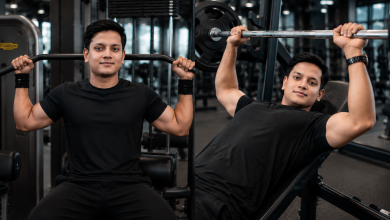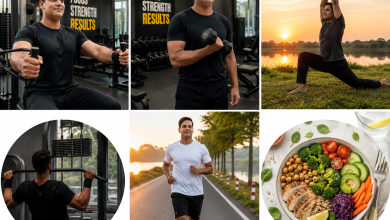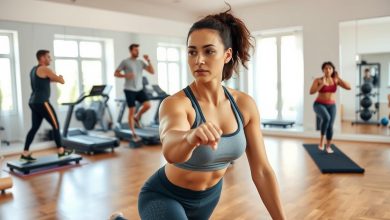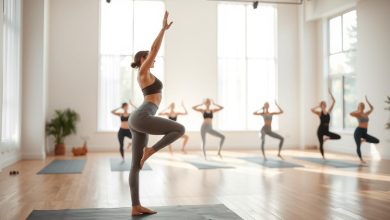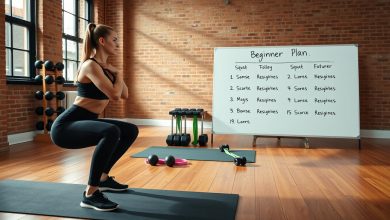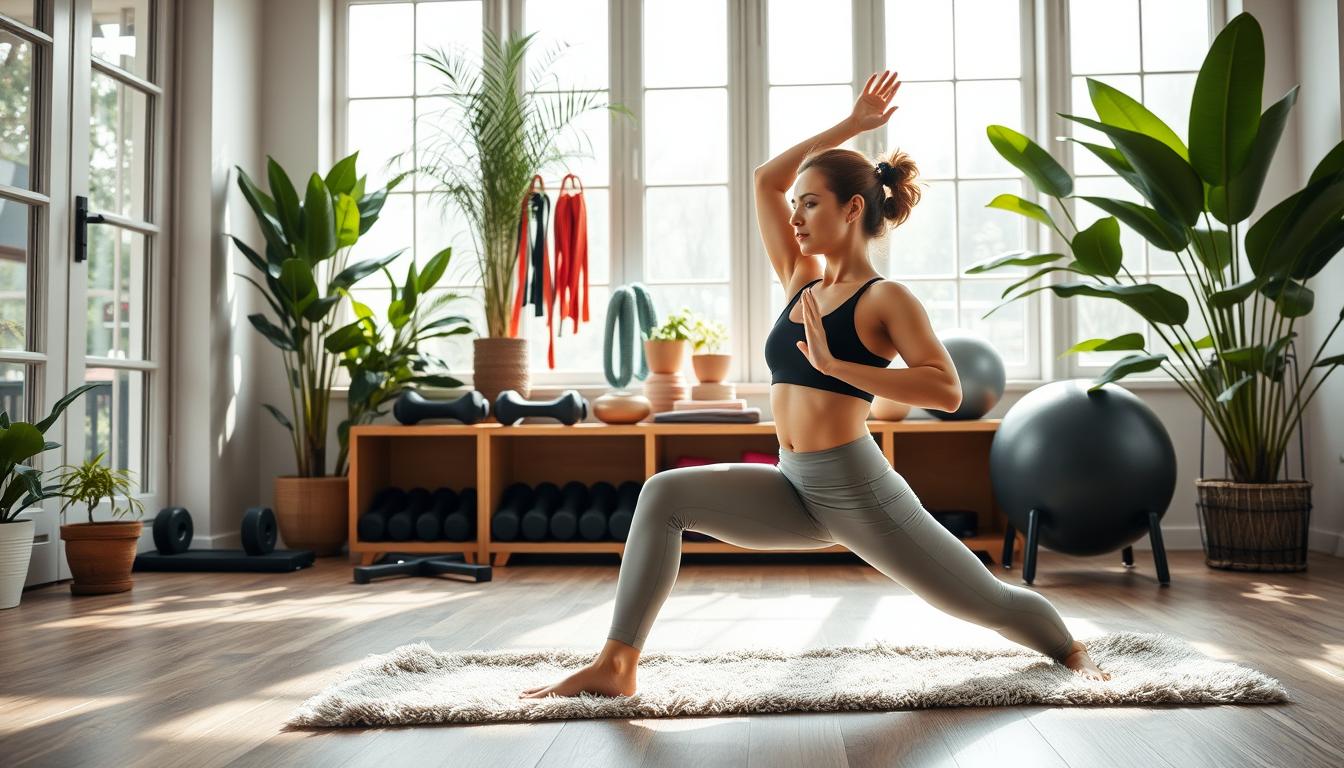
You don’t need to spend hours at the gym to get fit. Effective at-home fitness plans can help you stay in shape from your home. This way, you can work out whenever you want, without the cost of gym memberships or special equipment.
Adding simple yet effective exercise routines to your day can boost your health. It doesn’t matter if you’re new to fitness or have been doing it for years. Exercising at home can make you more flexible and save you money.
Key Takeaways
- Convenience of exercising at any time
- No need for expensive gym memberships
- Personalized workout routines
- Improved overall health and wellness
- Flexibility in scheduling workouts
Benefits of Home Workout Routines
Working out at home has many perks, like saving money and being flexible. It can greatly boost your fitness and health.
https://www.youtube.com/watch?v=GrCFh9grF-k
One big plus of home workouts is how affordable they are. Gym memberships can cost a lot. But with a home routine, you can save money and still reach your fitness goals. Here are some ways home workouts save you money:
- No gym membership fees
- Minimal equipment investment
- No commuting costs
Cost-Effective Fitness
Buying a few key pieces, like dumbbells or a yoga mat, is a smart investment. It’s a one-time cost that saves you money over time. This way of staying fit is not only budget-friendly but also efficient. It lets you use your money better.
Flexibility and Convenience
Home workouts give you the freedom to work out whenever you want. You don’t have to stick to gym hours. This is great for those with busy lives or odd work hours. With a home workout plan, you can:
- Exercise at your preferred time
- Avoid peak gym hours
- Quickly fit in a workout during breaks
Personalized Workout Environment
Working out at home lets you tailor your space to your liking. You can control things like temperature, music, and lighting. This makes your workouts more fun and effective. A space that’s just for you can also help you focus better.
By using these benefits, you can make a home workout plan that fits your life and goals.
Essential Equipment for Home Workouts
To get the most out of your home workouts, having the right equipment is key. Some exercises need no tools, but others require specific gear. A few key pieces can make your workouts better and more varied.
Dumbbells and Resistance Bands
Dumbbells are a must-have for many home gyms. They’re versatile for strength training and more. Resistance bands are also great, offering a portable and affordable way to add resistance. Both are perfect for home gym workouts, helping you work different muscles.

Yoga Mats and Foam Rollers
A good yoga mat is crucial for comfort and grip during floor exercises. It cushions your joints and prevents slipping. Foam rollers help with muscle soreness and recovery. Both are simple yet effective for better home workouts.
Stability Balls and Kettlebells
Stability balls are excellent for core exercises and balance. They’re versatile for strength training and stretching. Kettlebells mix strength training with cardio, making them great for full-body exercises. They add a challenge to your bodyweight exercises at home.
Adding these essential pieces to your home workouts can make your fitness routine well-rounded. Whether you’re doing strength training, stretching, or cardio, the right tools matter. They can significantly improve your progress and fitness journey.
Full-Body Home Workout Routine
You don’t need a gym to get fit. A full-body workout can be done at home. With the right routine, you can get fit without expensive equipment.
Warm-Up Exercises
It’s key to warm up before working out. This prevents injury and boosts performance. Good warm-up exercises include:
- Jumping jacks: A classic that raises your heart rate and loosens muscles.
- Leg swings: Stand with feet apart and swing one leg forward and backward, then switch.
- Arm circles: Hold arms straight out and make small circles with your hands.

Strength Training Moves
Strength training is vital for a full-body workout. Here are some home exercises:
- Push-ups: Works your chest, shoulders, and triceps. Start in a plank and lower until your chest almost touches the ground.
- Squats: Targets legs and glutes. Stand with feet apart and lower down until thighs are parallel to the ground.
- Lunges: Works legs. Step out with one foot and lower until back knee almost touches the ground, then switch.
Cool Down Stretches
It’s important to cool down after working out. This helps your body recover. Good cool-down stretches include:
- Hamstring stretch: Sit on the floor with legs straight out. Lean forward to reach for your toes.
- Quad stretch: Stand with one hand on a wall for balance. Lift one leg behind you, holding onto your ankle.
- Chest stretch: Stand in a doorway with hands on the doorframe at shoulder height. Lean forward until you feel a stretch in your chest.
By adding these exercises to your routine, you can enjoy a full-body workout at home.
Bodyweight Exercises for All Levels
Bodyweight exercises make at-home fitness easy for everyone. They use your body weight to build strength and improve health. Plus, you can do them anywhere, anytime, without gym equipment.

Beginner Bodyweight Workout
Beginners can start with simple exercises. Push-ups, squats, and lunges are great for basic strength. Remember to start slow and focus on form to avoid injuries.
Sample Beginner Routine:
- Push-ups: 3 sets of 10 reps
- Squats: 3 sets of 10 reps
- Lunges: 3 sets of 10 reps (per leg)
Intermediate Bodyweight Exercises
Intermediate exercises are for those who have a basic level of fitness. Try diamond push-ups or jump squats to challenge yourself more. These exercises work different muscles.
Example Intermediate Routine:
- Diamond push-ups: 3 sets of 12 reps
- Jump squats: 3 sets of 15 reps
- Single-leg deadlifts: 3 sets of 12 reps (per leg)
Advanced Bodyweight Challenges
Advanced exercises are for those who want to push their limits. Try box jumps or planches for a tough workout. These exercises are great for experienced individuals.
Advanced Routine Example:
- Box jumps: 3 sets of 15 reps
- Planche holds: 3 sets of 30-second hold
- Burpees: 3 sets of 20 reps
As fitness expert,
“Bodyweight exercises are not just for beginners; they offer a comprehensive workout solution for all fitness levels.”
Adding these exercises to your routine can greatly improve your strength and fitness.
HIIT (High-Intensity Interval Training) at Home
High-Intensity Interval Training (HIIT) has changed how we see fitness. It’s a quick and effective way to boost heart health and burn calories at home. This method involves short, intense workouts followed by brief breaks.

Designing Your HIIT Routine
To create a HIIT routine at home, pick exercises that work many muscles at once. Examples include burpees, jump squats, or mountain climbers. Always warm up before starting and cool down afterwards to avoid injuries.
Key considerations: Choose exercises you like, set achievable intervals, and make sure you have enough time to recover.
Sample HIIT Workouts
A sample HIIT workout could be:
- 30 seconds of burpees
- 30 seconds of rest
- 30 seconds of jump squats
- 30 seconds of rest
- Repeat for 15-20 minutes
You can adjust this routine by changing the exercises, intervals, or how long you do it to fit your fitness level.
Benefits of HIIT Workouts
HIIT workouts have many benefits. They improve heart health, burn more calories, and boost your metabolism. They’re also great for all fitness levels, making them perfect for a virtual training program or home workout.
Adding HIIT to your home workouts can lead to big fitness gains quickly. It’s a smart and effective way to stay fit from home.
Cardio Options for Home Workouts
You can do effective cardio workouts at home with little equipment. Cardio exercises are key for a good fitness routine. They boost heart health, metabolism, and fitness.
Jump Rope Workouts
Jumping rope is a high-energy cardio workout that needs just a simple piece of equipment. It’s great for heart health, calorie burn, and coordination. A jump rope session can be as short as 10-15 minutes, perfect for a busy schedule.
To start, do shorter intervals (30 seconds to 1 minute) with rest breaks. As you get better, increase the time and intensity of your workouts.
Dancing and Aerobics
Dancing and aerobics are fun ways to get cardio without feeling like you’re working out. Many dance workout videos are online, from high-energy aerobics to graceful dance styles. These workouts keep you motivated and make home workouts enjoyable.
Popular dance and aerobics for cardio include Zumba, hip hop, and jazzercise. You can find videos and classes online or make your own routine with your favorite music.
Stair Climbing Techniques
If you have stairs at home, climbing them is a great cardio workout. It works your legs, glutes, and heart, giving a full-body workout. You can change the intensity by adjusting your pace or adding interval training.
Without stairs, you can use stair climber machines or step-up exercises with a sturdy chair or bench. These are just as effective.
| Cardio Exercise | Equipment Needed | Intensity Level |
|---|---|---|
| Jump Rope | Jump Rope | High |
| Dancing/Aerobics | None/Optional (mat, speakers) | Variable |
| Stair Climbing | Stairs or Stair Climber | High |
The American Heart Association says adding cardio to your routine lowers heart disease risk and boosts health. “Regular physical activity helps keep a healthy weight, reduces heart disease risk, and improves health and well-being.”

Yoga and Flexibility Routines at Home
Yoga at home is a great way to boost flexibility, balance, and strength. You don’t need special gear. It’s a simple way to improve your health every day.
Beginner Yoga Flow
Starting with yoga is easy. Begin with basic poses like Mountain Pose, Downward-Facing Dog, and Child’s Pose. These poses are great for beginners. They help you get stronger, more balanced, and flexible.
- Mountain Pose: Stand tall with feet hip-width apart, engaging your core and lengthening your spine.
- Downward-Facing Dog: Start on all fours, then lift your hips up and back, straightening your arms and legs.
- Child’s Pose: Kneel on the mat, then sit back onto your heels and stretch your arms out, lowering your forehead to the ground.
Intermediate Yoga Practices
When you get better at beginner poses, try more challenging ones. Intermediate poses like Warrior Poses, Triangle Pose, and Tree Pose are next. They need more balance, strength, and flexibility.

As you get into intermediate poses, work on your alignment and core. Try to move smoothly from one pose to the next.
Advanced Flexibility Techniques
For those who are more experienced, yoga can help you stretch your limits. Advanced poses include deep backbends and complex balancing poses. Always warm up well before trying these.
Advanced poses like Scorpion Pose, King Pigeon Pose, and Eight-Angle Pose are very challenging. They need a lot of flexibility, strength, and control.
Adding yoga to your home workout routine can make you more flexible, balanced, and healthy. Yoga is good for everyone, whether you’re just starting or have been practicing for a while.
Strength Training at Home Without Equipment
You don’t need a gym to get strong. You can work out at home with just your body. Use things around you or your own weight to challenge your muscles.

Using Household Items as Weights
Using household items as weights is easy. Fill water bottles with sand or water, grab cans, or use books. For example, do bicep curls with water bottles or shoulder presses with cans.
Creative Household Items for Strength Training:
- Water bottles or jugs filled with water or sand
- Canned goods or bottles for resistance
- Backpacks or bags filled with books for added weight
Bodyweight Strength Training
Bodyweight exercises are great for strength training at home. Try push-ups, squats, lunges, and planks. These exercises work many muscles and can be adjusted for your fitness level.
Benefits of Bodyweight Exercises:
- Improved strength and muscle tone
- Increased flexibility and mobility
- No need for any equipment, making it cost-effective
Circuit Training Styles
Circuit training is fast-paced and works many muscles. It’s good for strength and heart health. Use bodyweight exercises or household items for weights.
Sample Circuit Training Routine:
- Squats – 15 reps
- Push-ups – 10 reps
- Lunges – 15 reps (each leg)
- Plank hold – 30 seconds
Do the circuit 2-3 times with little rest in between.
Incorporating Core Workouts into Home Routines
Adding core exercises to your home workouts boosts stability and lowers injury risk. A strong core helps keep your posture right, balance steady, and fitness high.
The Importance of Core Strength
Core strength is key for fitness. It keeps your body stable during movements, improving balance and cutting injury risk. A strong core also boosts athletic performance by giving a solid base for powerful actions.
Benefits of Core Strength:
- Improved posture and balance
- Enhanced athletic performance
- Reduced risk of injury
- Better overall stability
Effective Core Exercises
Many effective core exercises can be done at home without equipment. These include:
- Plank: Holds the body straight from head to heels, working the core.
- Bicycle Crunches: Targets the obliques, boosting rotational strength.
- Russian Twists: Works the obliques, improving rotational strength and stability.
- Leg Raises: Strengthens the lower abs, boosting overall core strength.

Core Routine for Beginners
For beginners, starting with a simple routine is best. Here’s a beginner-friendly core routine for home:
- Plank: Hold for 30-60 seconds
- Bicycle Crunches: 3 sets of 15-20 reps
- Russian Twists: 3 sets of 15-20 reps
- Leg Raises: 3 sets of 15-20 reps
Start slow and get stronger as you go.
Creating a Balanced Weekly Workout Plan
To get the most out of your home workouts, creating a balanced weekly schedule is key. A good routine targets different muscle groups and allows for enough rest.
Designing Your Routine
When planning your home workouts, think about your fitness goals and current level. It’s important to mix strength training, cardio, and flexibility exercises for overall fitness.
- Strength Training: Include exercises like squats, lunges, push-ups, and rows to work major muscles.
- Cardio: Add activities like jumping jacks, jogging in place, or dancing to boost your heart rate.
- Flexibility: Add yoga or stretching to improve flexibility and reduce muscle soreness.

Importance of Rest Days
Rest days are crucial in any workout plan. They let your muscles recover and get stronger. Aim for at least one or two rest days a week.
Adequate rest prevents overtraining, which can cause injuries and burnout. Listen to your body and take extra days off if needed.
Tracking Your Progress
Tracking your progress is key to seeing how well your workout plan works. Keep a workout journal or use a fitness app to log your exercises, sets, reps, and weight.
| Workout Day | Exercises | Sets/Reps |
|---|---|---|
| Monday | Push-ups, Squats | 3 sets of 10 reps |
| Wednesday | Lunges, Rows | 3 sets of 12 reps |
| Friday | Deadlifts, Planks | 3 sets of 8 reps |
By monitoring your progress, you can adjust your routine as needed. This ensures you keep challenging yourself and reach your fitness goals.
Staying Motivated with At-Home Workouts
Keeping motivated is key for a successful at-home fitness journey. Working out at home offers flexibility but also challenges. It’s hard to stay on track without a gym’s structure.
Achievable Milestones
Setting realistic goals is crucial. Break big goals into smaller, achievable milestones. This helps you track progress and stay motivated.
Support Systems
Finding support boosts motivation. Join a virtual training program or fitness community. Connect with others who share your fitness goals.
Variety in Routine
Changing your workout routine is important. Mix different exercises and workouts to keep things fresh and engaging.
FAQ
What are the benefits of a home workout routine?
Home workouts save money on gym memberships. You can exercise anytime. Plus, you can create a workout space that fits your style.
What equipment do I need for effective home workouts?
You’ll need basic items like yoga mats and dumbbells. Also, resistance bands, stability balls, and kettlebells are key.
Can I do a full-body workout at home?
Yes, you can do a full-body workout at home. It includes warm-ups, strength training, and cool-down stretches.
Are bodyweight exercises effective for fitness?
Bodyweight exercises work for all fitness levels. They’re great for beginners and those looking for a challenge.
What is HIIT, and how can I incorporate it into my home workout?
HIIT means short, intense exercise followed by rest. It boosts heart health and burns calories. You can do it at home.
What cardio options can I do at home?
Home cardio options include jump rope and dancing. Stair climbing is also great. These keep workouts fun and varied.
Can I improve flexibility and balance with home workouts?
Yes, you can improve flexibility and balance at home. Yoga and flexibility exercises suit all levels, from beginners to advanced.
How can I do strength training at home without equipment?
Use household items as weights for strength training. Bodyweight exercises and circuit training are also effective without equipment.
Why is core strength important, and how can I incorporate core workouts into my routine?
Core strength is vital for fitness and stability. You can do core exercises at home. A beginner’s routine is a good place to start.
How do I create a balanced weekly workout plan?
A balanced plan mixes different exercises and includes rest days. Tracking progress helps you keep improving.
How can I stay motivated with at-home workouts?
Stay motivated by setting achievable goals and finding support. Mix up your workouts to avoid boredom.