
The PGA Tour represents the pinnacle of professional golf competition in North America, featuring the world’s top players competing for prestigious titles and substantial prize money.
The modern PGA Tour operates as a nonprofit organization, managing multiple professional golf tours, including the main PGA Tour, PGA Tour Champions, Korn Ferry Tour, and PGA Tour Americas. Throughout the season, players compete in a structured schedule of tournaments.
Key Takeaways
- The PGA Tour is the organizer of professional golf tours in North America.
- It manages multiple professional golf tours, including the main PGA Tour and PGA Tour Champions.
- The tour features a structured schedule of tournaments throughout the season.
- Top players compete for prestigious titles and substantial prize money.
- The PGA Tour has a rich history dating back to 1916.
The Evolution of PGA Tour Golf: From 1916 to Present
From humble beginnings to a global sports phenomenon, the PGA Tour’s history is a fascinating story. The roots of the modern PGA Tour stretch back to April 10, 1916, when the Professional Golfers’ Association of America (PGA) was formed. By 1916, several prestigious golf tournaments offering prize money to the winner had been established in America, including the North and South Open, the Metropolitan Open, the Canadian Open, the Shawnee Open, the Western Open, and the U.S. Open.
The Founding Years: 1916-1929
During its founding years, the PGA Tour was loosely organized, with events like the North and South Open and the U.S. Open forming the backbone of professional competition. The tour began to take a more structured form in 1929 with the formation of a tournament committee consisting of notable golfers such as Tommy Armour, Al Espinosa, and J.J. Patterson. As Tommy Armour once said, “Golf is deceptively simple and endlessly complicated; it’s a game that can be played in a variety of ways, but it’s always a challenge.” This marked the beginning of formal organization within the tour.
Formalization of the Tour: 1930-1968
The 1930s saw further formalization when Bob Harlow was hired as manager of the PGA Tournament Bureau. He worked tirelessly to establish a year-round schedule of tournaments, providing consistent playing opportunities for golfers. This period was crucial in shaping the modern PGA Tour, as it brought structure and stability to the tour. The PGA Tour continued to grow, with the addition of more tournaments and an increase in prize money.
“The PGA Tour has come a long way since its inception, and it’s exciting to see how it continues to evolve.” –
Independence and Growth: 1968-Present
A pivotal moment came in 1968 when tour players, seeking more control over tournament purses and television revenue, formed their own organization independent from the PGA of America. The “Tournament Players Division” was created in December 1968 as an autonomous entity under a 10-member Tournament Policy Board. This move set the stage for the modern PGA Tour structure. Throughout the decades, the tour has experienced tremendous growth in terms of purse sizes, global reach, and media coverage, transforming from a modest circuit to a worldwide sports phenomenon.
The PGA Tour has continued to evolve, with changes in its format, scheduling, and global outreach. The tour now includes a diverse range of events, attracting top tour players from around the world. As the tour continues to grow, it remains committed to providing a competitive platform for golfers and delivering exciting golf experiences for fans.
Understanding the PGA Tour Organization
Understanding the PGA Tour requires insight into its organizational framework and guiding principles. The PGA Tour operates as a nonprofit organization headquartered in Ponte Vedra Beach, Florida.
Structure and Leadership
The PGA Tour has a governance structure that includes a commissioner and a policy board overseeing all operations. Since 2017, Jay Monahan has served as the PGA Tour commissioner, following predecessors Tim Finchem, Deane Beman, and Joseph Dey, who each shaped the tour’s development during their tenures.
The commissioner’s role is crucial in guiding the tour’s strategic direction and ensuring its continued growth and success.
Relationship with PGA of America
The PGA Tour maintains a distinct identity from the PGA of America, which focuses primarily on serving club professionals rather than tournament players. While the PGA of America retains control of the PGA Championship and Ryder Cup, the PGA Tour manages most week-to-week professional tournaments.
Global Reach and Partnerships
The PGA Tour’s global reach extends through partnerships with international tours, sanctioning of World Golf Championships events, and the development of tours in regions including Latin America, Canada, and Asia.
Strategic media partnerships with networks like CBS, NBC, and Golf Channel have expanded the tour’s visibility, while corporate sponsorships provide the financial foundation for tournament purses and operational expenses.
| Partnership Type | Description | Benefits |
|---|---|---|
| International Tours | Partnerships with tours in Latin America, Canada, and Asia | Expanded global presence |
| Media Partnerships | Broadcast agreements with CBS, NBC, and Golf Channel | Increased visibility and exposure |
| Corporate Sponsorships | Financial support from corporate partners | Funding for tournament purses and operational expenses |

The PGA Tour Season Structure
Understanding the PGA Tour season structure is crucial for appreciating the tour’s dynamics. The PGA Tour season follows a structured calendar that begins in the fall and continues through the following summer, with tournaments organized into distinct segments that build toward the season-ending playoffs.

Regular Season Events
The regular season events form the backbone of the tour schedule, featuring a mix of traditional tournaments, signature events with elevated status, and major championships that test players across diverse courses and conditions. Players earn FedEx Cup points throughout the regular season, with higher point values awarded for signature events and majors, creating a season-long competition that determines playoff eligibility.
- Regular season events run from January through mid-August.
- Players compete in various tournaments, earning FedEx Cup points and prize money.
- The top 125 players in FedEx Cup points qualify for the playoffs.
FedEx Cup Playoffs
The FedEx Cup Playoffs, introduced in 2007, consist of a series of tournaments with progressively smaller fields, culminating in the Tour Championship where the season champion is crowned and awarded a substantial bonus prize. The playoff format features a points reset before the Tour Championship, ensuring drama in the final event while still rewarding consistent performance throughout the season.
- The playoffs include four events from mid-August to mid-September.
- Field sizes decrease from 125 to 100, then to 70, and finally to 30 for the Tour Championship.
- Additional FedEx Cup points are earned in these events.
Fall Series and International Events
Fall Series events, played after the Tour Championship, provide opportunities for players to secure or improve their tour status for the following season, particularly for those who finished outside the top positions in the FedEx Cup standings. International events, including tournaments in Asia, Mexico, and other global locations, have become increasingly important components of the tour schedule, reflecting golf’s worldwide popularity and the tour’s expanding global footprint.
Major Championships in PGA Tour Golf
The four major championships in golf are the cornerstone of the PGA Tour, offering the most coveted titles in the sport. These prestigious tournaments are the ultimate test of skill, strategy, and endurance for the world’s best players, competing on the biggest field in golf.
The Masters Tournament
The Masters Tournament, held annually at Augusta National Golf Club in Georgia, is characterized by its iconic setting and the tradition of awarding the green jacket to the winner. It’s the only major tournament played at the same venue each year, making it a unique event in the golf calendar.
PGA Championship
The PGA Championship, conducted by the PGA of America, has evolved from a match play format to stroke play and features one of the strongest fields in golf. It includes a significant allocation of spots for club professionals, making it a premier event for both tour players and club professionals alike.
U.S. Open
The U.S. Open, administered by the United States Golf Association, is renowned for its challenging course setups that test every aspect of a player’s game. The tournament typically features narrow fairways, thick rough, and fast greens, demanding precision and strategy from the competitors.
The Open Championship
The Open Championship, often referred to as the British Open in America, is golf’s oldest major, dating back to 1860. It brings a unique challenge with its links-style courses, unpredictable weather conditions, and emphasis on creative shot-making, testing the skills and adaptability of the players.
Major championships offer substantially higher purses, world ranking points, and FedEx Cup points than regular tour events, reflecting their elevated status and importance in the golf world. Victories in these four prestigious tournaments define careers and secure players’ legacies in the sport’s history, making them the pinnacle of achievement in professional golf.
Signature Events on the PGA Tour
The PGA Tour is known for its signature events that elevate the golfing experience. These events are characterized by their prestige, challenging courses, and the world’s top golfers competing against each other.
The Players Championship
The Players Championship, often referred to as the “fifth major,” is the PGA Tour’s flagship event held annually at TPC Sawgrass in Florida. It features the iconic island green 17th hole and consistently attracts the strongest field in golf. The tournament is a highlight of the PGA Tour season, with top players vying for the top prize.
Tour Championship
The Tour Championship at East Lake Golf Club serves as the culmination of the FedEx Cup Playoffs. It’s a unique event where the season-long champion is crowned using a starting strokes format that rewards regular season performance. This tournament is the climax of the PGA Tour’s season, bringing together the best golfers.
Other Prestigious Tournaments
Beyond The Players Championship and the Tour Championship, the PGA Tour features other signature events. The Memorial Tournament, founded by Jack Nicklaus, and the Arnold Palmer Invitational are notable examples. These events honor golf legends while providing challenging tests at renowned venues. Additionally, World Golf Championships and the Genesis Invitational, hosted by Tiger Woods, are part of the elevated tournaments with higher purses and stronger fields.
These signature events play a crucial role in the PGA Tour schedule, maintaining fan interest throughout the season and providing consistent high-quality competitions between the major championships.
The FedEx Cup: Golf’s Ultimate Prize
The PGA Tour’s season-long championship, the FedEx Cup, has revolutionized the way players compete and fans engage with the sport. Introduced in 2007, the FedEx Cup has become a cornerstone of the PGA Tour, providing a thrilling conclusion to the golf season.
History and Evolution
The FedEx Cup was established to create a season-long championship structure for the PGA Tour, adding playoff drama and a definitive conclusion to each golf season. The competition offers one of the largest prize pools in sports, with the overall champion receiving a significant bonus.
Throughout the regular season, players earn FedEx Cup points based on their tournament finishes, with points weighted more heavily for signature events and major championships. The points system has undergone several revisions since its inception to balance rewarding season-long consistency with maintaining excitement in the final playoff events.
Points System Explained
The FedEx Cup points system is designed to reward players for their performance throughout the season. Players earn points in each tournament, with the points available varying based on the event’s prestige.
| Event Type | Points Available |
|---|---|
| Regular Season Events | 500-600 points |
| Signature Events | 800-1000 points |
| Major Championships | 1200-1500 points |
Impact on Player Strategies
The FedEx Cup has fundamentally changed how players approach their schedules, with many top competitors carefully planning their seasons to peak during the playoffs while ensuring they qualify for all the important events. The competition has also led to a more strategic approach to the season, with players weighing the importance of each tournament.
The FedEx Cup’s impact on the PGA Tour has been significant, creating a more engaging and competitive season. As the tour continues to evolve, the FedEx Cup remains a central component of the golf season.
Legendary Players in PGA Tour History
The PGA Tour has been shaped by numerous legendary players throughout its history. These golfers have not only elevated the game through their skill and competitive achievements but have also captivated audiences with their charisma.
Early Pioneers
The foundations of professional golf were established by early pioneers such as Walter Hagen, Gene Sarazen, and Byron Nelson. Nelson’s remarkable 1945 season stands out, with 18 victories in 30 tournaments, including 11 consecutive wins—a record that remains unbroken.
Ben Hogan and Sam Snead were dominant figures in the post-World War II era. Hogan’s precision and Snead’s natural athleticism led to numerous victories, with Snead ultimately achieving a record 82 PGA Tour career victories.
The Golden Era
The “Golden Era” of the 1960s and 1970s was characterized by the rivalry and contrasting styles of Arnold Palmer, Jack Nicklaus, and Gary Player. This period saw Palmer win 43 titles and Nicklaus secure 30 titles, with Nicklaus eventually becoming golf’s greatest champion with 18 major championships and 73 PGA Tour victories.
Modern Legends
Tiger Woods revolutionized the game in the 2000s, winning 57 of his 82 career titles during this period. His dominance tied Snead’s record and significantly increased the game’s popularity and prize money.

Current Stars
Today’s tour golfers continue to push the boundaries of performance. Players like Rory McIlroy, Jordan Spieth, and Scottie Scheffler have achieved significant success, with Scheffler recently establishing himself as the world number one.
The legacy of these players ensures the PGA Tour remains a premier golfing competition, attracting new fans and continuing to challenge the best golfers in the world.
How to Qualify for the PGA Tour
Becoming a PGA Tour member demands a high level of golfing proficiency and the ability to perform under pressure. The journey to the PGA Tour involves several challenging pathways that test a player’s skills, consistency, and mental fortitude over extended periods.
Korn Ferry Tour Pathway
The primary route to the PGA Tour is through the Korn Ferry Tour, the PGA Tour’s official developmental circuit. The top 25 players on the Korn Ferry Tour’s regular season points list automatically earn PGA Tour cards for the following season. An additional 25 PGA Tour cards are awarded through the Korn Ferry Tour Finals, a three-tournament series.

Q-School and Other Qualification Methods
While the traditional Q-School no longer offers direct access to the PGA Tour, it serves as a gateway to the Korn Ferry Tour. Players can also qualify through alternative methods, such as winning three times on the Ferry Tour in a single season or exceptional performance on international tours with strategic partnerships.
Maintaining Tour Status
Once on the PGA Tour, players must maintain their tour status by finishing in the top 125 of the FedEx Cup standings. Those ranked 126-200 have conditional status and can regain full privileges through the Korn Ferry Tour Finals. Tournament victories provide multi-year exemptions, typically two to three years, while major championship wins offer five-year exemptions, providing valuable security and schedule flexibility for successful players on the tour.
The Business of PGA Tour Golf
The PGA Tour has evolved into a multi-billion-dollar industry, driven by tournament operations, media rights, and sponsorships. As a nonprofit organization, it manages a sophisticated business enterprise that generates significant economic impact.
Prize Money and Purse Distribution
The PGA Tour is known for its substantial prize money, which has grown exponentially over the decades. Total purses now exceed $400 million annually, with individual tournament purses regularly surpassing $20 million for signature events. The distribution is typically structured so that approximately 18% of the purse goes to the winner, creating a steep payout that rewards top performers.
- Total annual purses exceed $400 million
- Signature events often have purses over $20 million
- Winner’s share is approximately 18% of the total purse
Sponsorships and Endorsements
Corporate sponsorships form the backbone of tournament financing, with title sponsors investing between $8-12 million annually for regular events. Individual player endorsements also represent a significant revenue stream, often exceeding tournament earnings for top players.
Media Rights and Broadcasting
Media rights have become the PGA Tour’s largest revenue source, with domestic broadcast agreements with CBS, NBC, and Golf Channel valued at approximately $700 million annually. International distribution deals further supplement this revenue.
The PGA Tour’s business model ensures that revenue is reinvested into the sport, supporting increased purses, charitable initiatives, and developmental tours. Since its founding, PGA Tour events have collectively generated over $3 billion for charitable causes.
PGA Tour Venues: Iconic Golf Courses

The PGA Tour features a diverse range of golf courses, from purpose-built tournament venues to historic clubs with rich competitive traditions. These iconic venues challenge the world’s best golfers in different ways, showcasing the versatility and skill required in professional golf.
TPC Network Courses
The TPC (Tournament Players Club) Network is a cornerstone of PGA Tour-owned and operated facilities. The flagship venue, TPC Sawgrass in Ponte Vedra Beach, Florida, is renowned for hosting The Players Championship on its Stadium Course, featuring the iconic island green 17th hole.
Other prominent TPC venues include TPC Scottsdale, home of the WM Phoenix Open, known for its energetic atmosphere and challenging stadium 16th hole; TPC River Highlands, which hosts the Travelers Championship; TPC Twin Cities, the site of the 3M Open; and TPC Southwind, where the FedEx St. Jude Championship is held.
Historic and Traditional Venues
Historic and traditional venues on the PGA Tour maintain connections to golf’s past while testing modern players. Courses like Pebble Beach Golf Links, Colonial Country Club, Riviera Country Club, and Harbour Town Golf Links are steeped in history and architectural significance.
These venues have hosted numerous major championships and tournaments, providing a challenging test for golfers while preserving the heritage of the game.
International Destinations
The PGA Tour’s international footprint continues to expand, with regular events in Mexico, Canada, and Bermuda. The tour also includes co-sanctioned tournaments and World Golf Championships played across Asia, Europe, and beyond.
This global presence not only broadens the tour’s appeal but also provides golfers with diverse challenges and experiences, enriching the competitive landscape of professional golf.
The PGA Tour’s Developmental Tours
The PGA Tour operates several developmental tours that offer competitive opportunities for golfers at various stages of their careers. These tours are crucial for identifying and nurturing talent, providing a clear pathway for players to advance to the main PGA Tour.
Korn Ferry Tour
The Korn Ferry Tour is a primary developmental tour that serves as a stepping stone to the PGA Tour. It features a 26-tournament schedule with purses of $1 million per event. The tour identifies emerging talent through a season-long points race and the Korn Ferry Tour Finals. Many successful PGA Tour players, including Justin Thomas and Zach Johnson, have graduated from the Korn Ferry Tour.
PGA Tour Americas
PGA Tour Americas was formed in 2023 through the merger of PGA Tour Latinoamérica and PGA Tour Canada. This tour creates a unified competitive structure across the Americas, providing a streamlined pathway to the Korn Ferry Tour. The top five players from the PGA Tour Americas points list earn promotion to the Korn Ferry Tour each season, facilitating a clear developmental ladder for international talent.
PGA Tour Champions
PGA Tour Champions offers competitive opportunities for players aged 50 and over. The tour features modified formats, typically three-round events, and a season-long Charles Schwab Cup competition. This tour attracts golf legends and senior competitors, providing them with a platform to continue their careers.
The PGA Tour’s developmental tours create a global talent pipeline that strengthens the main tour while providing playing opportunities for hundreds of professionals at different career stages. By offering a structured pathway, these tours help golfers develop their skills and achieve their goals.

Technology and Innovation in PGA Tour Golf
Technological innovation has revolutionized professional golf, impacting how the game is played, analyzed, and presented to audiences worldwide. The PGA Tour has been at the forefront of embracing technology to enhance the golfing experience for players and spectators alike.

Advancements in Equipment
The evolution of equipment has been a significant factor in the transformation of golf. Modern drivers feature adjustable weights and lofts, multi-material construction, and aerodynamic designs, enabling professionals to drive the ball over 300 yards consistently. Additionally, advancements in irons, wedges, and putters have provided enhanced feel and performance, while golf ball technology has been optimized for specific launch conditions and flight characteristics tailored to individual player preferences.
Shot Tracking and Analytics
Shot tracking and analytics have revolutionized how players understand their performance. ShotLink technology captures data on every shot hit on the tour, providing insights that inform practice routines and strategic decisions. Furthermore, the use of sophisticated launch monitors, pressure plates, 3D motion capture, and artificial intelligence has enabled the analysis of swing mechanics with unprecedented precision, identifying inefficiencies and optimizing performance.
Enhancing the Viewer Experience
Broadcast innovations have significantly enhanced the viewer experience through augmented reality graphics, shot tracer technology, microphones in cups, drone footage, and enhanced statistical integration. The PGA Tour’s digital platforms continue to evolve with features like TOURCast, allowing fans to follow every shot from every player in 3D renderings, creating more immersive ways to consume tournament coverage beyond traditional broadcasts.
The PGA Tour Academy: Training the Next Generation
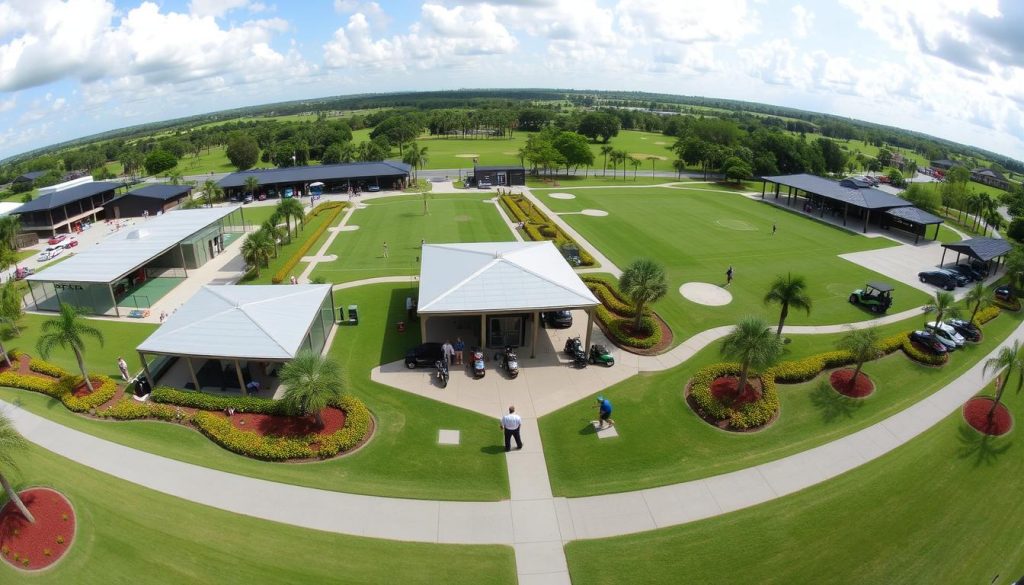
Since its inception, the PGA Tour Academy has been at the forefront of golf education and development. Established in 2000 at the World Golf Village in St. Augustine, Florida, it has become a flagship location for golf instruction, helping hundreds of golfers improve their game.
Instructional Programs and Philosophy
The PGA Tour Academy offers a customized instruction experience appealing to all skill levels. Its instructional programs are built around a comprehensive philosophy addressing all aspects of the game, from full swing mechanics and short game techniques to course management and mental performance. Each instructor undergoes rigorous certification to meet the organization’s “Standards of Excellence,” ensuring high-quality instruction.
Custom club fitting services are also integrated with instructional programs, recognizing that properly fitted equipment is essential for skill development and performance improvement.
Junior Golf Development
The PGA Tour Academy’s primary goal for its juniors is to provide a positive and fun learning environment. Specialized programs are designed to introduce young players to the game, building fundamental skills and a lifelong passion for golf. The academy’s junior programs balance technical instruction with age-appropriate games and competitions, focusing on overall athletic development while teaching golf’s unique etiquette and values.
Many current PGA Tour professionals benefited from structured junior development programs, highlighting the importance of early, quality instruction in developing elite competitive golfers.
PGA Tour vs. LIV Golf: Understanding the Rivalry
The professional golf landscape was shaken in 2022 by the introduction of LIV Golf, sparking a contentious rivalry with the PGA Tour. This new entity, backed by Saudi Arabia’s Public Investment Fund, brought about a significant shift in the dynamics of professional golf.
Origins of the Conflict
The conflict between the PGA Tour and LIV Golf stems from fundamentally different visions for professional golf. LIV Golf introduced a new format featuring shorter 54-hole tournaments with no cuts, team components, and significantly higher purses. In contrast, the PGA Tour emphasized tradition, competitive integrity, and its nonprofit structure. This divergence in approach led to a clash between the two entities.
In June 2022, the PGA Tour suspended 17 players who participated in the inaugural LIV Golf Invitational Series event, warning that future participation would result in similar punishment. This move was a direct response to the emergence of LIV Golf and its attraction to established PGA Tour players.
Key Player Movements
Several high-profile players, including major champions like Phil Mickelson, Dustin Johnson, Brooks Koepka, Bryson DeChambeau, and Cameron Smith, defected to LIV Golf. These players were drawn by the promise of guaranteed contracts reportedly worth hundreds of millions of dollars. The loss of these players to LIV Golf created divisions within the professional golf ranks and challenged the PGA Tour’s traditional merit-based compensation model.
The Merger Agreement and Future Outlook
In a surprising turn of events, on June 6, 2023, the PGA Tour, PGA European Tour, and LIV Golf announced a framework agreement to merge their commercial rights into a single, for-profit entity. The Saudi Public Investment Fund will serve as the “exclusive investor” in this new entity, with the PGA Tour appointing the majority of its board members and Jay Monahan acting as CEO. This merger has raised questions about the future governance and values of professional golf.
| Aspect | PGA Tour | LIV Golf |
|---|---|---|
| Tournament Format | Traditional 72-hole events | 54-hole events, no cuts |
| Purse Size | Varies, with signature events increasing | Significantly higher, with team components |
| Player Compensation | Merit-based | Guaranteed contracts for top players |

How to Follow and Enjoy PGA Tour Golf
Fans can stay connected to PGA Tour golf through various broadcast and digital options. The tour offers multiple avenues for engagement, from traditional television broadcasts to digital streaming and in-person experiences.
Broadcast and Streaming Options
Television coverage forms the foundation of PGA Tour consumption, with CBS Sports and NBC Sports sharing weekend broadcast duties for most tournaments. The Golf Channel provides weekday and early weekend coverage, along with comprehensive pre- and post-round analysis. Digital streaming has expanded viewing options significantly, with ESPN+ offering PGA Tour Live for featured group and featured hole coverage before the main broadcast. Additional streaming alternatives are available through Peacock, Paramount+, and the PGA Tour app.
International viewers can access PGA Tour content through regional broadcast partners, including Sky Sports in the UK and Warner Bros. Discovery throughout Europe. This ensures that golf fans worldwide can follow their favorite tournament or event every week.
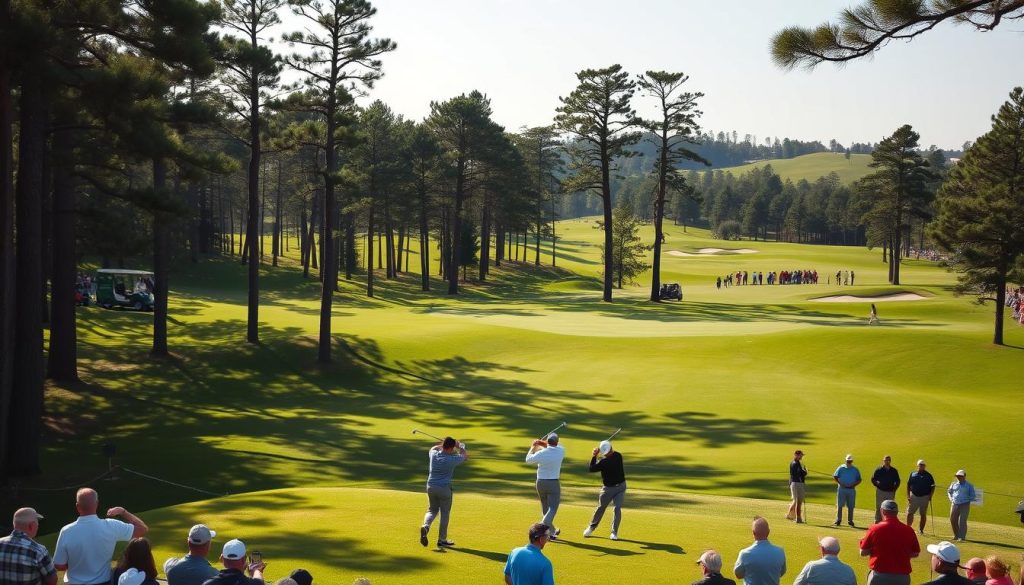
Attending Tournaments in Person
Attending tournaments in person provides an unmatched experience, allowing fans to follow specific groups, position themselves at strategic viewing locations, and enjoy the atmosphere of live professional golf. Most tournaments offer various ticket options, from daily grounds passes to premium hospitality packages. Practice rounds provide better player access, while championship days deliver maximum competitive drama.
Fantasy Golf and Betting
Fantasy golf has grown tremendously in popularity, with platforms like PGA Tour Fantasy Golf, DraftKings, and FanDuel offering season-long competitions and weekly contests that enhance viewer engagement. Sports betting on golf has also expanded, with options ranging from tournament winners and head-to-head matchups to in-play betting on individual holes and specialized proposition bets.
By leveraging these options, fans can enjoy PGA Tour golf in a way that suits their preferences, whether through traditional broadcasts on Golf Channel and NBC Sports, or by exploring digital and interactive opportunities.
Conclusion: The Enduring Appeal of PGA Tour Golf
The PGA Tour’s enduring appeal lies in its ability to balance tradition with innovation, creating an engaging experience for both players and spectators. This balance is evident in the tour’s rich history and its adoption of cutting-edge technology.
The PGA Tour continues to captivate audiences worldwide through its unique combination of individual excellence and dramatic competition. Unlike team sports, the PGA Tour offers year-round competition across diverse venues, creating an ever-evolving narrative of player achievements.
The tour’s emphasis on sportsmanship and integrity creates a distinctive competitive environment. Additionally, the PGA Tour’s charitable impact, with tournaments collectively generating over $3 billion for local causes, adds meaningful purpose beyond the competition itself.
Technological advancements in equipment, analytics, and media presentation continue to enhance both player performance and viewer experience. Whether following favorite players, appreciating the strategic challenges of iconic courses, or simply enjoying the drama of Sunday afternoon finishes, the PGA Tour offers something for every sports fan.
As the PGA Tour continues to evolve, its combination of elite competition, global reach, and compelling personalities ensures its position as golf’s premier professional circuit. The tour’s ability to adapt to changing landscapes while maintaining its core values will remain key to its enduring success.